



What an Omron Proximity Sensor Actually Costs: The Honest Price Map
Search “Omron proximity sensor price” and you will get one page of prices and no price. A distributor lists an M8 unit at €51, a marketplace shows the same family at $13.68, and a regional supplier page quotes the equivalent of $5 per piece. None of them is lying, and none of them answers your real question.
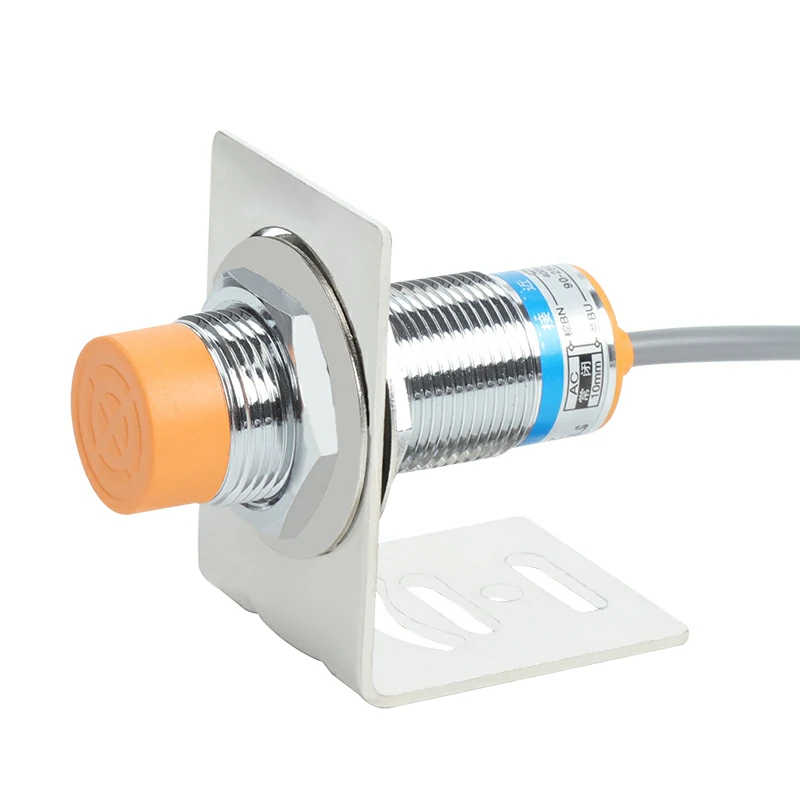
The honest answer has two parts, and you need both before any number makes sense. First, “Omron proximity sensor” spans a family of cylindrical inductive sensors, the E2E series being the one you will meet most often, sized M8, M12, M18 and M30, with sensing distances from about 1.5 mm to 15 mm. Capacitive and photoelectric sensors sit in the same catalog family but work differently and price differently; this article focuses on the inductive cylindrical types that dominate the price queries. Second, Omron does not publish a price list. The “price list PDF” searches you are doing come back empty because no official list exists. Every price you see is a channel price, set by the seller, not by the manufacturer.
With that said, here is the map. Genuine units through authorized distribution and electronics distributors typically run roughly $50–150 for M8 sizes, $100–200 for M12, and $120–320+ for M18/M30; for example €51–62 for a 2 mm M8 NPN on RS, about $127 for an M30 10 mm shielded unit from Kempston, $201–225 from Master Electronics or Newark. Used and surplus units on auction sites cluster around $13–48. And regional industrial marketplaces quote $5–16 equivalents (₹382–1,300) for “Omron” sensors.
That last band is where the trouble starts, and where this article will spend most of its time. Cheap listings exist for four different reasons, and three of them will cost you more than the $100 you saved.
Read the Model Number Before You Read the Price
Half of the price spread is not channel markup; it is specification. An M30 sensor with a 10 mm sensing distance is a physically bigger, higher-spec device than an M8 unit rated at 2 mm, and it is priced accordingly. If you compare prices without first decoding the part number, you are comparing different products and drawing the wrong conclusion.
Omron’s E2E naming is systematic, and the code is readable:
| Part number segment | What it tells you | Verified example |
|---|---|---|
| Family prefix (E2E / E2E2 / E2S / TL-N) | Product generation and family | E2E = standard cylindrical inductive |
| Distance digit (X10, X3, X5…) | Nominal sensing distance in mm | E2E-X10D1-N = 10 mm |
| Output code (D1, B1, ME1…) | Output topology, DC 2-wire, 3-wire NPN/PNP, AC | D1 = DC 2-wire |
| Output behavior (-N, NO/NC variants) | Normally open or normally closed | E2E-X10D1-N = NO |
| Cable/connector suffix (-2M, -5M, -M1J…) | Cable length or connector type | -M1J = connector, 0.3 m |
Write the six spec lines down before you search a price: housing size, sensing distance, shielding, output topology, supply voltage, cable. That list is what you are actually comparing — the model number is just its shorthand.
Cross-checked against distributor and manufacturer data, the code holds. The E2E-X10D1-N listed by Kempston, Ramco and Omron’s own lineup is consistently an M30 shielded unit, 10 mm sensing distance, DC 2-wire, normally open, 12–24 VDC, pre-wired. Three independent listings, one identical specification. The Amazon-listed E2E2-X10MB1M1 resolves the same way: 10 mm sensing, PNP output.
Two caveats before you treat this as a universal decoder ring. Older generations and different families (E2S, TL-N) do not always use identical segments, so always confirm against the datasheet for the exact part number. And the model number tells you nothing about the channel: the same E2E-X10D1-N is exactly the part priced at ~$127 through distribution and at surplus prices on auction sites. That gap is the next question.
Same Sensor, $13 or $320? Where the Price Gap Comes From
Take one verified specification, M30, shielded, 10 mm, DC 2-wire NO, and you can still be quoted anything from roughly $13 to $320 for it. Same part number, ten-to-twenty-fold spread, and every seller is describing the same physical object. That is the single most important fact in this article: identical nominal sensors carry prices 3–10× apart depending on channel, and the price difference is what you are actually buying. Remember that number, because every decision below hangs off it.
Same nominal sensor, different channel
3–10×
The price spread you will meet on identical specifications depending on where you buy. The difference is not noise — it is what you are paying for.
The channel cost structure
Each price band buys you a different bundle:
| Channel | Typical price (M18/M30 class) | What the money buys | Main risk |
|---|---|---|---|
| Manufacturer catalog | No price published | Reference specs only | Can’t buy from it; directs you to authorized channels |
| Authorized distribution & electronics distributors (RS, Newark, DigiKey, Master, Kempston…) | $120–320+ | Genuine new unit, full warranty chain, technical selection support, invoice traceability | Highest price; quantity breaks start only around 10+ pcs |
| Retail marketplaces (Amazon, eBay new) | $35–200 | Convenience, often genuine but verify the seller | Counterfeits and grey goods sit next to genuine listings |
| Used / surplus (eBay auctions, scrapped line pulls) | $13–48 | A working sensor, unverified history | No consistency, no remaining life guarantee; fine for bench testing, a gamble in production |
| Regional industrial marketplaces (IndiaMART etc.) | $5–16 equivalent | The lowest number you will ever see | Highest counterfeit/mislabeled density; see below |
The authorized-channel price is not “the price plus greed.” It includes a warranty chain you can actually exercise, application support when the sensing distance behaves differently than the datasheet promised, and a supplier who still exists when you call back in eighteen months. Those are real costs, and they are priced in.
What the cheap “Omron” listings actually are
Prices far below the distribution band need an explanation, and the explanation is usually one of four things. Genuine used units: legitimate, but with unknown duty cycles behind them. Refurbished units: re-cased or re-labeled, sometimes with the original markings, sometimes not. Counterfeits: new parts stamped with Omron branding, the most dangerous kind, because they fail like cheap sensors while being trusted like genuine ones. And spec-compatible copies: sensors built to match Omron dimensions and ratings and sold under their own brand, a legitimate product category of their own (more on these in a moment). The problem: on low-priced marketplaces, listings rarely tell you which of the four you are looking at.
So the verification move is simple and non-negotiable. The moment a price sits far below the distribution band, treat the listing as unverified and check before paying. Ask for the seller’s authorization status, demand a serial number you can trace to the manufacturer, compare packaging and laser marking against a known-genuine sample, and cross-check the claimed parameters against the datasheet. Sellers of re-labeled parts routinely list the wrong sensing distance or output type because they copied the wrong row from the same catalog.
Price far below the distribution band = unverified until proven otherwise. Ask for authorization, trace the serial number, compare markings, and check the claimed specs against the datasheet before you pay.
Genuine, Used, or Spec-Compatible: Decide by Scenario, Not by Price
Once you can read the part number and you understand what each channel actually sells, the buying decision becomes a scenario question, not a price question. There is no universally “right” option, and the people who get burned are the ones who picked an option first and checked the scenario second.
When a spec-compatible alternative makes sense
A spec-compatible sensor, built to match the Omron dimensions, sensing distance, output topology and environmental ratings, is a legitimate engineering answer in a specific set of conditions. The checklist: the application is not a safety function; the sensor sits inside a machine where failure means downtime, not injury; you can verify every spec line against the datasheet (rated sensing distance and tolerance, shielded or unshielded, NPN/PNP/2-wire output, supply range, IP rating, temperature range, switching frequency, target size); and you can field-test before committing in volume.

That is exactly why the 3D-printing community, where a genuine Omron unit can cost over €60 and a compatible one a fraction of that, has largely moved to compatible sensors for bed leveling. For a non-safety sensing job with a verifiable spec sheet and an on-site test, the compatible part is not a compromise; it is the economically rational choice. OEMs making the same calculation in production machinery should add one more condition: your customer’s maintenance team has to accept the substitution, because their spare-parts bin is stocked against your BOM.
When it does not
When spec-compatible does not work
Safety circuits and emergency-stop chains: never substitute. The failure behavior is part of the safety case, and a spec sheet cannot certify that.
Warranty and liability: if the machine carries an OEM warranty or the end customer’s contract specifies original parts, a compatible sensor voids the coverage. The $100 you saved becomes the $10,000 repair you own.
Certification-bound exports: equipment that must land with CE/UL/CCC documentation matching the BOM cannot quietly swap sensing elements.
Extreme environments with no comparable data: if the genuine part’s datasheet covers conditions your compatible option has no published data for, such as temperature extremes, washdown or weld-field interference, you have no basis to assume equivalence.
The failure stories in the field are rarely about the sensor category; they are about mismatched scenario and part. A Voron 3D-printer user whose genuine Omron sensor failed from bed heat found the fix was not “cheaper sensor” but the correct sensing distance and proper mounting distance from a heated bed. Maintenance engineers replacing a unit “damaged onsite” face the same fork: match the specification, not just the brand label.
Buying decision by scenario
| Scenario | Genuine new | Used or surplus | Spec-compatible |
|---|---|---|---|
| Safety circuit or e-stop chain | Required; never substitute | Not acceptable | Not acceptable |
| OEM warranty or contract specifies original parts | Required | Not acceptable | Not acceptable unless approved |
| Non-safety machine sensing, spec verifiable, field-testable | Works, most expensive | Risky, no life guarantee | Recommended |
| Bench testing or one-off repair with no safety exposure | Works | Acceptable | Works |
| Certification-bound export (CE/UL/CCC BOM match) | Required | Not acceptable | Not acceptable |
If You Go Spec-Compatible: How to Vet the Supplier
If the scenario test points you to a spec-compatible sensor, the risk moves from the part to the supplier. Compatible sensors are now sold everywhere, including next to the genuine listings on the same retail pages. The vetting is a checklist, not a feeling:
- Can they give you a line-by-line specification comparison against the Omron part number, covering sensing distance and tolerance, shielding, output topology, supply range, IP rating, temperature range and switching frequency, not just “compatible with E2E-X…”?
- Do they publish a datasheet with test conditions, and will they share test data before you order?
- Is there a sample policy so you can field-test before volume?
- Do they state factory testing (e.g., aging/burn-in, 100% function checks) and a warranty with concrete replacement terms?
- Can they show certification documents (CE, RoHS, CCC, ISO 9001) rather than claim them?
- Do they state stock and lead time in numbers you can plan against?
A supplier who answers every line with specifics is carrying the engineering risk for you. A supplier who can only say “compatible” is handing that risk to you; the sensor will sit in your machine, and their vague sentence will not.
One honesty note that protects you downstream: a spec-compatible sensor is a copy of the specification, not a license from the brand. When you pass it to an end customer, say exactly that. It keeps the substitution defensible and your reputation intact.
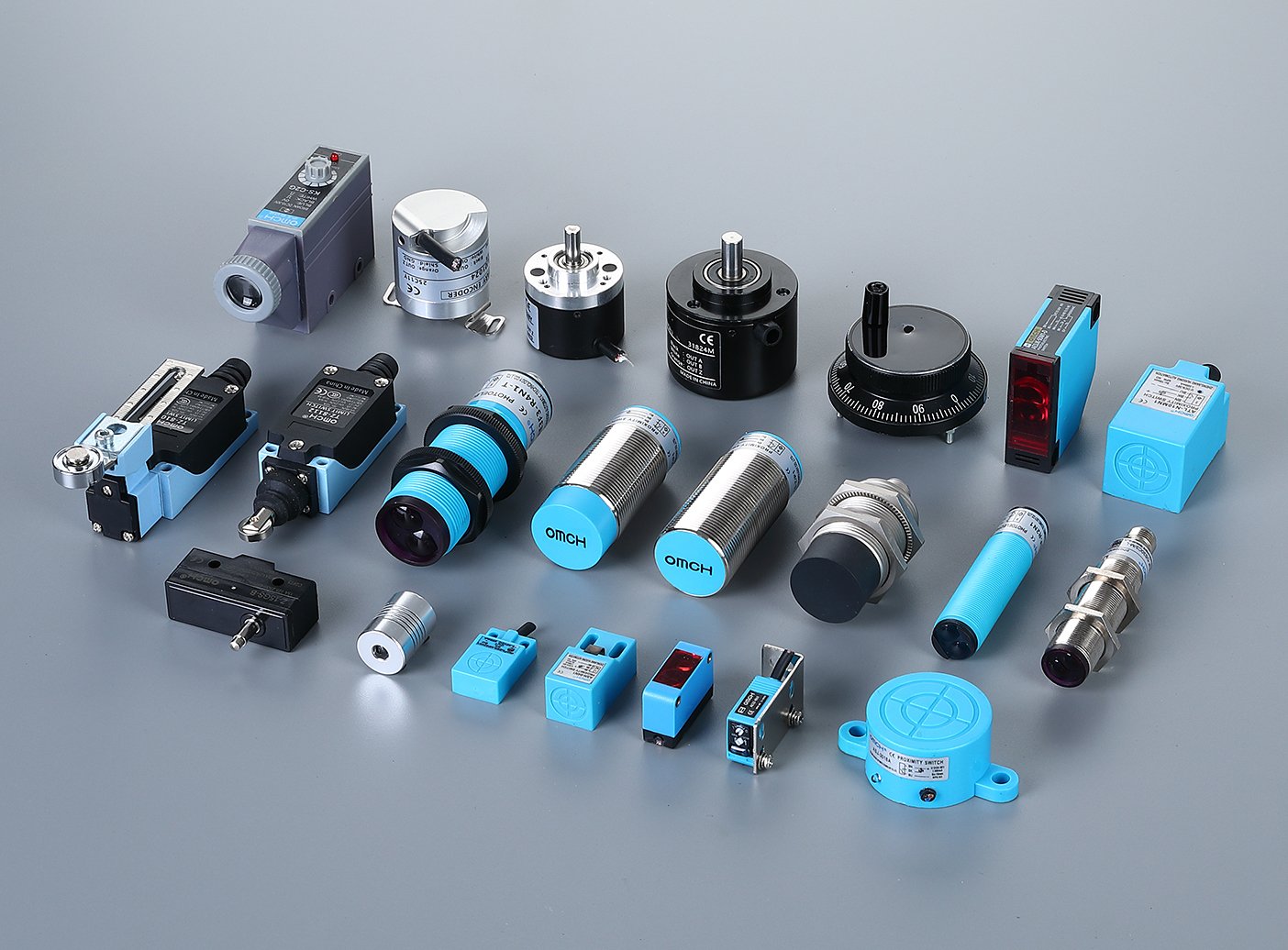
Our inductive proximity line is built to answer the specification-matching checklist line by line, with M8 through M30 housings, rated sensing distances from 1.5 mm to 15 mm, NPN, PNP and 2-wire output variants, and IP67 across wide temperature operation. Our engineers will walk a spec comparison with you before you commit, the same way we match specs and samples for every category we supply. Send us the Omron part number and the application, and you will get the specification sheet back, not a slogan.
Supplier vetting checklist
- Line-by-line spec comparison against the Omron part number
- Datasheet with test conditions, shared before you order
- Sample policy so you can field-test before volume
- Factory testing (aging/burn-in, 100% function checks) plus warranty with concrete replacement terms
- Certification documents (CE, RoHS, CCC, ISO 9001) shown, not claimed
- Stock and lead time stated in numbers you can plan against
The Distributor’s Playbook: Turning an Omron Part Number into a Quote
If you are a distributor or trader, the customer message you actually receive is not “I want an Omron sensor.” It is a part number and a need date. Everything in this article collapses into a three-step quote process.

Step 1, decode the part number into a specification list. Housing size, sensing distance, shielded or not, output topology, supply voltage, cable or connector. This is the same decoding shown above; a customer’s “E2E-X10D1-N” becomes “M30 shielded, 10 mm, DC 2-wire NO,” and now it is comparable to anything.
Step 2, ask what the sensor protects. Safety function, warranty-bound machine, certification-bound export, or general non-safety sensing? That one question decides which of the price bands you may honestly quote. A customer who needs genuine Omron for a safety chain is not a lost sale when you quote the authorized-channel band; he is a customer who learned you can be trusted with his risk.
Step 3, quote the spec-matched replacement with the comparison sheet attached. For non-safety applications, price the matching unit from a manufacturer who can answer every line of the specification comparison against the Omron part number. The margin is not in the genuine band; that market is served by Omron’s own distribution, with public prices already compressed. The margin is in the translation: you decoded the part number, you matched the specification, you vouched for the boundary conditions, and you sourced it from a maker who stands behind the comparison sheet. That service is what the customer is buying, and it is the only part of the transaction that cannot be undercut by a cheaper listing.
Before you quote, look at your own source. The replacement you sell is only as good as the factory behind it, and most sellers of compatible sensors have no factory. They hold someone else’s stock and give you one line: “compatible with E2E-X….” When that sensor fails on your customer’s machine, the customer calls you, not them. Vet your source the way your customer will vet you: is the line really theirs, a question a video walk-through settles? Are parameters published down to the SKU detail page, not hidden behind a slogan? Is the warranty written and the lead time a stated number? The answers separate a factory from a trading desk quickly.
Run the arithmetic and the model wins. Omron’s own channel keeps the genuine margin at public prices; a spec-matched replacement carries margin for you, and the comparison sheet you hand the customer is the justification. That is the business we are built for: our proximity line publishes specifications on its SKU detail pages, ships with a written one-year warranty and a 30–45 day standard lead time, and we build 30-plus categories of automation components in one factory, so the replacement you quote and the rest of your container come from one accountable source instead of a dozen separate suppliers.
The playbook’s rule, in one line: treat the Omron part number as a specification request, not a brand request. The distributors who survive the transparent-price era are the ones who sell the specification match and the boundary honesty, and decline the orders that would cost their customer more than the invoice.
Send us the Omron part number and the application. We will return a line-by-line specification comparison and a quote for the matching sensor from our own line, with the boundaries of the substitution stated in writing.
Get a Spec-Matched Replacement Quote for Any Omron Part Number
Send us the Omron part numbers and applications on your list. We’ll return a line-by-line specification comparison for each, with the matching unit quoted from our own line and the substitution boundaries stated, so you can quote your customer without guessing.
Request a spec-matched quoteReferences
- r/klippers. “Anyone using Omron sensors? — genuine units cost over €60.” 2023. https://www.reddit.com/r/klippers/comments/15kj4gg/hi_guys_anyone_using_omron_sensors/
- r/VORONDesign. “Voron Switchwire Omron proximity sensor.” 2021. https://www.reddit.com/r/VORONDesign/comments/rw2eus/voron_switchwire_omron_proximity_sensor/
- DigiKey Forum. “Omron E2S-W13 1M: Mounting Bracket? (damaged onsite replacement).” 2025. https://forum.digikey.com/t/omron-safety-and-automation-proximity-sensor-e2s-w13-1m-mounting-bracket/65948

 English
  Arabic
  Turkish
  Russian
  Spanish
  French
  Indonesian
  Portuguese
  Thai
Thai  Vietnamese