




The what is a reed relay question is increasingly relevant in the fast-changing world of 2026 electronics, where solid-state devices are often the primary topic of discussion. Although it may appear at first sight to be an antique technology—having been first invented by John Moore and others in the 1930s—it possesses a mechanical simplicity and hermetic seal protection that has made it an indispensable core component of a reed relay system that cannot be replaced in high-precision applications.
From the battery management systems of modern electric vehicles to the sensitive signal paths of medical diagnostic equipment, the reed relay provides a level of inherent isolation and “clean” switching that digital alternatives struggle to match. The manual also delves into the details of the design, physics and implementation to provide the engineers with the technical expertise to master this significant component.
Understanding Reed Relay Technology and Core Construction
At its heart, a reed relay is a specialized form of electromagnetic switch. The reed relay uses the reed switch contacts as the switching element as opposed to a standard Electromechanical Relay (EMR) that uses complex pivot points and an armature mechanism. The structure is deceptively simple and at the same time requires an extremely high degree of precision.
The Internal Architecture
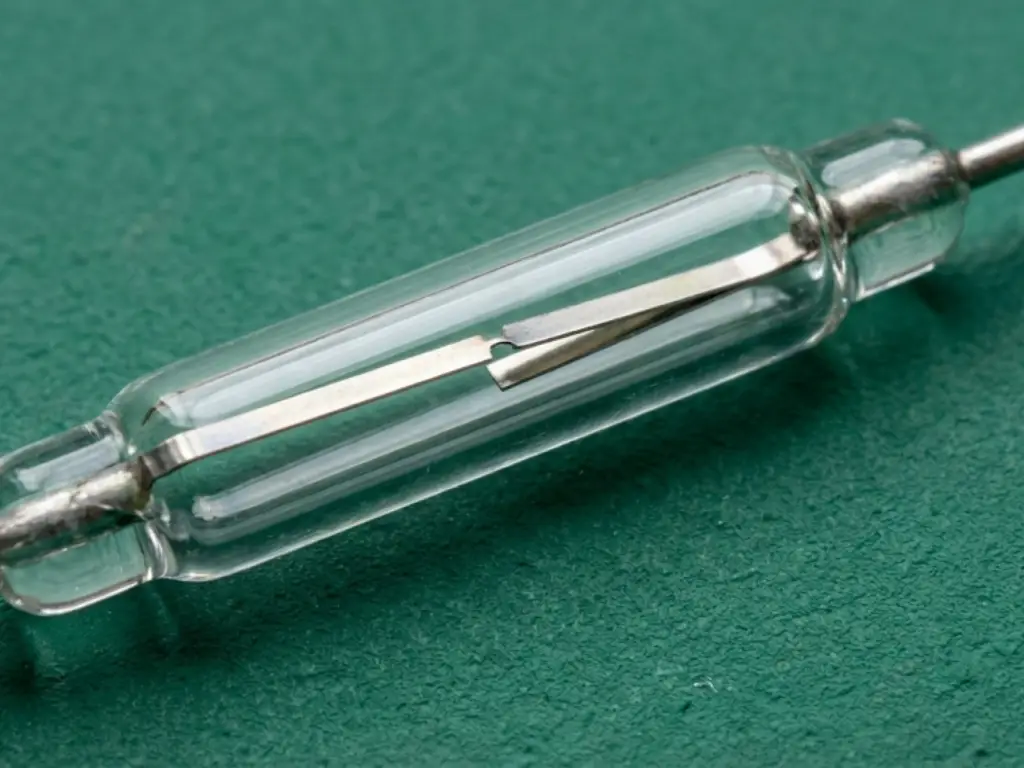
- The Reed Switch: This is a type of switch composed of two metal blades made of a ferromagnetic material (typically a nickel-iron alloy). These blades are arranged in a manner that the open contacts overlap in the switch area. There is a given gap size between them in their normal state.
- The Glass Envelope: The blades are contained in a glass hermetic seal envelope. This envelope is stuffed with inert gasses such as nitrogen or, in the case of larger switches designed for higher power levels, it is evacuated to a vacuum.
- Metal Seal of the Reed Switch Capsule: The metal seal of the reed switch capsule is important to ensure that the internal environment is not contaminated by external contamination, which is critical to preserve physical strength and electrical integrity.
- Termination Leads: The termination leads extend outside the glass to allow for various PCB package styles.
The reed contacts are the only movable part in this assembly, which flex under magnetic influence. Since the devices have no wearing mechanical parts, they offer an exceptionally long mechanical life.
Magnetic Principles and the Power of Hermetic Sealing
The operation of a reed relay is a masterclass in applied magnetism. An electromagnetic coil is wrapped around the glass envelope. The coil generates an axial magnetic field when a control signal is energized that is parallel to the axis of the reed blades.

The Physics of the “Snap”
The blades are ferromagnetic and this makes them to be a part of the magnetic circuit. The axial magnetic field causes the opposite magnetic polarities at the point of contact. The reeds are pulled together once the magnetic force surpasses the mechanical deflection of the blades.
- Ampere Turns: The sensitivity of the switch is often measured in terms of the ampere turns (the product of the current and the number of turns in the coil).
- Angle of Deflection: Angle of deflection is small so that the reed switch contacts are exposed to uniform pressure.
Why Hermetic Sealing Matters
In standard relays, exposure to oxygen causes the electrical contact surfaces to degrade. In a reed relay, the hermetically sealed envelope ensures:
- Low Leakage: Low leakage nature of the product makes it suitable in measuring femto-ampere currents.
- No Contamination: The inert gasses inhibit the oxides.
- High Reliability: Even smaller reed switches maintain their performance because the contact area is protected from the elements.
Top Performance Benefits: Speed, Isolation, and Long Life
Engineers choose pickering relays or other high-quality reed designs when they must be able to trade the mechanical ruggedness and semiconductor speed.
- High-Speed Switching
A traditional EMR can take 10ms to 20ms to switch, but a high-quality reed relay can take as short as 0.5ms to 2ms to switch. Even faster switching can be done by smaller relays using short reeds and thinner materials because of the reduced mass.
- Extreme Galvanic Isolation
The insulation resistance of reed relays is truly amazing and this is one of the main reasons why they are still in use in 2026. A reed relay can insulate between the open contacts and between the coil and the switch with a range of 10^12 to 10^15 ohms. This is many orders of magnitude greater than most Solid State Relays (SSRs) are capable of, which frequently have a problem with leakage current that can cause interference with sensitive measurements.
- Billion-Cycle Reliability
Under low-signal (dry switching) conditions, a reed relay can easily exceed 10^9 (one billion) operations. In the world of industrial automation, this translates to decades of maintenance-free service, significantly reducing the Total Cost of Ownership (TCO) for large-scale deployments.
- Low Signal Distortion
The connection is purely metallic and thus there is no physical contact, no “on-state voltage drop” or thermal noise as would be the case with semiconductors. This ensures the integrity of sensitive analog signals, such as those found in high-fidelity audio or precision sensor arrays.
Comparative Analysis: Reed Relays vs. EMR and SSR
Choosing the right relay involves weighing trade-offs in power, speed, and cost.
| Feature | Reed Relay | Electromechanical (EMR) | Solid State (SSR) |
| Switching Speed | Fast (0.5 – 2 ms) | Slow (10 – 20 ms) | Ultra-Fast (less than 0.1 ms) |
| Contact Life | Very High (10^9 cycles) | Medium (10^5 – 10^6) | Infinite (No moving parts) |
| Isolation | Excellent (up to 10^15 ohms) | Good | Moderate (Leakage current present) |
| Power Handling | Low to Medium | Very High | High |
| Signal Distortion | Zero | Minimal | Present (Voltage drop/Leakage) |
| Physical Size | Small / High Density | Large | Small to Medium |
| Mechanical Wear | Minimal (Flexing only) | High (Pivot & Spring) | None |
The reed relay is the “Goldilocks” solution in which accuracy and low leakage are the most significant, but higher power levels (such as hundreds of amps) are not needed.
Critical Applications in EV, Medical, and ATE Systems
Reed relays have created several niche markets that should be utilized in the contemporary industry because of their peculiarities.
Electric Vehicles (EV) and Energy Storage
In the EV industry, safety cannot be compromised. Reed relays are used in Battery Management Systems (BMS) to perform insulation monitoring. They periodically check the resistance between the high-voltage battery pack (often 800V or higher) and the vehicle’s chassis. The relay has enormous isolation, which implies that the main traction battery will never destroy the delicate monitoring electronics.
Medical Diagnostics and Life Support
Medical devices like Defibrillators and MRI machines rely on reed relays for their high-voltage handling and zero-leakage properties. A high-voltage reed relay is used in a defibrillator to make sure that the stored charge is safely isolated off the patient until the precise discharge moment. In addition, they are small and this implies that they can carry additional portable medical equipment.

Automated Test Equipment (ATE)
ATE systems use smaller reed switches (like short switches) to build dense matrices. These smaller relays have to operate through millions of cycles per day with a very low resistance of the coil of wire to reduce heat.
Solving Design Challenges: Magnetic Shielding and Contact Protection
Reed relays are not “set and forget” components despite their advantages. In order to get out of the physical limitations, they must be designed with special consideration to PCB.
Magnetic Crosstalk and Shielding
Because reed relays are sensitive to an axial magnetic field, permanent magnets or relays adjacent to them may cause them to be influenced.
- The Solution: Use a magnetic screen or magnetic shield to contain the flux. This ensures that different levels of the magnetic field from nearby components don’t cause accidental triggering.
Contact Protection and Snubber Circuits
The most common cause of reed relay failure is contact welding. This happens when switching inductive loads (like small motors or solenoids) or capacitive loads.
- Optional Diode: Incorporating an optional diode across the coil helps dissipate the back emf.
- Contact Area Protection: Signal paths should be done with fine wires and higher power levels should not be used than the rating to prevent welding of the switch area.
Key Factors for Selecting the Right Reed Relay
One of the factors that engineers should take into account is the power consumption versus sensitivity trade-off.
- Coil Specifications: Higher coil resistance figures usually lead to lower power consumption. This is done through the use of finer wires and more turns in the electromagnetic coil.
- Switch Size: Bigger switches and longer switches tend to be more powerful whereas shorter reeds tend to be faster.
- Mechanical Stiffness: Stiffer reed switches may require more coil powers to close but provide better resistance to vibration.
The OMCH Advantage: Precision Engineering for Industrial Automation
As one of the most successful manufacturers of industrial automation since 1986, OMCH knows that the failure of one relay may halt an entire production line. With over 36 years of experience, OMCH has not only been a manufacturer but also a total solution provider to the world industry.
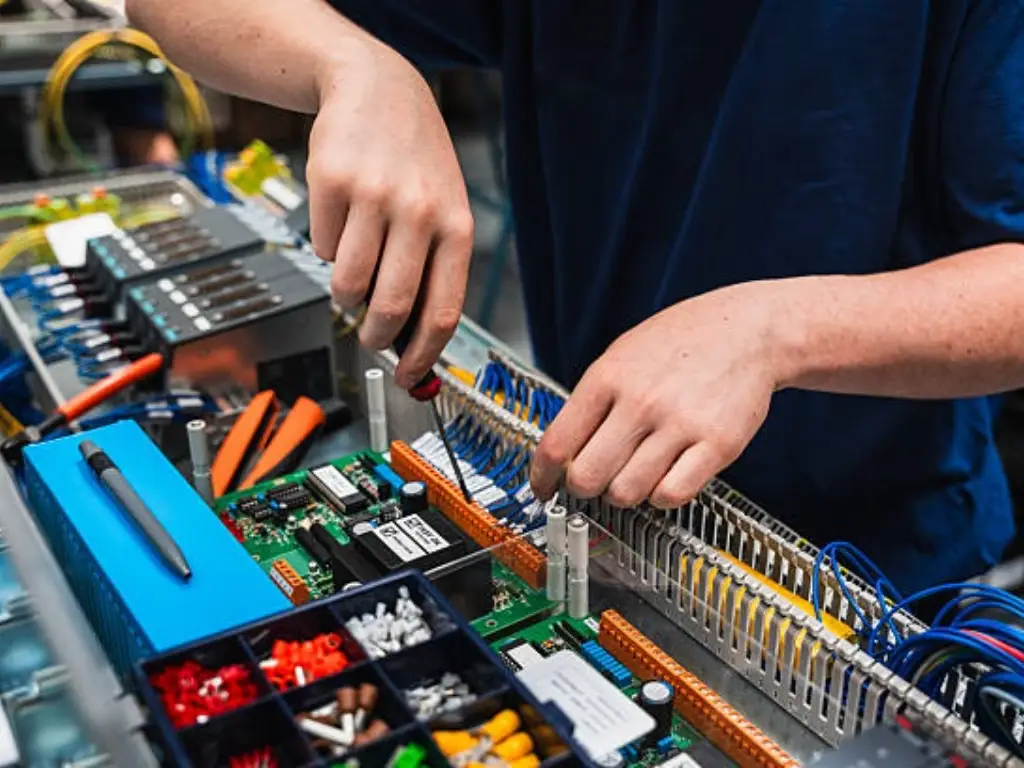
The following are our strengths that are of immediate benefit to your engineering and procurement departments:
- Scale and Reliability: OMCH possesses over 7 committed production lines and has an 8,000-square-meter contemporary plant that serves over 72,000 clients in 100+ nations. This scale offers predictable supply chain and lead times on your high volume projects.
- Certified Excellence: Every OMCH relay and automation component adheres to rigorous international standards, including ISO9001, CE, RoHS, and CCC. Our “Three-Stage Inspection” (Raw material, In-process and Final) will make sure that our billion-cycle life claims are supported with empirical data.
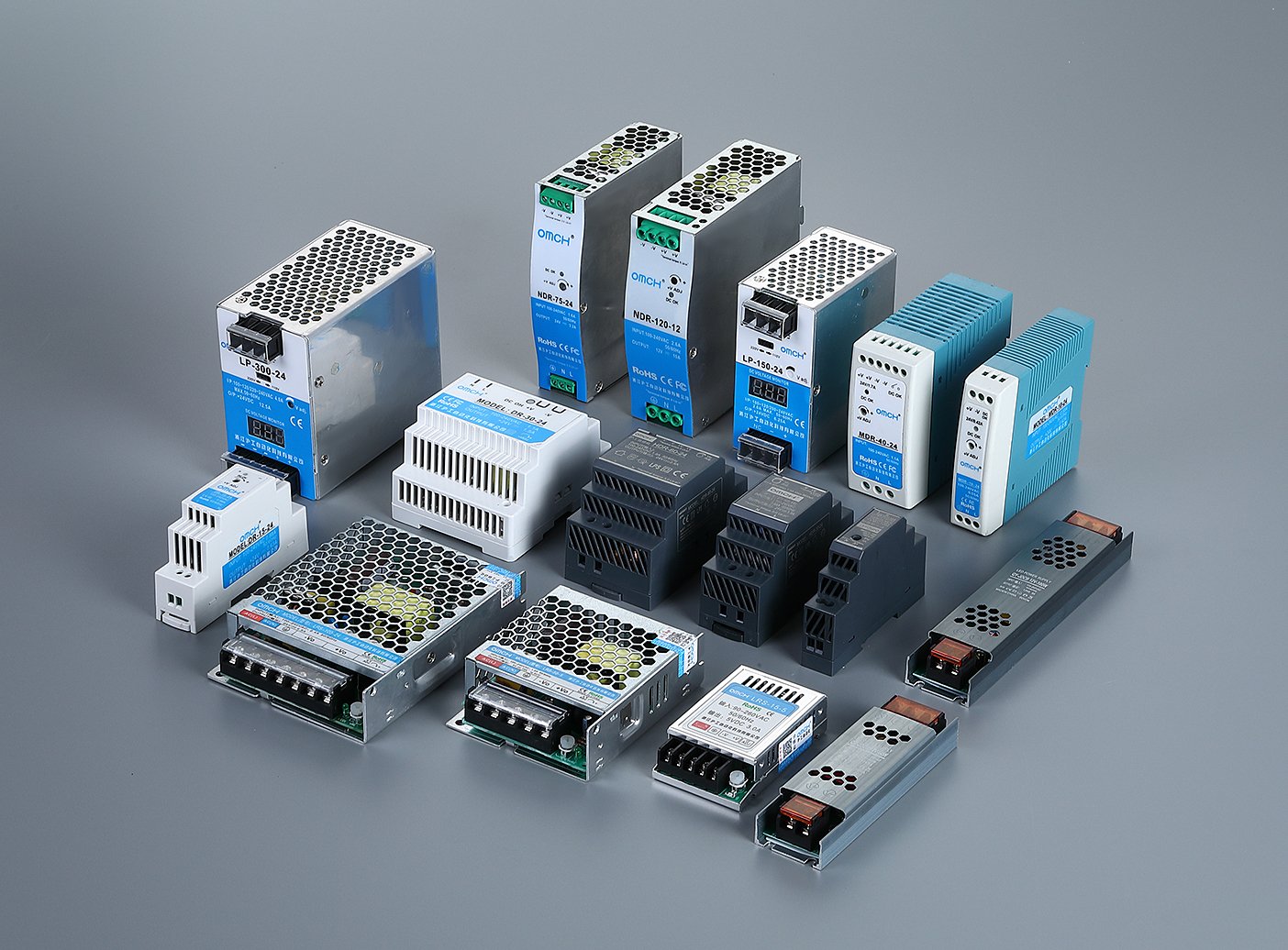
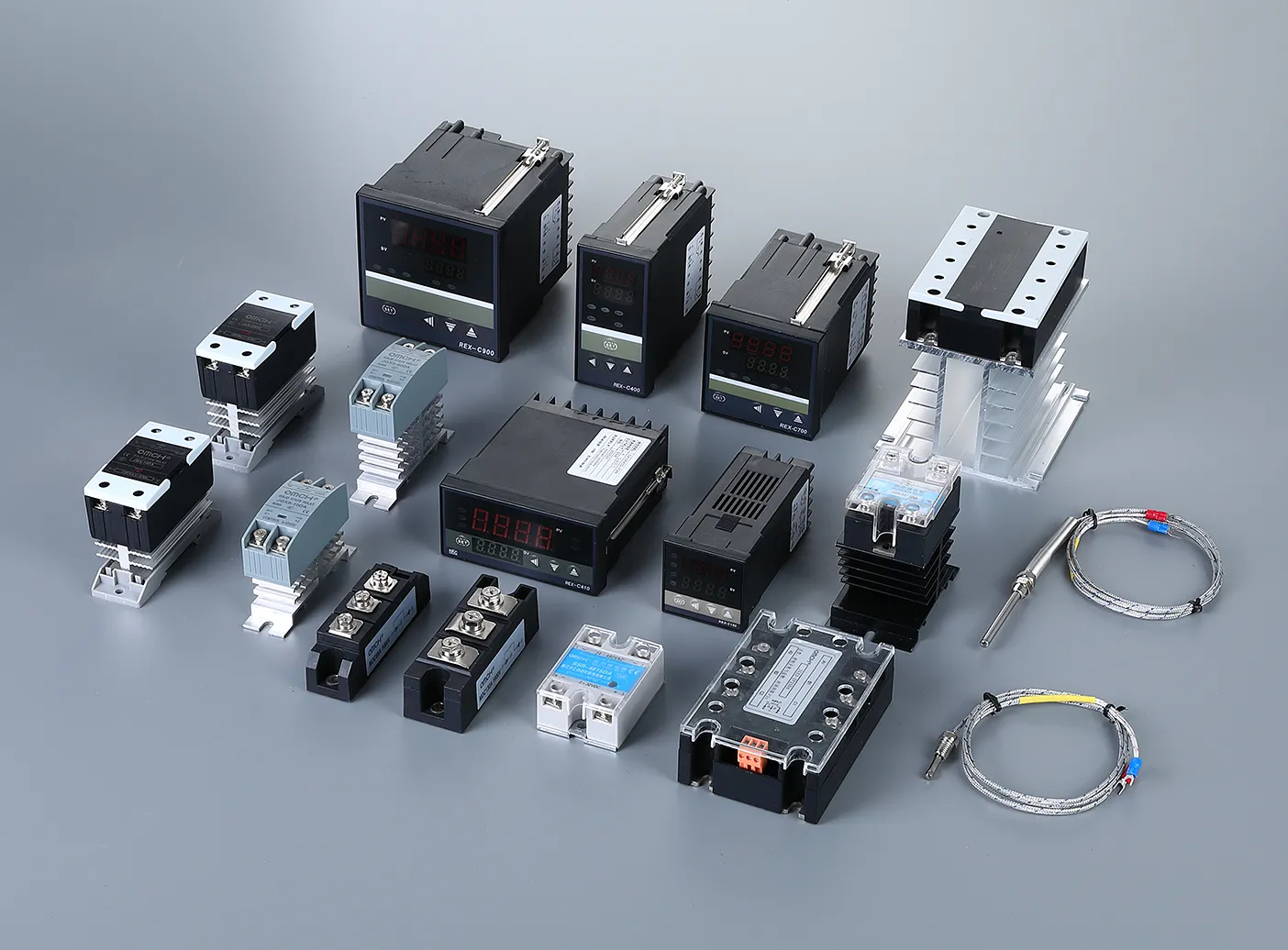
- The “One-Stop” Catalog: With over 3,000 SKUs covering power supplies, proximity sensors, and diverse relay types, OMCH allows engineers to source entire control sub-systems from a single vendor, ensuring perfect component synergy and simplified procurement.
- Global Support: We provide 24/7 quick response and one year warranty with a special quality compensation system supported by a network of 86 branches in China and international distribution network.
When you integrate an OMCH component, you aren’t just buying a part; you are leveraging decades of manufacturing pedigree designed to survive the harshest industrial environments.
The Evolution of Reed Relays for 2026 Tech
The reed relay is not fading away; it is developing. We are seeing smaller relays that use strands of wire as fine as a human hair for their coils and different reed switches that can handle RF signals into the gigahertz range.
Modern designs focus on reducing power consumption and improving the encapsulating package to allow for high-density mounting. The what is a reed relay question in 2026 is answered by a device that is smaller, faster, and more reliable than ever. By understanding the axial magnetic field dynamics and the importance of the glass envelope, engineers can continue to rely on this “fine instrument” for a connected, high-voltage future.




 English
  Arabic
  Turkish
  Russian
  Spanish
  French
  Indonesian
  Portuguese