



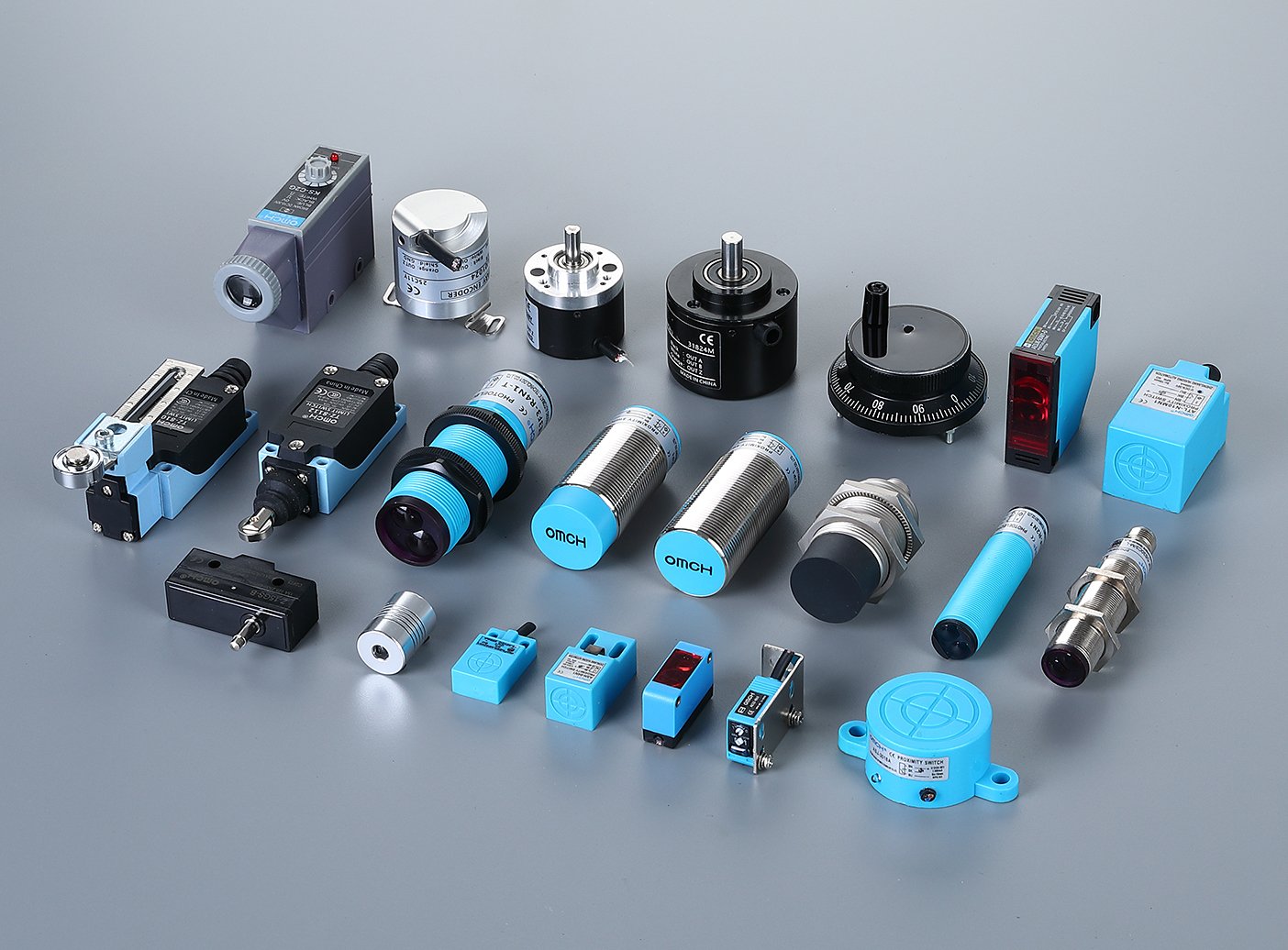

Introduction: What Are Encoders and Why Do You Need Them?
Modern technology is a complicated dance where accuracy is the key. Whether it is the robotic arms that are assembling smartphones or the algorithms to tell you what to buy next, the capacity perceive, interpret and act on the data responsively is what made the difference between succeeding and failing. As the core unit of this precision is the encoder. Essentially, an encoder is a device, sensor or an algorithm that changes the format of the information one thing into another. This definition is imprecise, yet it is applied in a very specific and strong way.
In the physical sense of engineering and automatization, an encoder is an electromechanical component that converts mechanical motion, or movement, e.g. an axis in an automation system like motor shaft rotation, or linear movement of a component, into an electrical signal. The signal gives feedback information of shaft position, speed, direction or count, enabling machines to run highly controlled and accurate. The smooth working of the CNC machines, automation of conveyors and intricate robots would not have been possible without the use of encoders. They play a vital role in contemporary machines as they provide the sense organs in controlling intelligent activities through differing applications and in differing conditions of the environment.
The algorithm for the conversion of data (namely, categorical variables, e.g., red, green, blue) to numerical representation that can be read and analysed by machine learning models is called an encoder in the digital context of data science and machine learning. Such transformation is a main principle of getting data ready to be analyzed allowing the algorithms to see some patterns and make predictions.
Knowledge of varieties of encoders is thus not simply a theoretical one. It is a very essential need of engineers, data scientists, developers, and system integrators. The type of encoder, from an actual device used with a motor, to a software method used with a dataset both have direct influence on the performance, reliability, and efficiency of that system. This guide will cover the microcosm of the encoder landscape, and demystify the technologies used, as well as enable you to make informed decisions on your application of choice.
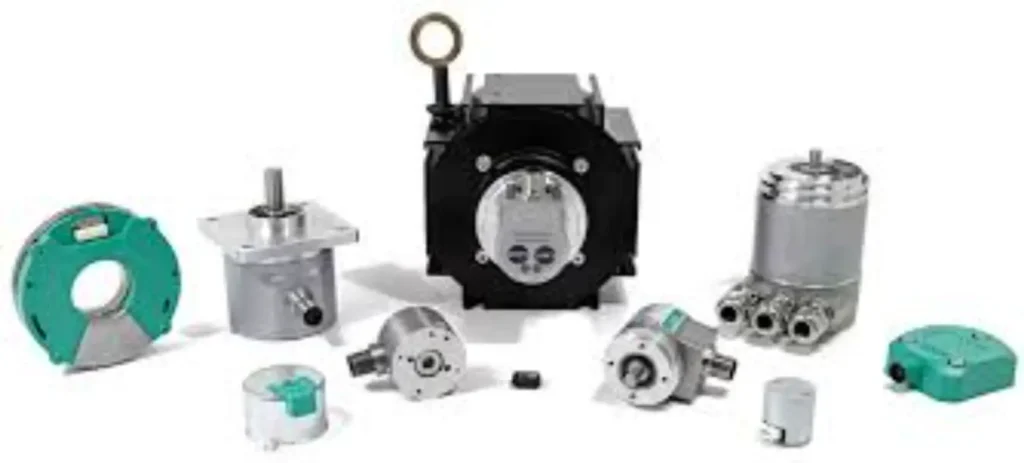
Different Types of Encoders: Overview and Key Differences
The world of encoders is basically separated into two differing universes data science encoders and physical encoders measuring motion. Their forms are dissimilar and differ absolutely in their functions even though they happen to share a name and a central tenet like conversion.
Physical Encoders are Hardware Encoders that are supposed to measure movement. They are the senses that act as feedback in thousands of machines that are automated. The major differentiation in this group is concerned with the kind of motion they compute:
- Rotary Encoders: The purpose of these devices is to measure the rotational movements. They are supported onto a rotating disk, e.g. a motor shaft, and produce an output signal related to the angular-position or speed of the shaft. Practically they can be found everywhere in rotational control.
- Linear Encoders: Linear encoders on the contrary measure linear movement. They are a transducer (or readhead) and a scale which measures relative position as a movement along a specified distance. They play very critical roles, such as machine tools, 3D printers and 3D printers, and coordinate measuring machines (CMMs).
Data Science Encoders Algorithmic processes used in data preprocessing as part of a machine learning workflow. They are aimed to transform the non-numeric data into numerical representation, in which mathematical models can be applied. The important ones are:
- Categorical Encoders: These algorithms utilize variables, which are categorical. Typical examples of encoding are One-Hot Encoding or encoding where a binary value is introduced by column per classification and another is Label Encoding where each classification is assigned a distinct code. The selection of a technique here is based on data nature and the needs of the machine learning model.
- Feature Learning Encoders (e.g., Autoencoders): Feature Learning Encoders (e.g., Autoencoders): These are more advanced neural network construction that seeks to find efficient compressed representations of the data. An autoencoder comprises an encoder that transforms the input quantities into a low-dimensional latent space and a decoder which rebuilds the original quantities in the input space through a transduction of the compressed relationship between the input quantities and the compressed representation. They can be applied in such tasks as dimensionality reduction, feature extraction, and anomaly detection.
Recognizing the concept at this division of level is the initial step. In the case of the engineer, the options are between varying degrees of physical sensors in terms of motion, technology and output. To data scientists, the major dilemma is which algorithm will serve their dataiest adequate representation given a model.
Rotary Encoders: The Most Common Motion Control Solution
No device is ultimately more fundamental or far-reaching than a rotary encoder in respect to the motion control. Its application is important: to feedback in real-time the angular position, speed and direction of a rotating shaft. This is the core part of any closed-loop control system because it allows a piece of machinery to dynamically adapt its operation in order to achieve exact parameters. Whether it is the micro-or movements of a robotic arm or the above-average speed of a packaging machine, the rotary encoder is critical in the flawless execution of the commands.
Rotary encoders in automation and robotics are too essential to be underrated. They enable the control system of a motor to ensure the shaft has reached the right angle, that the spinning velocity is at an optimum level, and that it is headed the right direction. This is what is needed in automation to ensure repeatability, accuracy and safety. Systems without this effective response would have to operate “open-loop”, in effect estimating that their commands have been obeyed, which is unworkable in any high-precision system.
Absolute vs. Incremental Encoders: Which One Fits Your Needs?
Among the class of rotary (and linear) encoders, perhaps one of the most significant differences is that of absolute vs. incremental. The selection of one of them rests squarely on whether the application requires positional information, especially the system startup as well as power loss.
Incremental Encoders are the horses of labor of numerous motion control systems. They operate through a series of pulses that is produced continuously as the shaft turns. They usually possess two output channels (A and B), 90 out of phase, which enables the control system to decide which way is to be rotated. These pulses can also be referred to as the number of pulses and measuring this the system can deduce relative positions and speed. But an incremental encoder can tell itself that it moved and how far; it does not know where it is. As a result, in these applications, on start up or following a power loss the system will need to go through a “homing” procedure, which is a motion to a known starting point reference point or limit switch to achieve a zero reference position.
- Best for: Applications requiring speed control and moderate length measurement, along with applications in which a homing sequence can be tolerated. They are largely less expensive and less elaborate to build.
Absolute Encoders instead offer a distinctive digital code to every one of the shafts positions. The power may be switched off and on, when it returns it takes the encoder back to its actual position without having to reset itself to a point of reference. It is accomplished by means of a disc with individual pattern representing each of the positions. Even the number of complete revolutions can be monitored by multi-turn absolute encoders, which makes them suited to detailed positioning work.
- Best for: Absolute Encoders instead offer a distinctive digital code to every one of the shafts positions. The power may be switched off and on, when it returns it takes the encoder back to its actual position without having to reset itself to a point of reference. It is accomplished by means of a disc with individual pattern representing each of the positions. Even the number of complete revolutions can be monitored by multi-turn absolute encoders, which makes them suited to detailed positioning work.
Encoder Technologies: Optical, Magnetic, and Mechanical

A second important detail determining the performance, durability, and the appropriateness of an encoder in a particular environment is the internal technology used to sense motion, such as optical rotary encoders. These three are optical, magnetic, and mechanical.
The widely used and most popular are called Optical Encoders and are characterized by high resolution and accuracy. These are activated by an LED light being shone through a pre-etched disc (the code disc) with a pattern of transparent and opaque lines. A pattern of this is read by an optical sensor on the opposite side and converted to a digital electrical signal.
- Benefits: This is the most precise and the most resolute available. They form the industry reference when high-precision applications are required, as in semiconductor processing and high precision metrology.
- Limitations: There may be shock, vibration, and contaminant sensitivity of the internal optics, which may cause obstruction of the light path (dust or oil) resulting in signal errors- particularly in demanding environments.
Magnetic Encoders provide a higher ruggedness and durability. They are based on magnetized rotor (and series of magnetic poles, which are sensed by magnetic sensors (Hall effect or magnetoresistive sensor normally). The rotor turns, and the sensors observe this change of the magnetic field and produce a signal.
- Benefits: Very shock resistant, vibration, moisture and dust resistance. Their durable physical appearance qualifies them to be used in rough environments such as steel mills, construction equipment and washdown use.
- Limitations: Although modern magnetic encoders are much better, they are lower resolution and precision than optical encoders.
The most basic and simple are Mechanical Encoders (also called contact encoders). They rely on a couple of physical contacts and conductive traces on a PCB to get position. The shaft is spinning and the contacts follow the traces across the circuit opening and closing a circuit to form a coded signal.
- Benefits: Low cost and simple design.
- Limitations: They are susceptible to mechanical wear, as it is physically in contact, hence short shelf life and low can be unreliable. They also suffer bounce of contact and very low resolution, and are unsuitable to precision motion control.
Choosing the Right Encoder for Your Application
Selecting the ideal encoder requires a systematic evaluation of your application’s specific needs. Going beyond the basic types, you must consider several key performance parameters to ensure optimal functionality and longevity.
Here are the practical factors to guide your selection process:
- Resolution: This is the number of measurement points per revolution (for rotary) or per unit of length (for linear). It is often specified in Pulses Per Revolution (PPR) for incremental encoders or bits for absolute encoders (e.g., a 12-bit encoder has 2^12 or 4,096 unique positions). Higher resolution allows for more precise control but may not always be necessary and can increase cost.
- Accuracy: Not to be confused with resolution, accuracy refers to how close the encoder’s output is to the true physical position. A high-resolution encoder is not necessarily highly accurate. Accuracy is critical for metrology and precision positioning applications.
- Environment: Consider the operating conditions. Will the encoder be exposed to dust, moisture, extreme temperatures, high shock, or vibration? A magnetic encoder is better suited for a dirty, high-vibration factory floor, while an optical encoder would excel in a clean, controlled environment.
- Speed (RPM): The encoder must be able to handle the maximum rotational speed of your application’s shaft without losing pulses or generating errors.
- Physical and Mounting Requirements: Ensure the encoder’s physical dimensions, shaft size (or bore size for hollow-shaft encoders), and mounting pattern fit your mechanical design.
- Output Type: The electrical output (e.g., HTL, TTL, Open Collector) must be compatible with your control system (PLC, motion controller, etc.).
Encoder Selection Overview Table
| Parameter | Consideration |
| Resolution | Measurement granularity (PPR or bits) |
| Accuracy | Closeness to true position |
| Environmental Conditions | Suitability for contaminants, vibration, or EMI |
| Speed Capability (RPM) | Maximum shaft speed without data loss |
| Mounting & Dimensions | Mechanical fit, including bore size and housing pattern |
| Electrical Output Type | Compatibility with receiving electronics |
How Rotary Encoders Are Used in Robotics and Automation
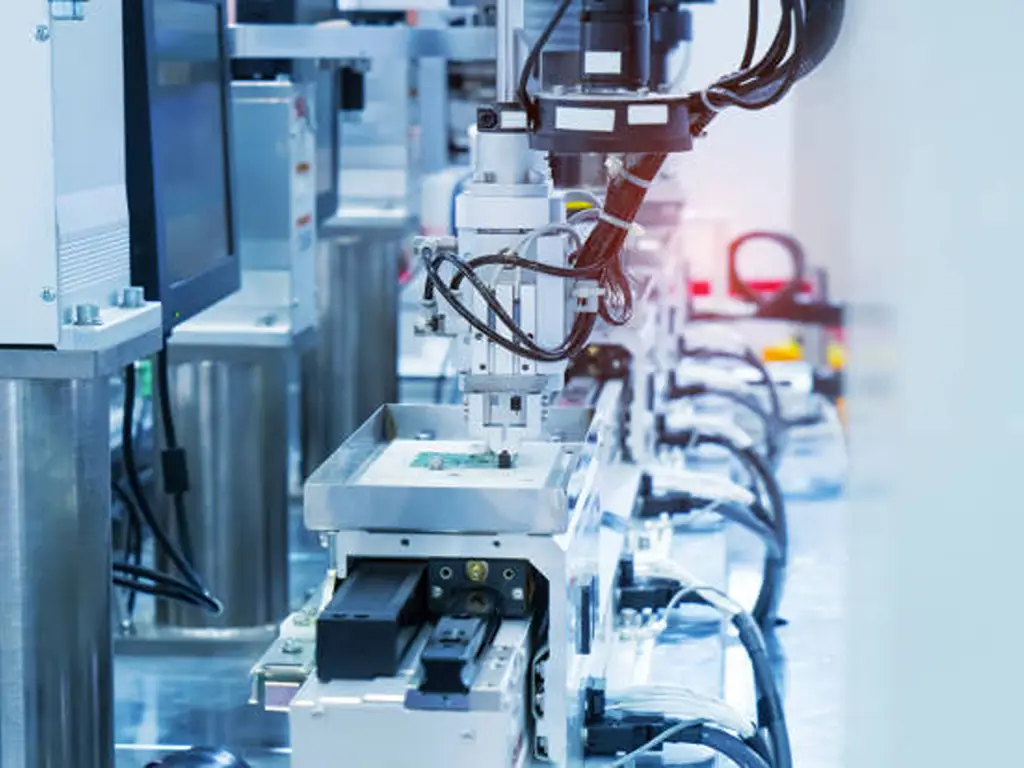
Rotary encoders, in the fields of robotics and industrial automation, play not only an enabling role but also the role of accurate positioning and precision. Complex machinery is able to perform tasks that possess superhuman repeatability and accuracy because of its capability to give accurate, real-time feedback.
In industrial robotics, each of the joints in a multi-axis robotic arm drive has a high precision absolute encoder fitted to it. When the controller installed on the robot instructs the joint to be operating in a particular angle, the encoder will give the feedback in order to verify when the joint has reached that particular angle. This feedback control and closed-loop permits the arm to trace a programmed path that can achieve precision down to exhausted millimeters necessary in welding, painting, and pick-and-place applications. The absolute nature of the encoders also means that the robot would always have knowledge of its pose, such that even in the event of a total shutdown, re-calibration sequences would not be long and most likely dangerous.
Rotary encoders form the backbone to many industrial processes. Incremental encoders are attached to the motors of conveyor belts and filling machines on a high-speed bottling line. They offer velocity feedback so that the belts run at an absolutely synchronized speed, catching bottles and avoiding jamming or spilling. When using a CNC machine, servo motors used to move the X, Y, and Z axes have encoders to position the cutting tool with an extreme degree of precision, allowing a machine to cut even complex shapes to near-tight tolerances.

Types of Encoders in Data Science and Machine Learning
Translating this to the digital domain, encoders in the field of data science are used to much the same end: to convert information to a form that a system can interact with. The system here or working algorithm is a machine learning algorithm and the language is mathematics. Numerous machine learning models such as linear regression and neural networks work with numbers as data. There is a chance that the entire dataset will have categorical features, i.e., it will either be the type of product, the geographic location of the customer or responses in the survey; the model then cannot be trained at all until it is encoded into numbers.
The main aim of the encoding procedure with categorical variables is to produce numerical value that retains information contained in initial categories without confusing the algorithm. The most popular two methods are:
- Label Encoding: Label encoding codes each category with a unique integer. As an example, Red, Green, and Blue could be changed to 0, 1, and 2. This is easy and may be troublesome. When those numbers are put into a model, they may then make the mistake of supposing that there is an ordinal relationship (e.g., that Blue > Green > Red) when it does not hold. It is most importantly employed with the variables that have a natural sequencing (e.g., Low, Medium, High).
- One-Hot Encoding: It is both safest and most popular method of nominal (not ordered) categorical variables. It changes one categorical column to several new binary columns, one column per category. To an individual observation, a column representing its category is coded as 1, and others as 0. This does not encounter the problem of suggested order, but a large value set (high dimensionality) will be produced should the variable include numerous categories.
In addition to mere categorical encoding, autoencoders are a further extension of this notion of encoding toward feature extraction and dimensionality reduction. They constitute an instance of an unsupervised neural network, which is trained to re-create its input. The encoder module of the network is then trained to shrink the representation to a sparse low dimensionality and hence capture the most important aspects of the data. Then this encoded representation can be fed into other machine learning models, which can produce improved performance and more rapid training.
Why OMCH Rotary Encoders Are the Ideal Choice for Precision Applications
In the world of precision motion control, the quality of your components determines the quality of your results. Every choice, especially the selection of a feedback device, has a direct impact on system accuracy, reliability, and longevity. This is why discerning engineers and system integrators turn to a trusted source for their most critical applications.
Why Choose OMCH Rotary Encoders for Your Projects?
In terms of picking the suitable rotary encoders, OMCH can be considered the best when it comes to quality and reliability. We produce the highest quality rotary encoders, with high precision and durability that suits a variety of industries and automation needs. We know that where you are working, there is no margin of error. Quality manufacturing practices backed by quality control gives you the assurance of a consistent, repeatable performance with every OMCH encoder. Our encoders are the trusted foundation of motion control as you design an advanced robotic device, or enhance a mission-critical industrial process. Please visit OMCH to see what we have and locate the perfect encoder to suit your requirements.
We also apply our commitment to our products to our customers. We have expert assistance that can help you pick the proper encoder, the one that fits your exact requirements in terms of resolution, durability, and environmental resistance. Selecting OMCH does not mean only purchasing a part it means investing in a business partnership with the pledge of quality and your final success embedded in mind.


 English
  Arabic
  Turkish
  Russian
  Spanish
  French
  Indonesian
  Portuguese
  Thai
Thai  Vietnamese