




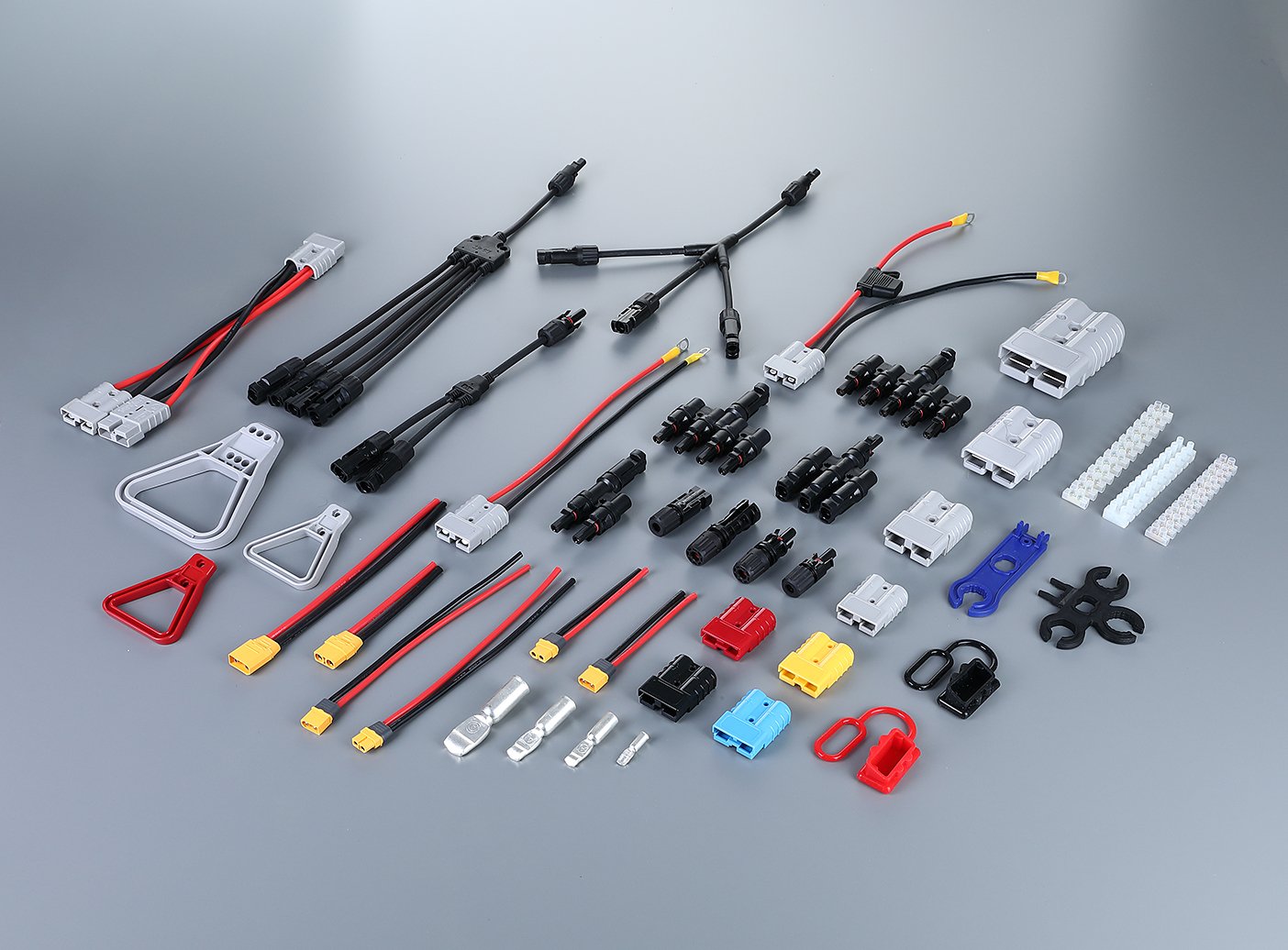
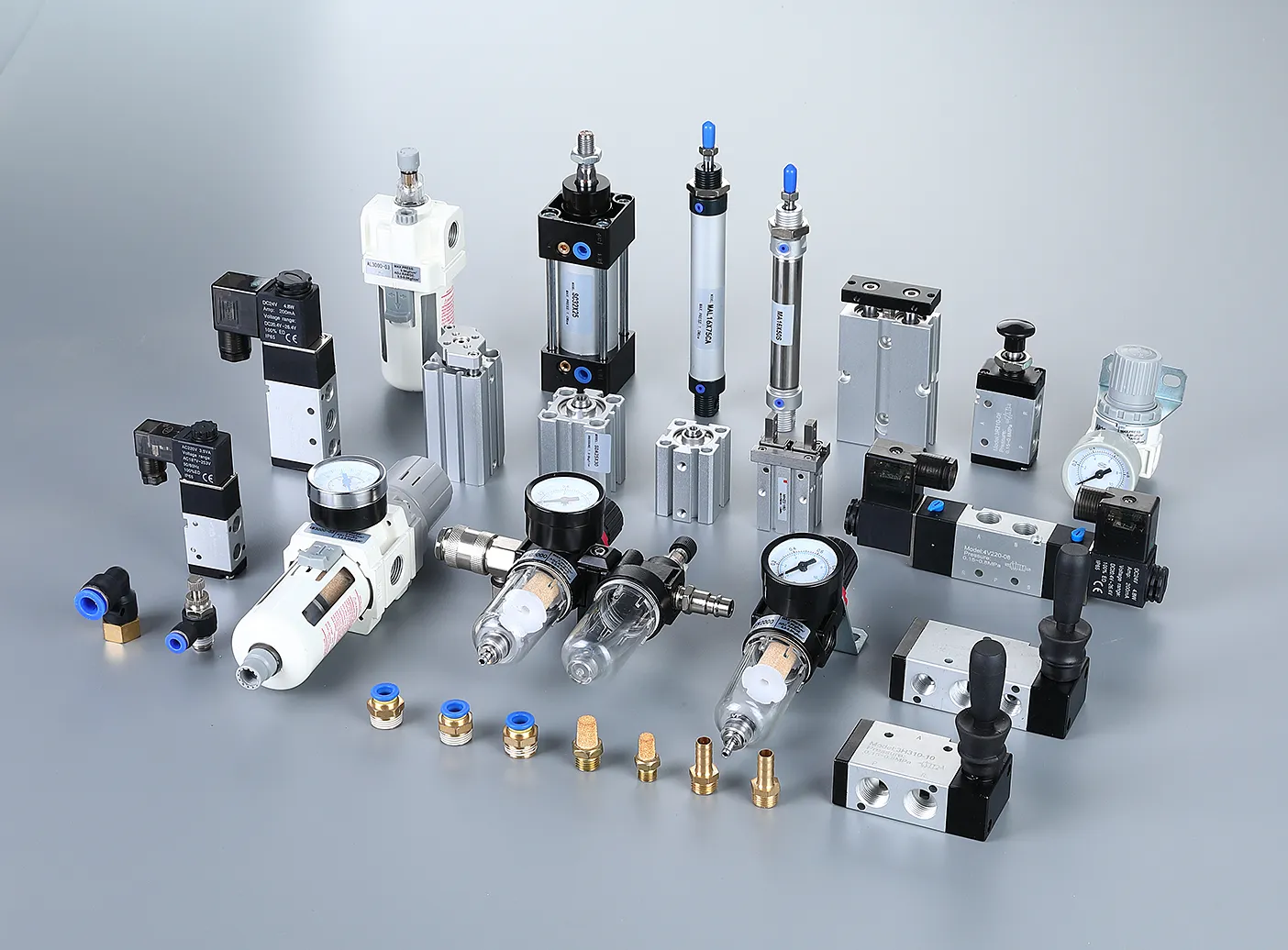
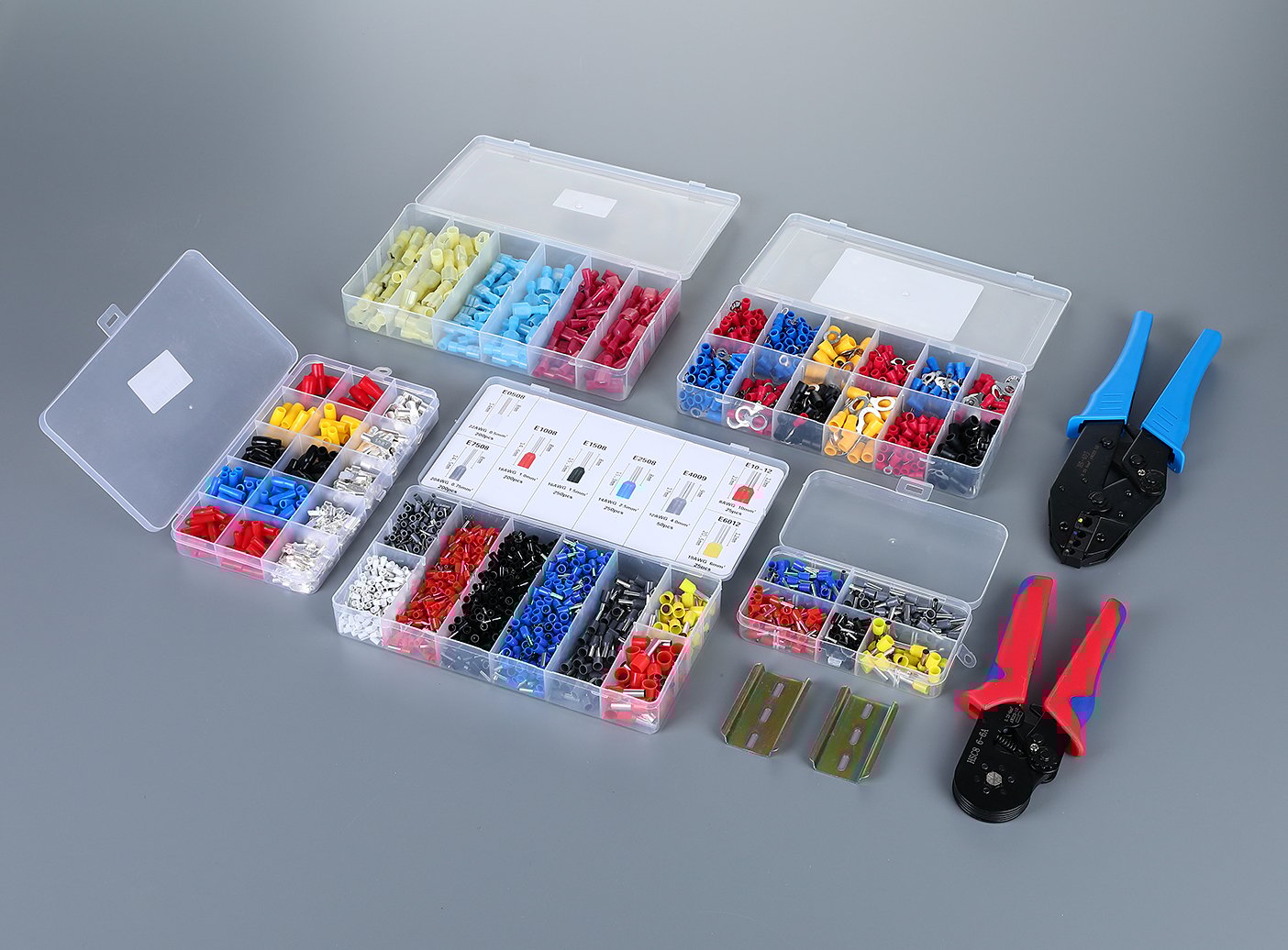

Across various industries, the world manufacturing environment is experiencing a seismic change. By the year 2026, the line between conventional production and the “smart” industrial ecosystem has been blurred. At the heart of this evolution lies the discrete manufacturing process—a sector responsible for nearly everything we touch, from the smartphones in our pockets to the electric vehicles on our streets.
This master guide examines the complexity of this type of manufacturing, offers practical examples of discrete manufacturing that characterize the present-day economy, and provides strategic suggestions on how businesses can use automation and digital transformation to attain sustainable growth.
Understanding Discrete Manufacturing Through Real-World Industrial Context
Discrete manufacturing refers to the manufacture of distinct items and individual units. In contrast to process manufacturing, which is based on formulas and thermal or chemical changes (such as refining oil or brewing beer), this production method is defined by assembling individual parts and distinct components.
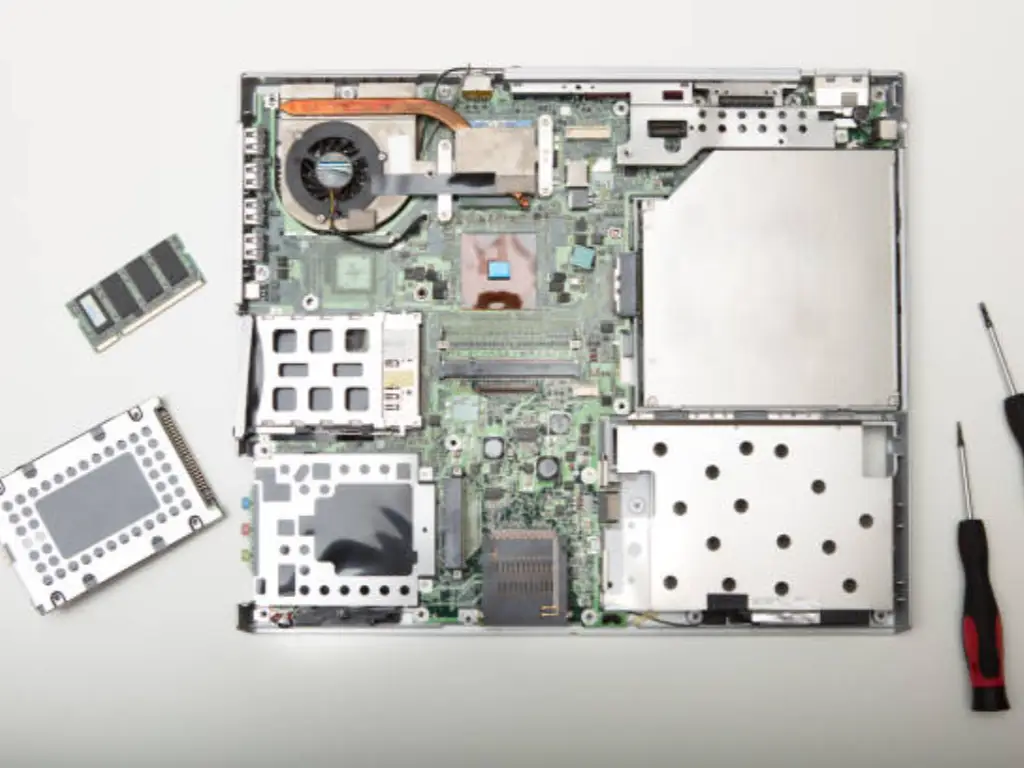
The characteristic of a discrete product in a real-life industrial setting is that it can be disaggregated. When you disassemble a laptop, you are left with a screen, a motherboard, and a chassis. These are items that can be counted; they are not measured by volume like a liquid. This “unit-based” logic determines all the key elements of the production environment, including the layout of the factory floor and the overarching supply chain management.
The discrete manufacturing landscape in 2026 is no longer only about “putting things” together. It entails high-precision synchronization across the entire discrete manufacturing process. Regardless of whether it is a low-volume, high-complexity product such as a satellite or high-volume consumer goods such as a fitness tracker, the workflow is a series of workstations in which particular parts are added according to bills of materials (BOM) and a highly defined Routing path.
7 Leading Discrete Manufacturing Examples Shaping Today’s Economy
In 2026, discrete manufacturing industries are defined by their diversity. From the microscopic precision of a medical sensor to the massive scale of an aircraft wing, these seven sectors illustrate the complexity and strategic importance of unit-based production. Below are the most prominent examples of discrete manufacturing industries and the types of products they deliver to the global market.
- Automotive and Electric Vehicles (EVs)
The automotive industry is the benchmark of discrete production. But the logic within has changed. Whereas traditional Internal Combustion Engine (ICE) vehicles were concerned with the complexity of the mechanical drive train, the 2026 EV future is about electronics integration and battery modularity.
- Manufacturing Challenge: Synchronizing the assembly of a 1,200-pound battery pack with a lightweight aluminum chassis. This involves robust robotics and high-resolution sensors to ensure quality control and make sure that thermal management systems are airtight.
- Key Trend: “Giga-casting,” in which large portions of the car frame are cast as one, with the result that fewer individual parts are made, but each assembly step is more critical to the finished product.
- Aerospace and Defense (A&D)
A&D is the other extreme of discrete manufacturing complexity. A modern commercial jet is not merely a machine, it is a “system of systems” that has more than 4 million separate parts which are supplied by thousands of suppliers around the world.
- Manufacturing Challenge: Extreme traceability. Every single bolt, sensor, and composite panel must have a digital birth certificate to ensure the safety of the final product.
- Key Trend: The “Digital Thread,” in which the 3D design models are directly connected to the robotic drilling and assembly stations, which guarantee zero-margin-of-error accuracy.
- High-Tech and Consumer Electronics
This sector is characterized by the highest volume and the fastest throughput. In factories producing smartphones or wearables, components are measured in microns, and assembly happens at the speed of milliseconds.
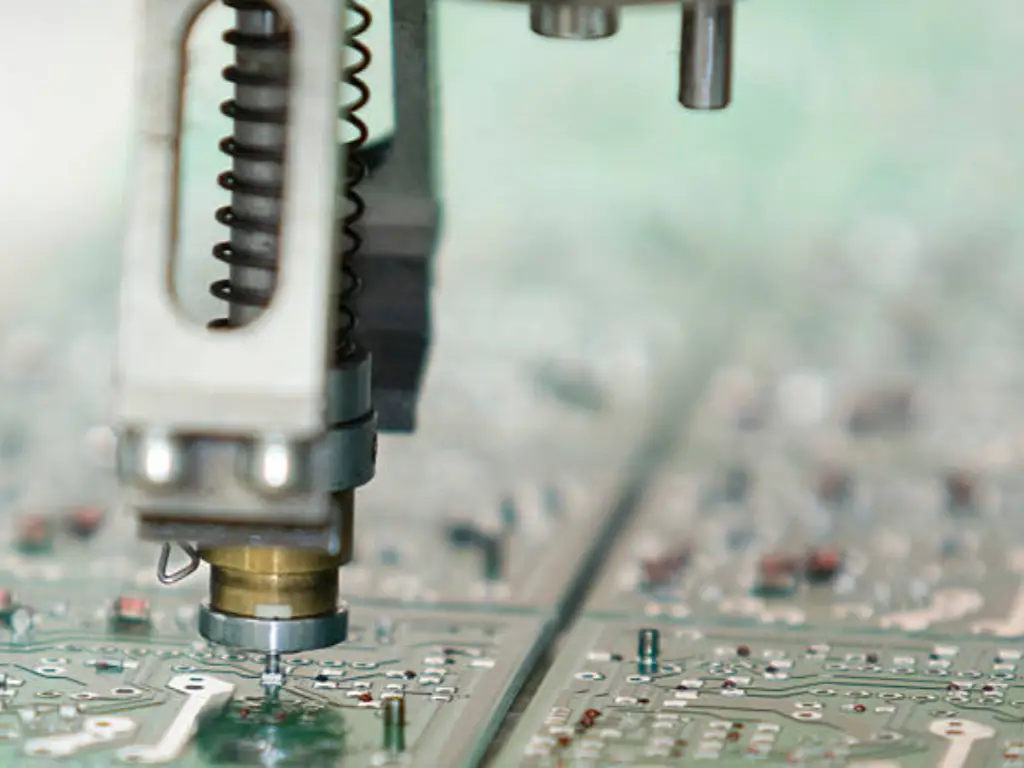
- Manufacturing Challenge: Miniaturization and Surface Mount Technology (SMT). Placing thousands of tiny capacitors onto a PCB requires high-speed optical sensors and vacuum-based pick-and-place machines to create the finished product.
- Key Trend: Foldable and flexible electronics. The production process has become more of a “soft” discrete assembly whereby the components are required to be attached to the flexible substrates without losing their connectivity.
- Medical Devices and Life Sciences
Medical device manufacturing is a mix of insulin pumps and high-tech surgical robots such as the Da Vinci system. This industry requires stringent quality control to meet life-saving standards.
- Manufacturing Challenge: Regulatory compliance (ISO 13485). The production environment must often be a “cleanroom,” where airflow, humidity, and particles are strictly controlled. All the sensors employed on the line, including the proximity or photoelectric switches, should be capable of enduring stringent cleaning procedures.
- Key Trend: Custom implants. 3D-printed distinct components (such as titanium hip joints) that are made to fit the anatomy of a particular patient.
- Industrial Machinery and Robotics
This is “manufacturing to manufacturers”. It deals with manufacturing of CNC machines, packaging systems and industrial robots. These are usually Make-to-Order (MTO) products, i.e. no two of them are identical.
- Manufacturing Challenge: Handling “Engineer-to-Order” processes. Bills of materials for an industrial packaging machine may vary in the middle of the manufacturing process depending on the size or speed of the bottle the client needs.
- Key Trend: Collaborative Robots (Cobots). The manufacturers are currently developing robots that will be safe to work with humans, which will demand an entire new set of safety sensors and tactile feedback devices.
- Renewable Energy Equipment
Discrete manufacturing is driven by the green transition on a massive scale. The manufacture of one wind turbine nacelle consists of the assembly of huge gearboxes, generators, and control systems, whereas the production of solar panels is centered on high-speed lamination and framing.
- Manufacturing Challenge: Scale and Logistics. How do you manage a discrete assembly line for a turbine blade that is longer than a Boeing 747? This requires specialized heavy-lifting automation and long-range sensors to track component alignment.
- Key Trend: Floating Wind Foundations. A new frontier in discrete manufacturing where ship-building techniques meet high-tech energy assembly.
- Consumer Appliances and Durables
White goods like refrigerators and HVAC systems are the backbone of the “Lean” discrete factory. The focus here is on high-volume efficiency and supply chain management.
- Manufacturing Challenge: Customization versus speed. The consumers of today desire a refrigerator of a certain finish or a “smart” screen, yet the factory has to produce thousands of units a day. This needs fast assembly lines capable of changing “recipes” (BOM configurations) on the fly.
- Key Trend: IoT-Based Appliances. Connecting all appliances implies that each end product now needs a micro-controller and a set of internal sensors.
Discrete vs. Process Manufacturing: Key Differences and Hybrid Models
Although these two types of manufacturing usually co-exist in the same global supply chain, their logic of operation is completely different. Understanding these differences is essential for choosing the right erp software and management strategy.
Comparison Table: Discrete vs. Process Manufacturing
| Feature | Discrete Manufacturing | Process Manufacturing |
| Output Type | Distinct units (Cars, Phones, Parts) | Undifferentiated quantities (Oil, Juice, Steel) |
| Primary Document | Bill of Materials (BOM) | Recipe or Formula |
| Measurement Unit | Count / Each | Volume / Weight / Mass |
| Reversibility | Components can often be disassembled | Ingredients cannot be separated after mixing |
| Production Flow | Discontinuous (Station to Station) | Continuous or Batch-based |
| Key Challenge | Component synchronization & assembly | Consistency, temperature & pressure control |
The Rise of the Hybrid Model
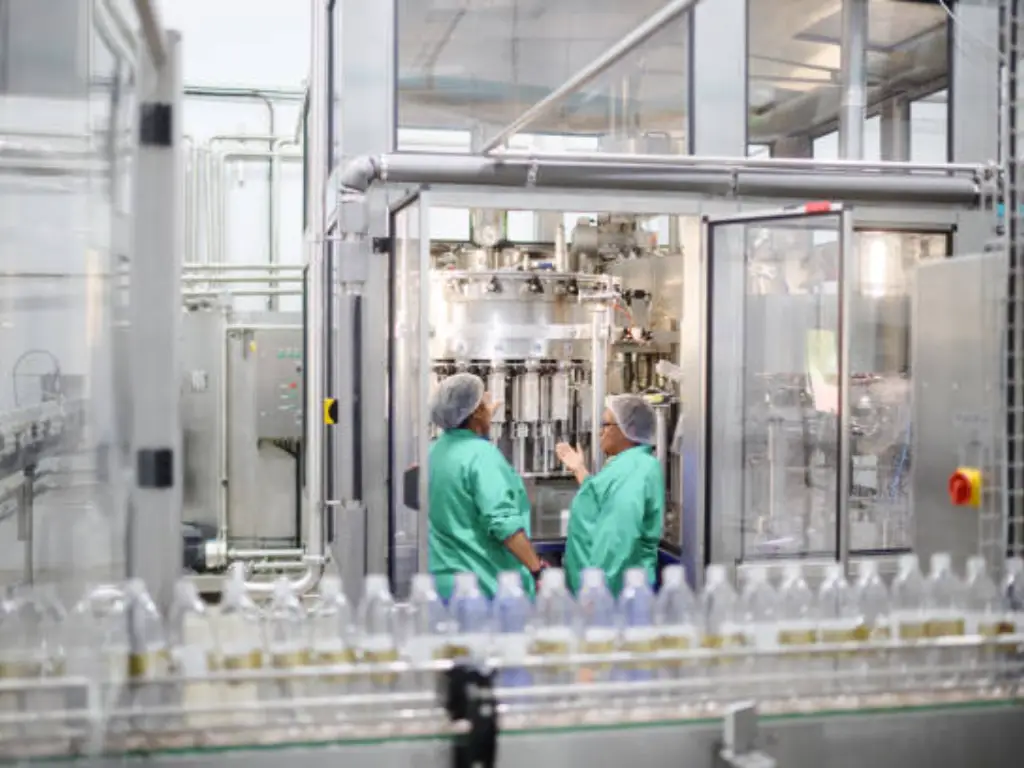
In 2026, we see a significant rise in Hybrid Manufacturing. Consider a pharmaceutical company: the creation of the medicine itself is a process, but the packaging—putting pills into boxes and then onto pallets—is a discrete process. Modern factories must now manage both “recipes” and “BOMs” within a single digital ecosystem to ensure operational efficiency.
Managing Complex BOMs and Workflows in Discrete Environments
In the discrete manufacturing process, the Bill of Materials (BOM) is the “Single Source of Truth.” As products become smarter, the BOM has changed from a simple list of mechanical parts to a complex map containing software versions and firmware.
To handle these complicated workflows and improve inventory management, it is necessary to focus on:
- Engineering Change Management: Ensures that when a design is changed, the shop floor is immediately given the new specs to prevent scrap and maintain quality control.
- Multi-Level BOMs: Managing individual components that make up sub-assemblies (e.g., an engine within a car’s larger BOM).
- Routing Optimization: Determining the most efficient route a product follows across different work centers to reduce “work-in-progress” (WIP) inventory.
Overcoming Production Bottlenecks in High-Volume Assembly Lines
In high-volume manufacturing operations, the distinction between a profitable quarter and an operating loss can be as little as “Takt Time”—the rate at which you need to finish a product to satisfy customer demand. This rhythm is disrupted when there are bottlenecks. To defeat them, we must examine the technical root causes afflicting modern assembly lines.
- The “Ghost Stop” Phenomenon: Signal Jitter and False Detection
Assembly lines are high-speed environments where sensors are subjected to “noise” from vibrations or EMI.
- The Technical Barrier: Standard sensors are usually not able to cope with the problem of “Signal Jitter”, where the sensor is unable to differentiate between a valid workpiece and a temporary vibration. This causes a false positive or negative, which causes an emergency stop.
- Operational Impact: These “Ghost Stops” reduce operational efficiency. Even a 30-second stop can result in a 10-15% reduction in Overall Equipment Effectiveness (OEE) over time.
- Power Quality Instability: The “System Reset” Trap
Within manufacturing operations, industrial power grids are notoriously “dirty,” characterized by surges and switching noise.
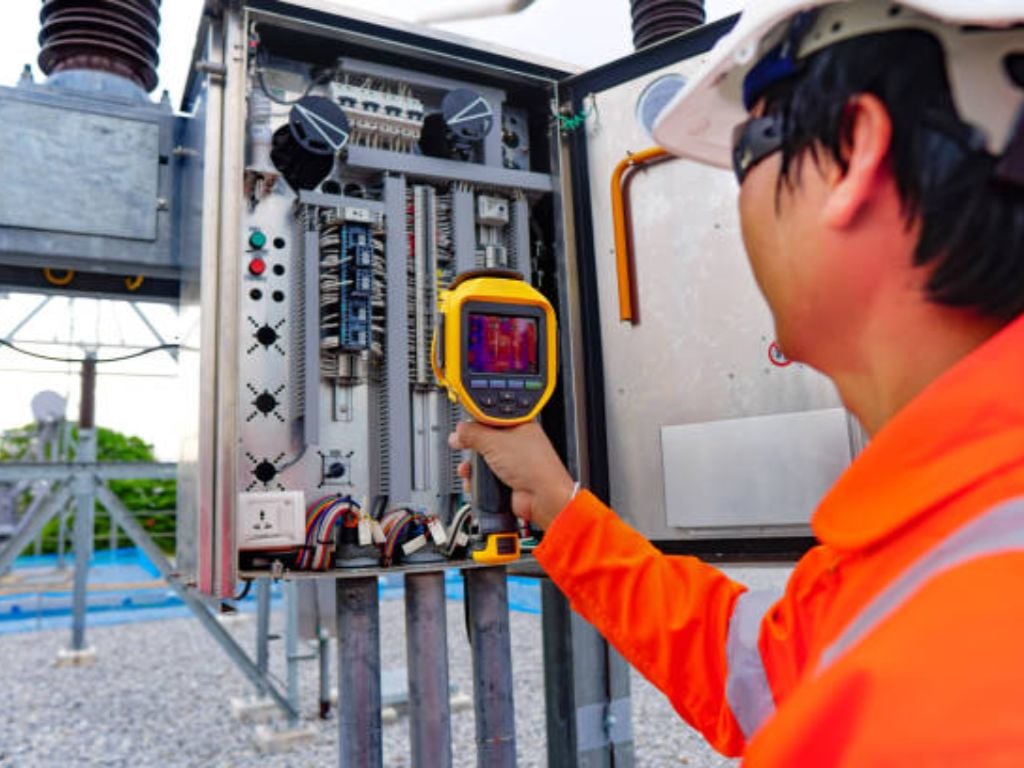
- The Technical Barrier: When the input power to a control cabinet fluctuates even slightly outside of tolerance, the PLC may undergo a “soft reset” or lose its memory stack.
- Operational Impact: A power crash usually needs a manual reboot and a “line purge,” where all WIP must be cleared to guarantee the quality of the finished product.
- Cumulative Fatigue: The High-Cycle Maintenance Trap
In such industries as automotive or consumer durables, mechanical parts such as limit switches, micro-switches and buttons are operated thousands of times per day.
- The Technical Barrier: Low-grade components contain poor contact materials which oxidize or mechanical springs which lose tension with time. These components become “sticky” as they approach their failure limit and cause intermittent signals which are infamously hard to diagnose by maintenance personnel.
- Operational Impact: Unplanned downtime for a $10 switch can cost $10,000 in lost production time, trapping manufacturers in “reactive maintenance” instead of continuous improvement.
- Integration Friction: The “Vendor Patchwork” Bottleneck
A large number of production lines are constructed with a “patchwork” of components of a dozen different vendors.
- The Technical Barrier: Engineers face “Compatibility Friction”—where the sensor from Brand A requires a specific mounting bracket, and the power supply from Brand B doesn’t quite fit the DIN rail spacing, or the wiring logic is inconsistent.
- Operational Impact: This prolongs the time needed to upgrade the line and makes the inventory of spare parts more difficult as the factory has to keep hundreds of different SKUs to keep the line running.
OMCH Automation: Enhancing Line Precision and Reducing Downtime
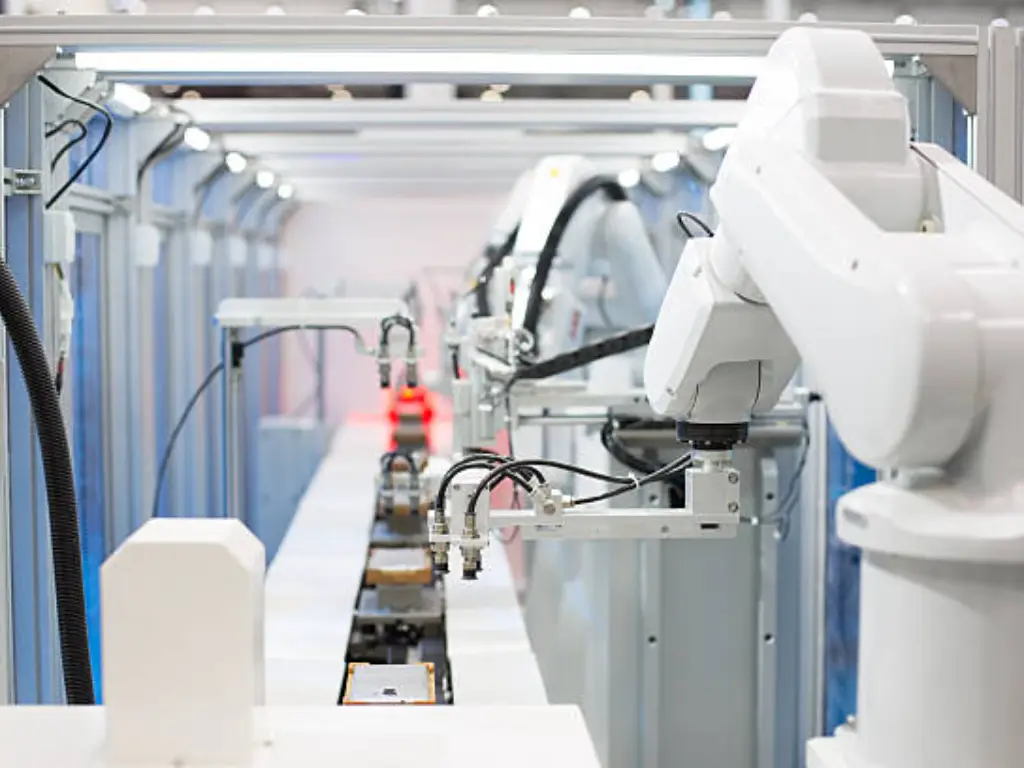
Identifying these bottlenecks is the first step; solving them requires hardware that matches the sophistication of your digital strategy. This is where OMCH’s industrial heritage becomes a decisive advantage. Being a full-fledged manufacturer with almost forty years of industrial experience, OMCH offers the hardware base that is needed to remove the above-mentioned bottlenecks. We do not simply sell parts but we offer the reliability that will not interrupt your strategic growth.
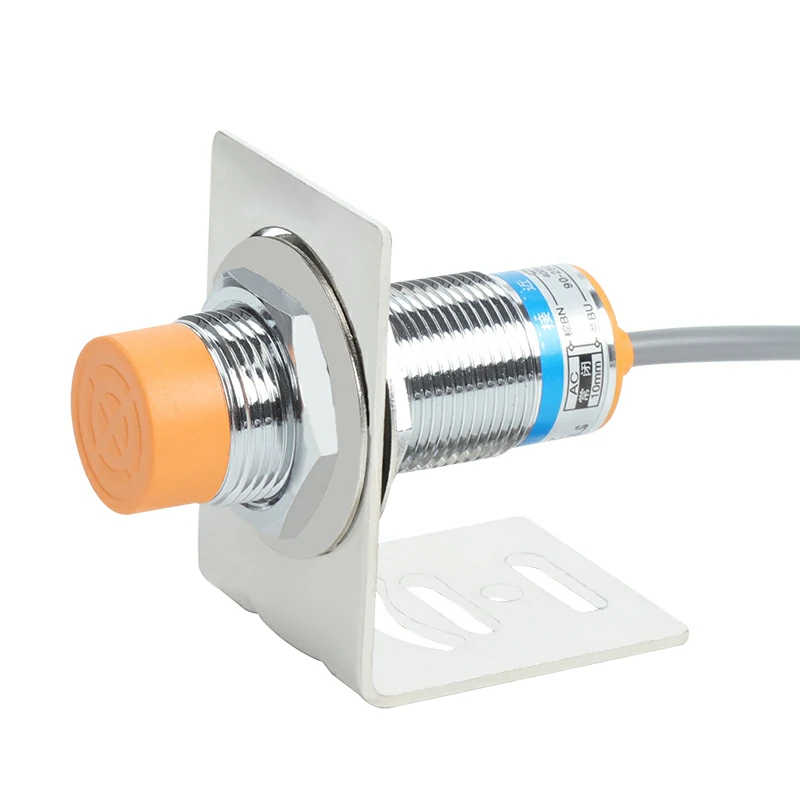
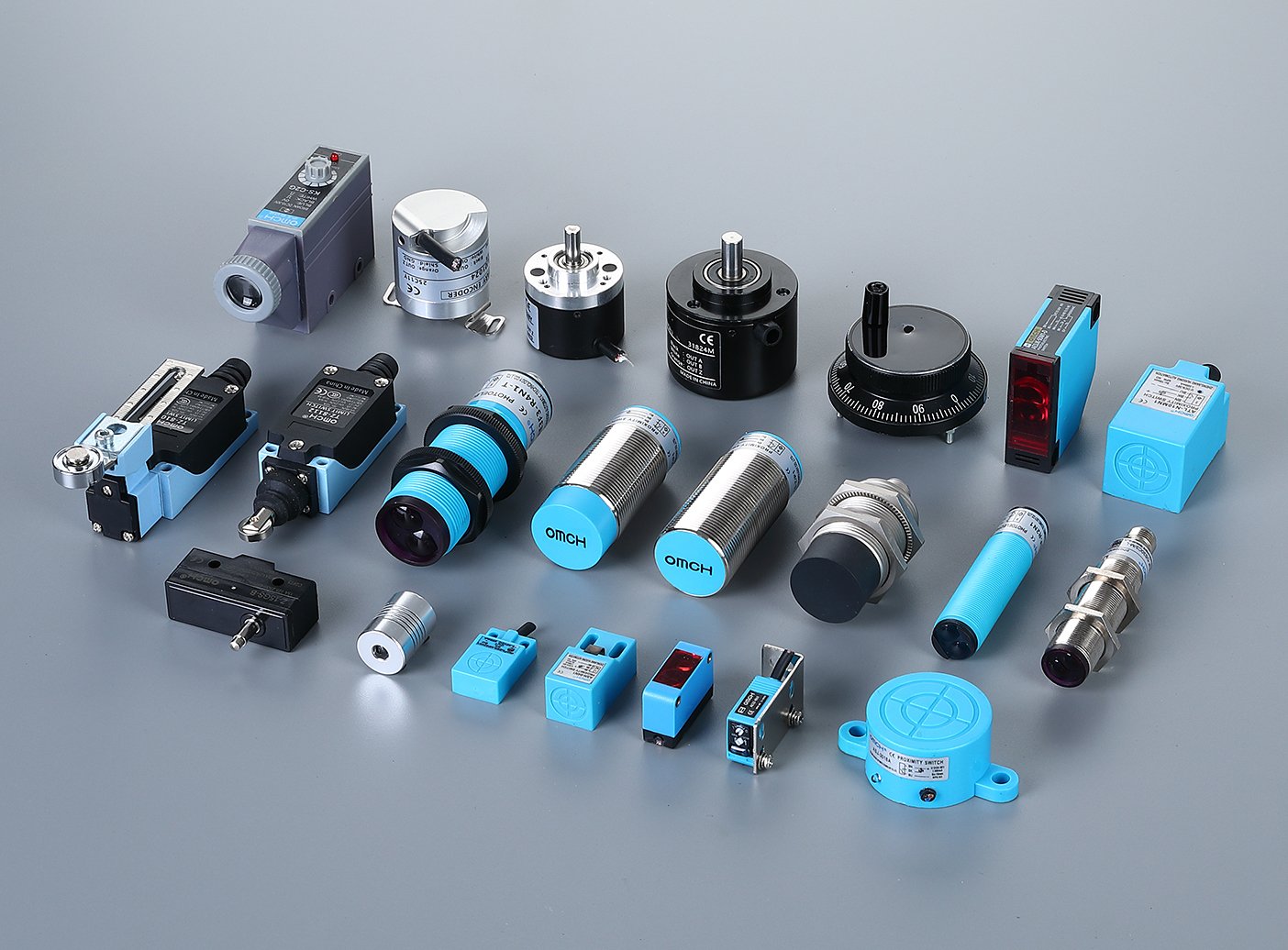
- Solving Signal Instability with Precision Sensing: To overcome the problem of “Ghost Stops”, OMCH provides a list of more than 3,000 SKUs, such as specialized Inductive and Capacitive Proximity Sensors. Our sensors are designed to IEC and GB/T14048.10 standards and have advanced filtering technology to reject environmental noise so that your “eyes on the line” are not blurred in 24/7 high-intensity operations.
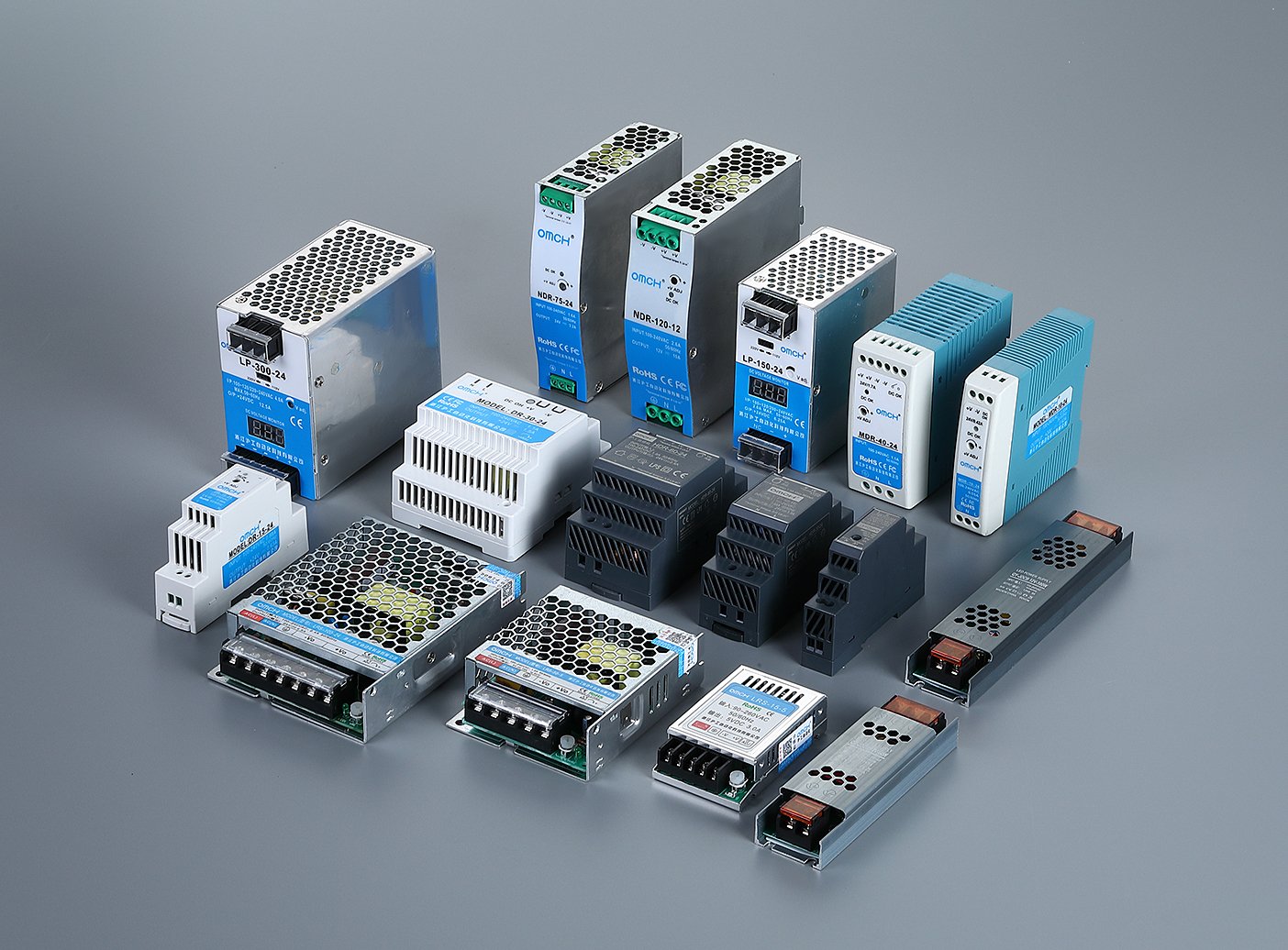
- Guarding Control Systems with Robust Power Solutions: We address “Power Quality” issues with our high-performance AC-DC DIN Rail Power Supplies. Since 1986, we have refined our power conversion technology to meet CE and RoHS certifications, providing a stable, “fortress-like” energy supply for your PLCs and controllers, effectively eliminating unscheduled reboots.
- Extending Lifecycles with High-Durability Components: OMCH Limit Switches and Micro-switches are designed for the “High-Cycle” reality of modern manufacturing. Using premium contact materials, our components are tested across millions of cycles. Backed by our ISO9001 certified 8,000-square-meter factory and a one-year warranty, we provide the mechanical endurance that reduces your MTTR (Mean Time to Repair).
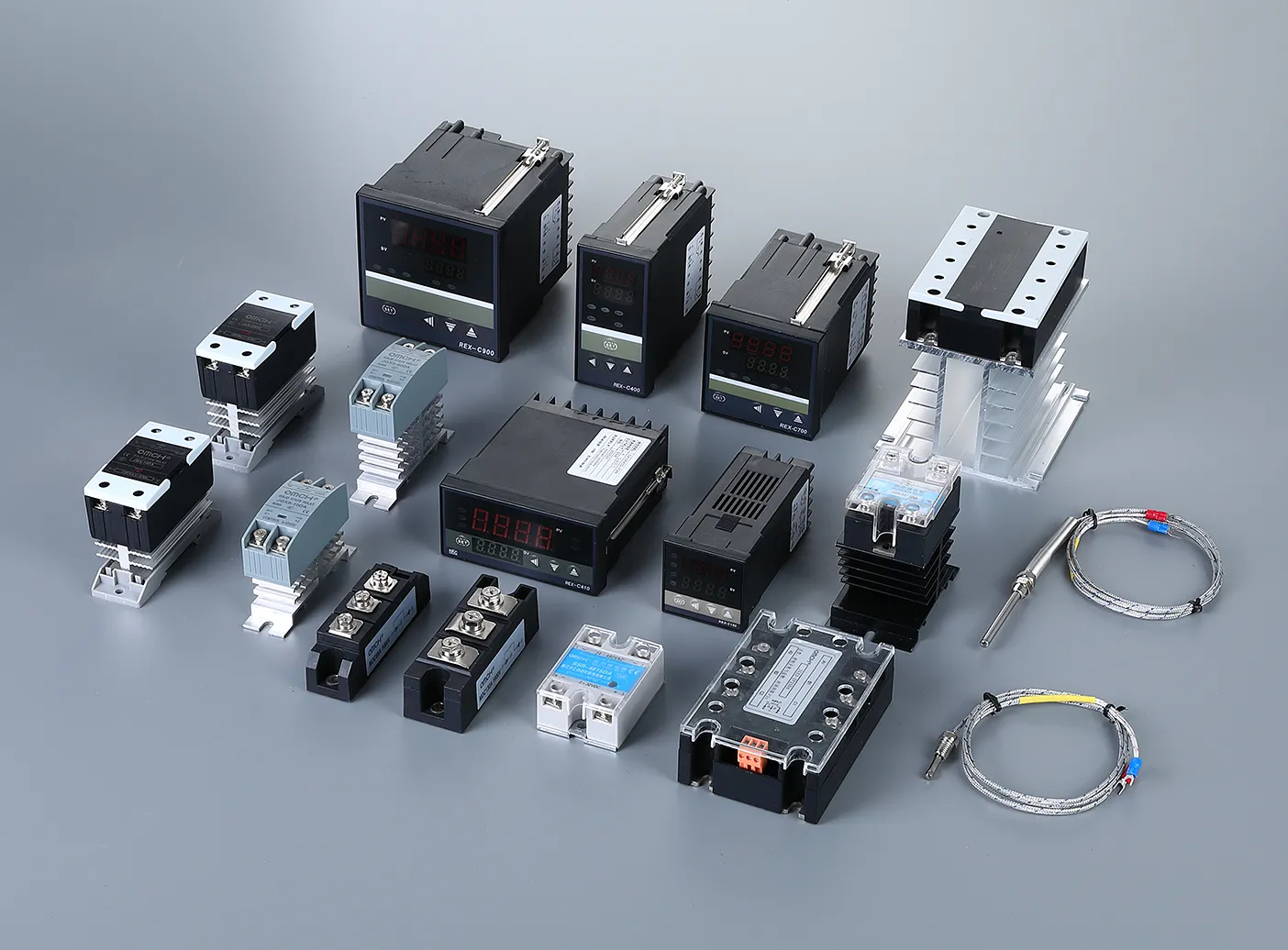
- Streamlining Procurement with the “One-Stop-Shop” Advantage: We remove the “Friction of Integration”: We provide a full ecosystem, including power supplies and distribution products (MCBs/ACBs), sensors, relays, and pneumatic actuators. This systemic integration makes sure that your parts are in harmony. Our global network of 86 branches in China and presence in more than 100 countries means that the right part is always on hand, and that the “Supply Chain Bottleneck” is solved to 72,000+ customers around the globe.
AI and Digital Twins: Transforming Modern Discrete Production Lines
With the rest of 2026 ahead of us, Artificial Intelligence (AI) and Digital Twins are not a thing of the past anymore, but a necessity. A Digital Twin is a computer simulation of a real production line. It enables managers to model changes prior to their occurrence on the floor.
Nevertheless, a Digital Twin is as good as the information it gets. This is the reason why quality sensors and controllers are essential. AI algorithms can:
- Predictive Maintenance: Identify that a motor is likely to fail before it happens, based on vibration and heat data.
- Dynamic Rescheduling: The production flow is automatically rescheduled in case a delay in the supply chain is identified.
- Quality Vision Systems: Inspections of parts with defects are performed with the help of AI at a speed that a human eye cannot achieve.
The physical hardware base serves as the “eyes and ears,” using digital tools to convert raw physical movements into actionable insights for continuous improvement.
Sustainable Manufacturing: Circularity and Disassembly in Discrete Systems
Discrete manufacturers have made sustainability a key strategic pillar. In contrast to process manufacturing, where re-processing chemicals can be referred to as “re-cycling”, discrete manufacturing is concerned with Circularity and Disassembly.
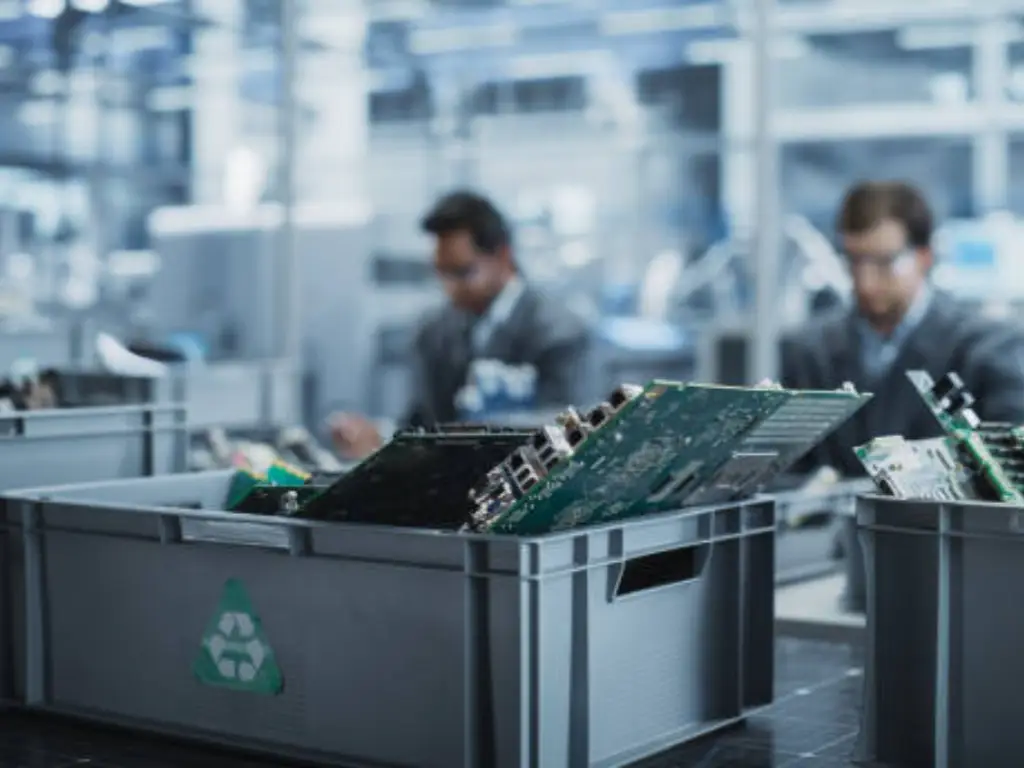
The concept of Design for Disassembly (DfD) allows discrete manufacturing companies to take back an end product at the end of its life cycle and reuse individual components.
- Remanufacturing: Replacing the parts of a machine that are worn out and selling it as “certified pre-owned.”
- Closed-Loop Recycling: Turning the aluminum chassis of an old laptop back into a new one.
Here, automation is significant. The sensors and robotics of automated disassembly lines will recognize and sort parts to be reused, and the “Green Factory” will be a profitable reality in 2026.
Selecting the Right ERP Strategy for Your Discrete Business
The last component of the strategic puzzle is the Enterprise Resource Planning (ERP) system. In the case of a discrete manufacturer, the ERP should be focused. It needs to be handled:
- Serial Number Traceability: Essential for recalls and warranty management.
- Advanced Planning and Scheduling (APS): To control the thousands of variables in a multi-station assembly line.
- Inventory Accuracy: Since the absence of a single screw worth $0.05 can halt a $50,000 machine.
When choosing between various erp systems, prioritize scalability and the ability to integrate with digital tools. Your hardware should communicate with your software to create a “connected enterprise” where the boardroom is fully aware of what is happening on the loading dock.
Final Thoughts for Strategic Growth
The world of discrete manufacturing industries is an arena of immense complexity but also immense opportunity. By mastering best practices in BOM management, investing in high-precision components, and embracing the digital twin trends of 2026, discrete manufacturing companies can transform their operations into agile, data-driven growth engines that ensure long-term customer satisfaction.
Ready to eliminate bottlenecks on your assembly line? Contact our technical service teams today for a customized sensor and control solution tailored to your discrete manufacturing needs.


 English
  Arabic
  Turkish
  Russian
  Spanish
  French
  Indonesian
  Portuguese