


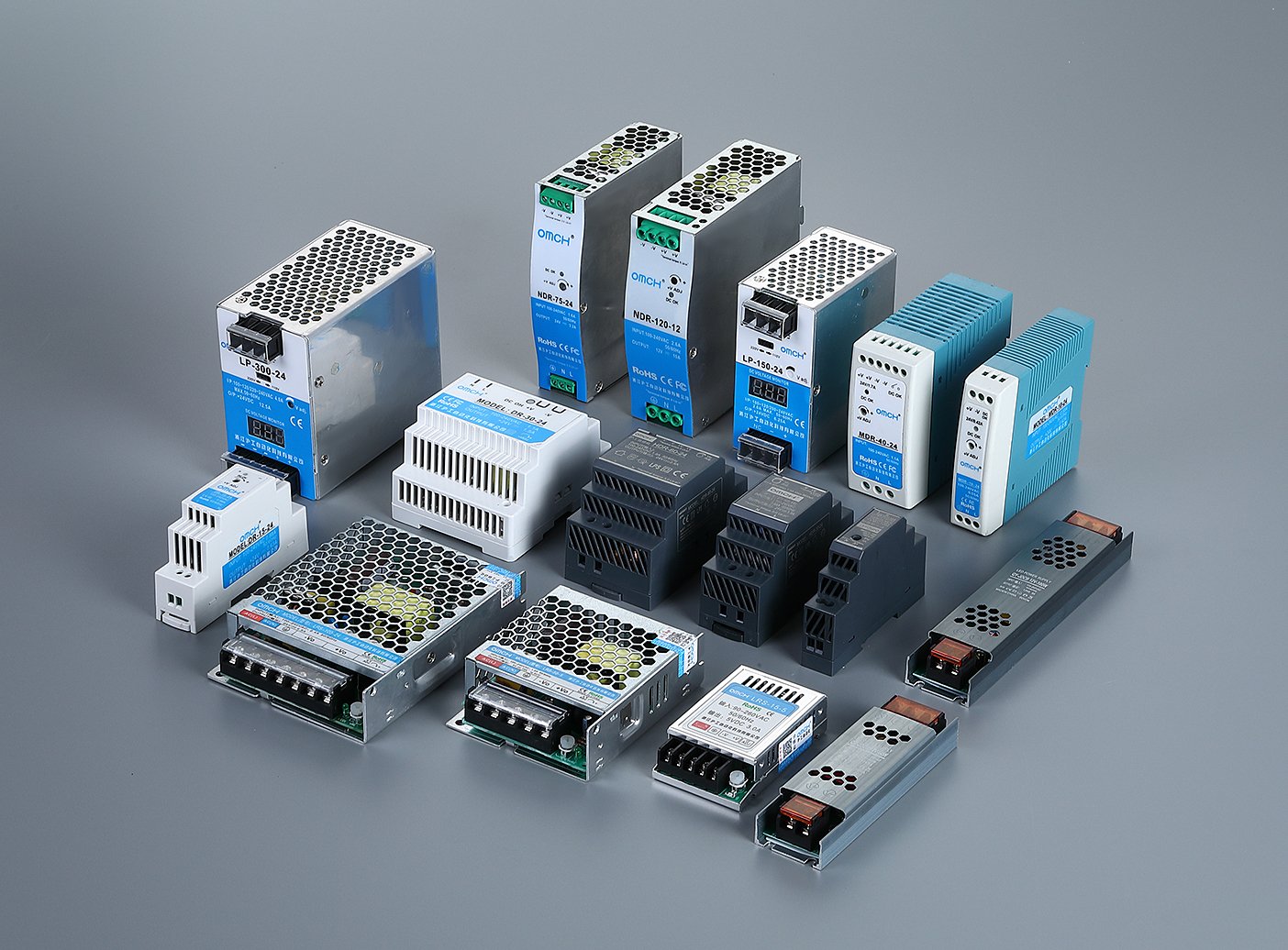

Se você fabrica equipamentos industriais, projeta painéis de controle ou adquire componentes para produção OEM, certamente já se deparou com as séries LRS e RSP da Mean Well. Essas são as duas fontes de alimentação em caixa mais frequentemente comparadas no catálogo da Mean Well — e por um bom motivo. Uma delas é a opção econômica e robusta que alimenta inúmeras máquinas em todo o mundo. A outra é a linha premium repleta de recursos, capaz de atender a diversas aplicações, desde o corte a laser até racks de servidores.
Mas escolher entre eles não é tão simples quanto “compre o melhor, se puder pagar”. A resposta certa depende das suas necessidades de potência, das exigências regulatórias regionais e — como abordaremos em detalhes — de alguns dados reais de confiabilidade que não constam em nenhuma ficha técnica.
Entendendo as duas séries — O que realmente são o LRS e o RSP
Tanto a série LRS quanto a série RSP pertencem à família de fontes de alimentação do tipo fechado da Mean Well. Ambas têm a mesma função básica: converter a energia da rede elétrica CA em saída CC estável para equipamentos industriais. No entanto, elas se situam em extremos opostos da estratégia de produtos da Mean Well.
Pense nisso como a linha de produtos da Toyota. O LRS é o Corolla — acessível, simples e confiável justamente porque há menos coisas que podem dar errado. O RSP é o Lexus — mais potente, repleto de recursos e projetado para aplicações exigentes, nas quais o desempenho é mais importante do que o custo inicial.
- Categoria econômica — projeto com custo otimizado
- 35 W – 350 W: faixa de potência padrão
- Não-PFC — arquitetura mais simples
- Resfriamento por convecção natural (menos de 200 W)
- Gama média a alta — plataforma com todos os recursos
- 75 W – 3.000 W, até 9.000 W em paralelo
- PFC ativo (PF > 0,97)
- Controle remoto, programação, paralelo
A maior diferença técnica — e aquela que exclui o LRS como opção em certos cenários — é a correção do fator de potência. É por aí que qualquer comparação séria precisa começar.
Principais diferenças técnicas — PFC, eficiência e desempenho energético
Antes de entrarmos em detalhes sobre as especificações individuais, eis o quadro de decisão que resolve cerca de 80% dos cenários de escolha entre LRS e RSP: O PFC é o primeiro filtro. Se a sua aplicação exigir correção do fator de potência — seja por questões de conformidade regulatória ou de infraestrutura elétrica —, o LRS não é uma opção, por mais atraente que seu preço possa parecer. Se a correção do fator de potência não for necessária, o LRS quase sempre será a melhor opção em termos de custo-benefício.
PFC e eficiência — o fator decisivo na maioria dos casos
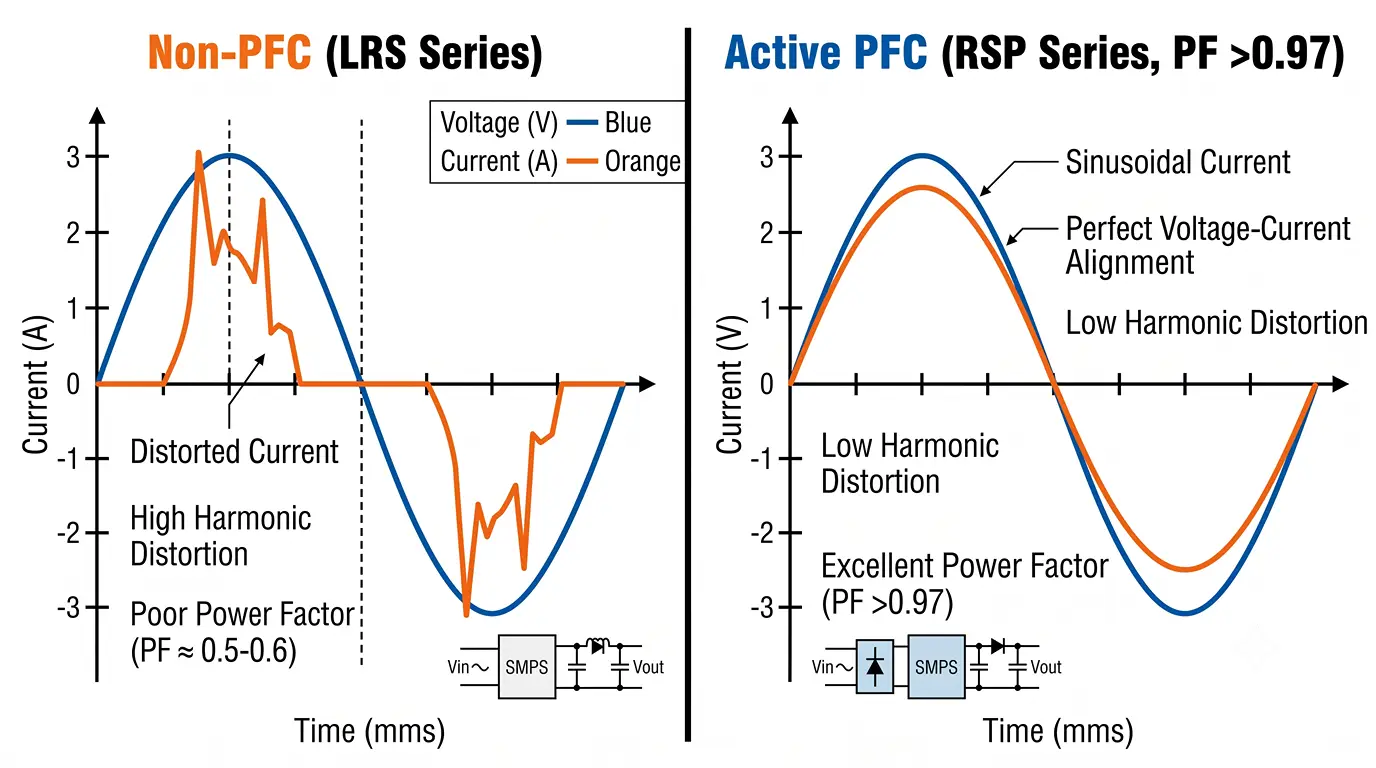
A correção do fator de potência é o diferencial mais mal compreendido entre essas duas séries. Muitos compradores confundem a PFC com eficiência ou qualidade de saída, mas a PFC não é nenhuma dessas coisas. Trata-se de uma medida que indica com que precisão a fonte de alimentação retira corrente da rede elétrica CA — mais especificamente, quanta distorção harmônica ela injeta de volta na rede elétrica.
A série LRS utiliza um projeto sem PFC. Sua forma de onda de corrente de entrada é não linear, com um fator de potência em torno de 0,65. Isso é perfeitamente adequado para equipamentos autônomos em regiões sem regulamentações rigorosas quanto a harmônicas. A série RSP, por outro lado, incorpora um circuito PFC ativo que modela a corrente de entrada para que ela siga de perto a forma de onda da tensão, alcançando um fator de potência de 0,97 a 0,99.
Em termos de eficiência, a diferença é real, mas modesta. O LRS-350-24 atinge uma eficiência de aproximadamente 87,5% com entrada de 230 VCA e 86% com 115 VCA. O RSP-320-24 atinge cerca de 901 TP3T. Essa diferença de 2 a 4 pontos percentuais faz diferença em grande escala — uma fábrica que opera dezenas de fontes de alimentação 24 horas por dia, 7 dias por semana, obterá economia de energia mensurável com o RSP —, mas, para a maioria das aplicações com uma única unidade, a diferença de eficiência por si só raramente justifica o preço mais alto.
Um detalhe contraintuitivo: o circuito PFC do RSP consome corrente em modo de espera mesmo quando a saída está ociosa, o que significa que seu consumo de energia sem carga é, na verdade, maior do que o do LRS (que consome menos de 0,75 W em modo de espera em toda a série). Se a sua aplicação fica por um tempo significativo em modo de espera, o LRS é a opção mais econômica em termos de energia.
Faixa de potência, ondulação e qualidade da saída
Se o PFC for o primeiro filtro, a exigência de potência é o segundo. A série LRS abrange de 35 W a 350 W em sua linha padrão, com alguns mercados oferecendo modelos estendidos de 1.200 W. A série RSP começa em 75 W e chega até 3.000 W por unidade — com suporte para operação em paralelo de três unidades nos modelos de 1.000 W ou mais, proporcionando até 9.000 W no total.
No caso do par mais comumente comparado — o LRS-350-24 (350 W, 24 V, 14,6 A) e o RSP-320-24 (320 W, 24 V, 13,3 A) — os números revelam uma história interessante:
O RSP oferece uma saída mais limpa — ondulação de 150 mVp-p contra os 200 mVp-p do LRS —, o que é importante para circuitos analógicos sensíveis ao ruído. Mas há uma nuance que raramente aparece em artigos comparativos: a arquitetura de dupla frequência do RSP (estágio PFC comutando a aproximadamente 80 kHz e estágio PWM a aproximadamente 65 kHz) pode produzir frequências de intermodulação em torno de 15 kHz. Em sistemas analógicos de precisão que operam na faixa de CC a 50 kHz, esse produto de intermodulação pode, na verdade, introduzir mais ruído de baixa frequência do que o projeto de frequência única mais simples do LRS. Para aplicações de precisão com potência inferior a 75 W, nas quais o PFC não é obrigatório, o LRS pode, paradoxalmente, oferecer resultados mais limpos.
Recursos avançados — O que o RSP oferece e o LRS não
Os recursos adicionais do RSP não são meras melhorias cosméticas. Cada um deles se aplica a um cenário industrial específico. A questão é se a sua aplicação realmente se enquadra em algum desses cenários — pois, caso contrário, você estará pagando por funcionalidades que ficarão ociosas dentro do gabinete.
Controle remoto e monitoramento remoto — Quando você precisa gerenciar a energia à distância
O controle remoto de liga/desliga permite que um sinal externo de corrente contínua (CC) alterne a saída da fonte de alimentação sem a necessidade de desligar fisicamente a entrada de corrente alternada (CA). Esse recurso está disponível nos modelos RSP-75, RSP-100, RSP-150 e RSP-500. Um exemplo prático de aplicação são as linhas de produção automatizadas, nas quais um PLC central precisa sequenciar a ativação ou o desligamento de fontes de alimentação individuais como parte de um processo coordenado. Se a sua aplicação for uma máquina autônoma com um interruptor manual, esse recurso não agrega nenhum valor.
O Remote Sense — disponível no RSP-500 e em todos os modelos de potência superior — resolve um problema diferente. Quando uma fonte de alimentação fica instalada em um gabinete de controle e sua saída de corrente contínua percorre vários metros de cabo para chegar à carga propriamente dita, a resistência do cabo causa uma queda de tensão. Uma fonte de 24 V pode fornecer apenas 23,2 V na extremidade da carga. O Remote Sense adiciona um par de fios finos de detecção que monitoram a tensão diretamente nos terminais da carga. A fonte de alimentação aumenta automaticamente sua saída para compensar a queda no cabo, garantindo que a carga receba exatamente a tensão nominal.
Isso é realmente valioso para configurações de equipamentos distribuídos — pense em um longo sistema de esteira transportadora em que uma fonte de alimentação abastece sensores e atuadores espalhados por 10 metros. Para uma máquina compacta, em que a fonte de alimentação fica a poucos centímetros da carga, esse recurso é irrelevante. Como disse um participante do fórum “Aussie Christmas Lighting”: “A menos que você esteja viajando pelo mundo com sua instalação de iluminação, não vejo necessidade de pagar a mais por isso.”
Programação de saída, operação paralela e limitação de corrente constante
Na faixa mais alta da linha RSP, três recursos a diferenciam como uma plataforma de nível industrial, em vez de uma simples fonte de alimentação:
Programação da tensão de saída (função PV) — disponível no RSP-750 e modelos superiores — permite que um sinal de controle externo de 2 a 5,5 VCC ajuste a tensão de saída nos modelos 40% a 110% até o valor nominal. Isso é importante em sistemas de teste e medição, nos quais a fonte de alimentação precisa simular condições de entrada variáveis, e em equipamentos a laser, nos quais a potência de saída é modulada pela tensão de alimentação.
Operação paralela — compatível com os modelos RSP-1000, RSP-1600, RSP-2000 e RSP-3000 — permite que até três unidades compartilhem a corrente de maneira uniforme, fornecendo até 9.000 W. Essa é uma capacidade que, de outra forma, você precisaria obter de uma fonte industrial de unidade única, muito mais cara.
Limitação de corrente constante — exclusiva dos modelos RSP-75, RSP-100 e RSP-150 — é o recurso que torna esses modelos RSP menores adequados para aplicações de carregamento de baterias e controladores de LED, nas quais a regulação de corrente é mais importante do que a precisão da tensão.
O sinal DC OK (disponível no RSP-750 e modelos superiores) fornece uma saída TTL ou de relé que indica se a fonte de alimentação está operando dentro dos parâmetros normais — um recurso de monitoramento que os integradores de sistemas utilizam para acionar alarmes ou a lógica de failover.
Para um fabricante de painéis que monta gabinetes básicos de controle de motores, nenhuma dessas funcionalidades é relevante. Para um fabricante de equipamentos semicondutores que integra uma estação de teste de precisão, várias delas podem ser obrigatórias. O custo adicional deve ser avaliado com base na utilização real das funcionalidades, e não na lista de funcionalidades em si.
Confiabilidade no mundo real — O que as fichas técnicas não revelam
As fichas técnicas descrevem para que um produto foi projetado em condições ideais. O que se segue é fruto da experiência real de engenheiros que instalaram centenas dessas fontes de alimentação em ambientes de produção — e contém informações que nenhuma comparação elaborada pelo fabricante divulgaria espontaneamente.
LRS — Arquitetura simples, histórico comprovado
A série LRS se beneficia de um princípio que os engenheiros de confiabilidade já compreendem há décadas: menos componentes significam menos modos de falha. Ao omitir todo o estágio ativo de PFC — o indutor de elevação de tensão, o circuito integrado controlador de PFC e os capacitores eletrolíticos de alta tensão no lado primário —, a série LRS elimina toda uma categoria de possíveis falhas.
Os números comprovam essa filosofia. A Mean Well estima que a série LRS tenha uma vida útil três vezes maior do que a de sua antecessora, a série RS. A classificação de vibração 5G (testada de acordo com a norma IEC 60068-2-6) significa que ela pode ser instalada no suporte de uma máquina-ferramenta ou dentro do gabinete de um gerador móvel sem sofrer degradação. A faixa de temperatura operacional de –30 °C a +70 °C supera o que a maioria das fontes de alimentação fechadas nessa faixa de preço pode oferecer, e a classificação de altitude de 5.000 metros abrange instalações desde o nível do mar até locais de mineração em alta altitude.
A proteção é abrangente, apesar do posicionamento de preço: proteções contra curto-circuito, sobrecarga, sobretensão e superaquecimento são todas padrão. O resfriamento por convecção natural nos modelos com potência inferior a 200 W significa que não há ventilador para emperrar, entupir ou emitir ruídos — mais um tipo de falha eliminado pela simplicidade.
RSP — Um guia de qualidade pós-2022 que todo comprador deveria ler
Antes de 2022, a série RSP gozava de excelente reputação. Engenheiros em fóruns industriais relataram que algumas unidades estavam em operação contínua desde 2014, sem nenhum incidente. “Tenho mais de 30 RSPs e ainda não tive nenhuma falha”, escreveu um usuário de longa data no fórum “Aussie Christmas Lighting”.
Isso mudou por volta de 2022.
No fórum de engenharia “All About Circuits”, um tópico intitulado “Alguém percebeu algum problema com as fontes de alimentação da série RSP da Meanwell nos últimos dois anos?” (Tudo sobre circuitos) documenta um padrão de falhas relatadas por vários usuários industriais. Os problemas incluem falhas intermitentes na inicialização, unidades que chegam com defeito de fábrica, MOSFETs queimados no estágio de saída e diodos queimados na seção de retificação de entrada. Uma empresa relatou ter recebido mais de 600 unidades com defeito em vários modelos da RSP.
Outras séries da Mean Well — LRS, SE, MDR e HRPG — não foram associadas a reclamações de qualidade semelhantes. O problema parece ser específico à produção da série RSP em um determinado período, e não uma crítica mais ampla à fabricação da Mean Well.
Tomando a decisão certa — Cenários de aplicação, conformidade e sourcing inteligente
A esta altura, você já tem todas as informações necessárias para tomar uma decisão bem fundamentada. Veja a seguir como aplicar isso em três etapas:
Etapa 1 — PFC: sim ou não? Se o seu equipamento for marcado com o selo CE e vendido na UE com potência igual ou superior a 75 W, ou se a infraestrutura elétrica da sua instalação exigir conformidade com as normas de harmônicas, a RSP é sua única opção. Se o seu mercado for a América do Norte e sua aplicação não estiver sujeita às normas de harmônicas, você pode passar para a próxima pergunta.
Etapa 2 — Necessidade de potência: acima de 350 W? O LRS atinge um máximo de 350 W em sua linha padrão. Se você precisar de mais potência — e não quiser conectar várias unidades menores em paralelo —, o RSP é a solução padrão.
Etapa 3 — Você precisa de controle remoto, programação de saída ou operação em paralelo? Se nenhuma dessas características se aplicar ao seu projeto e você tiver passado pelos dois primeiros filtros, o LRS é, quase certamente, a escolha certa. A diferença de custo — aproximadamente de 40% a 80% para potência equivalente — pode ser redirecionada para outros componentes essenciais da sua lista de materiais (BOM).
N/A / sem regulamentação
350 W ou menos
Nenhuma das opções acima
| Aplicativo | Recomendado | Motivo principal |
|---|---|---|
| Sinalização em LED, caixas de luz | LRS | Com foco no custo, sem exigência de PFC |
| Painéis de controle industrial (NA) | LRS | Ausência de pressão de conformidade harmônica |
| Painéis de controle industriais (UE) | RSP | EN61000-3-2 obrigatória ≥75 W |
| Corte a laser, equipamentos CNC | RSP | É necessária alta potência e baixo ripple |
| Ao ar livre, em alta altitude, com alta vibração | LRS | Resistência à vibração 5G, classificação para altitude de 5.000 m |
| Carregamento da bateria, LED de corrente constante | RSP-75/100/150 | Limitação de corrente constante integrada |
| Testes e medições de precisão | RSP | Baixa ondulação, programação da saída |
| Linha de produção em grande escala (distribuída) | RSP | A medição remota compensa a queda de tensão no cabo |
Especificamente para os compradores de RSP: verifiquem o código de data de produção, adquiram o produto por meio de canais de distribuição autorizados e considerem testar um lote piloto antes de confirmarem um pedido de produção em grande escala. O aviso sobre qualidade pós-2022 mencionado acima pode ser gerenciado com o devido cuidado no processo de aquisição — mas é uma etapa que vocês não devem ignorar.
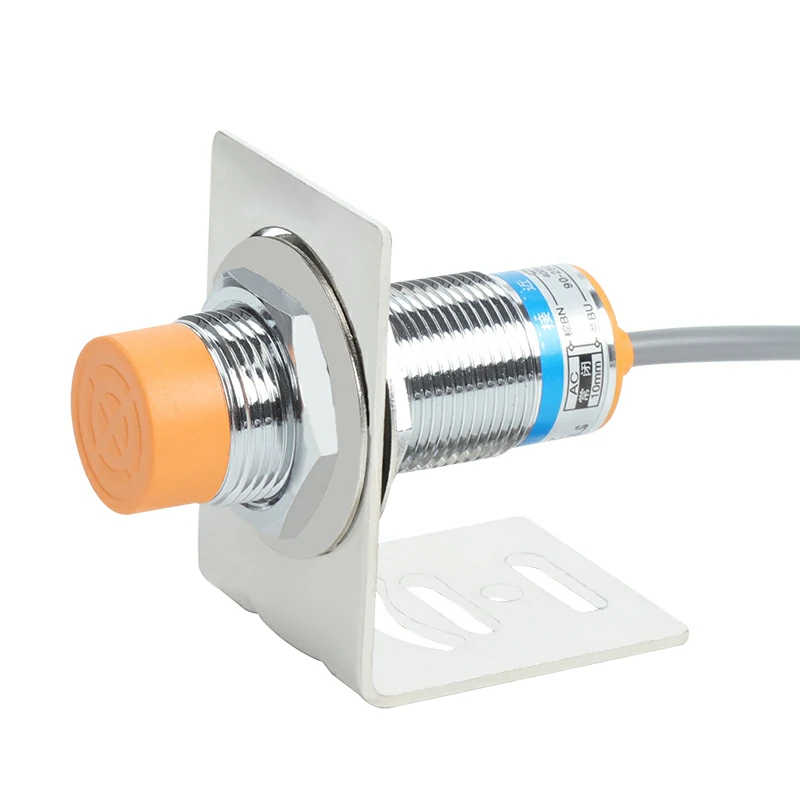
Para distribuidores de materiais elétricos e atacadistas industriais, a fonte de alimentação raramente é o fim da conversa — ela é o ponto de partida. Um cliente que comprar unidades LRS-350-24 hoje também precisará, amanhã, de disjuntores para trilho DIN, sensores de proximidade e relés de controle. A OMCH é uma parceira de fabricação direta da fábrica, criada especificamente para esse canal: mais de 3.000 SKUs em 30 categorias de automação, 38 anos de tradição em produção e personalização OEM/ODM que permite adaptar os produtos do catálogo às exigências do mercado local — tudo a partir de uma única fonte, com preços de atacado projetados para revenda.


 English
  Arabic
  Turkish
  Russian
  Spanish
  French
  Indonesian
  Portuguese
  Thai
Thai  Vietnamese