


Apa Itu Catu Daya Switching (SMPS)?
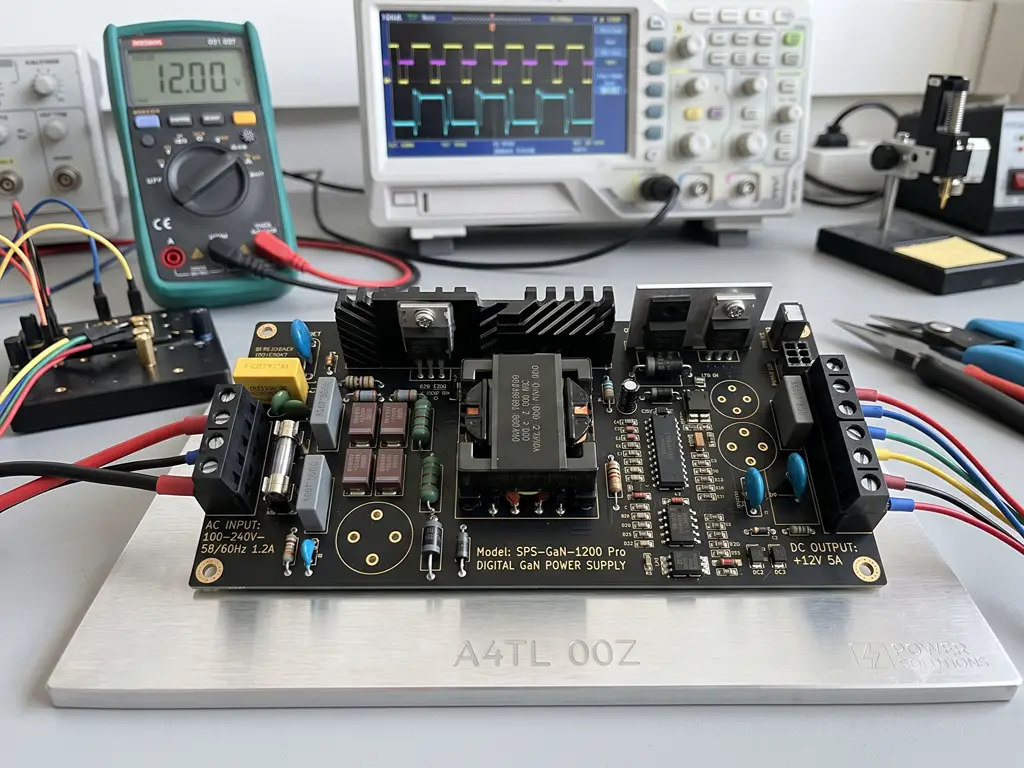
Catu daya switching — yang juga disebut catu daya mode switching, catu daya mode saklar, atau singkatnya SMPS — adalah perangkat elektronik yang mengubah daya listrik dari satu bentuk ke bentuk lain menggunakan regulator switching berkecepatan tinggi. Berbeda dengan catu daya linier model lama yang membuang kelebihan tegangan sebagai panas sisa, SMPS dengan cepat menghidupkan dan mematikan transistor ribuan kali per detik, sehingga mentransfer energi dalam bentuk pulsa yang presisi dan efisien.
Singkatan SMPS merupakan singkatan dari Switched-Mode Power Supply. Anda juga mungkin menjumpai istilah ini disebut sebagai switching power supply atau switch-mode power supply. Ketiga istilah tersebut merujuk pada teknologi yang sama. Yang penting bukanlah namanya, melainkan ide dasarnya: dengan beroperasi pada frekuensi tinggi (biasanya 20 kilohertz hingga beberapa megahertz), SMPS mencapai tingkat efisiensi sebesar 80% hingga lebih dari 95%. Sebagai perbandingan, catu daya linier biasanya hanya mencapai 40% hingga 60%.
Mengapa hal ini penting bagi Anda? Karena teknologi SMPS-lah yang membuat pengisi daya ponsel Anda muat di telapak tangan, bukan seberat batu bata. Teknologi inilah yang memungkinkan kabinet kontrol industri menyalurkan daya ke puluhan perangkat melalui unit rel DIN yang ringkas, bukan melalui rangkaian trafo sebesar ruangan. Setiap kali Anda mencolokkan laptop, menyalakan PLC pabrik, atau mengisi daya perkakas nirkabel, Anda bergantung pada catu daya switching untuk menyalurkan daya DC yang stabil dan efisien dari stopkontak AC di dinding.
SMPS vs. Catu Daya Linear — Mengapa Perbedaan Ini Penting
Untuk benar-benar memahami apa itu SMPS, Anda perlu memahami apa yang digantikannya. Catu daya linier dan catu daya switching memecahkan masalah mendasar yang sama — mengubah satu tegangan menjadi tegangan lain — tetapi keduanya melakukannya dengan cara yang pada dasarnya berlawanan. Catu daya linier bekerja seperti mengemudi dengan rem yang sedikit diinjak: transistor pengatur beroperasi di daerah liniernya, secara terus-menerus mengubah selisih antara tegangan masukan dan keluaran menjadi panas. SMPS bekerja seperti modulasi pulsa: transistor pengalih berada dalam keadaan sepenuhnya aktif atau sepenuhnya nonaktif, dan transfer energi hanya terjadi selama interval waktu yang tepat.
Efisiensi — Keunggulan Utama
Efisiensi bukanlah hal sepele. Justru itulah alasan utama keberadaan teknologi SMPS. Sebuah catu daya linier yang menyalurkan 100 watt ke beban mungkin mengonsumsi 170 hingga 250 watt dari stopkontak, sehingga 70 hingga 150 watt diubah langsung menjadi panas. Sebaliknya, SMPS yang setara dan menyalurkan daya 100 watt yang sama hanya mengonsumsi 105 hingga 125 watt, sehingga hanya 5 hingga 25 watt yang terbuang sebagai panas.
Prinsip fisika di balik celah ini cukup sederhana. Pada regulator linier, transistor pengatur bekerja di daerah aktifnya, di mana tegangan yang melintasi transistor dikalikan dengan arus yang mengalir melaluinya sama dengan disipasi daya terus-menerus. Bayangkan hal ini seperti menahan pintu agar tetap setengah terbuka saat angin kencang bertiup — Anda terus-menerus berjuang melawan angin. Dalam SMPS, transistor switching (biasanya MOSFET) beralih di antara dua keadaan: sepenuhnya menyala, di mana resistansinya turun menjadi miliohm dan tegangan yang melintasinya mendekati nol, serta sepenuhnya mati, di mana arus sama dengan nol. Dalam kedua keadaan tersebut, disipasi daya (tegangan dikalikan arus) mendekati nol. Kerugian hanya terjadi selama transisi singkat antar keadaan, yang berlangsung selama puluhan nanosekon.
Ukuran dan Berat — Mengapa Pengisi Daya Anda Tidak Sebesar Batu Bata
Buka catu daya linier berdaya 100 watt, dan Anda akan menemukan sebuah trafo seukuran kotak sepatu kecil, yang dibuat dengan inti besi yang berat. Buka SMPS berdaya 100 watt, dan trafonya muat di telapak tangan Anda, yang dibuat dengan inti ferit yang ringan. Perbedaannya terletak pada frekuensi.
Trafo mentransfer energi melalui inti magnetik, dan jumlah energi yang dapat ditangani inti tersebut per siklus ditentukan oleh ukuran fisiknya. Pada frekuensi 50 atau 60 hertz (frekuensi listrik jaringan), trafo berdaya 100 watt memerlukan inti besi yang cukup besar. Pada 100 kilohertz (frekuensi switching SMPS yang umum), inti dengan ukuran yang sama dapat menangani daya sekitar 2.000 kali lebih besar. Dalam praktiknya, perancang SMPS mengorbankan sebagian besar ruang kosong tersebut demi pengurangan ukuran yang drastis. Catu daya linier 100 watt mungkin memiliki berat 2 hingga 3 kilogram; sedangkan SMPS yang setara hanya memiliki berat 300 hingga 500 gram.
Derau dan Riak Keluaran — Perbandingan Antara Keduanya
Jika teknologi SMPS begitu unggul, mengapa catu daya linier masih ada? Jawabannya adalah gangguan. Pemutusan arus frekuensi tinggi tak terhindarkan menghasilkan riak tegangan pada keluaran — biasanya 50 hingga 150 milivolt puncak-ke-puncak pada SMPS standar — ditambah gangguan elektromagnetik (EMI) yang dapat merambat ke sirkuit sensitif di sekitarnya. Catu daya linier yang dirancang dengan baik menghasilkan riak di bawah 1 milivolt.
Untuk sirkuit digital, mikrokontroler, relai, dan sebagian besar sensor industri, riak sebesar 50 hingga 150 milivolt masih dapat diterima. Namun, untuk pengukuran analog presisi, peralatan audio kelas atas, atau instrumen medis yang sensitif, gangguan tersebut dapat merusak hasil pembacaan atau menimbulkan artefak yang terdengar. Dalam aplikasi-aplikasi tersebut, diperlukan catu daya linier atau SMPS (Switching Mode Power Supply) berisik rendah yang dirancang khusus (yang dapat mencapai nilai riak di bawah 10 milivolt dengan biaya yang lebih tinggi).
Kompleksitas dan Biaya — Semakin Banyak Komponen, Semakin Tinggi Nilai yang Ditawarkan
SMPS memiliki lebih banyak komponen dibandingkan catu daya linier: IC pengendali PWM, MOSFET pengalih, transformator frekuensi tinggi, umpan balik optocoupler, dan penyaring keluaran. Catu daya linier hanya memerlukan transformator, penyearah, kapasitor penyaring, dan regulator. Namun, jumlah komponen tidak selalu sama dengan biaya. Biaya catu daya linier didominasi oleh tembaga dan besi — yaitu transformator frekuensi jaringan yang besar dan heatsink yang besar. Biaya SMPS didominasi oleh semikonduktor, yang harganya semakin murah setiap tahun seiring dengan skala produksi. Di bawah sekitar 50 watt, unit SMPS hampir selalu lebih murah untuk diproduksi daripada catu daya linier yang setara. Di atas 500 watt, catu daya linier masih dapat bersaing secara biaya per unit, tetapi bobot dan efisiensi yang lebih rendah biasanya membuatnya tidak cocok untuk perangkat apa pun yang perlu dikirim atau dioperasikan secara terus-menerus.
Kapan Harus Memilih Yang Mana — Panduan Praktis
Setelah memahami keempat dimensi di atas, berikut ini adalah kerangka kerja pengambilan keputusan yang sederhana:
- Apakah aplikasi Anda bersifat analog presisi, medis, atau audio kelas atas? → Pertimbangkan penggunaan catu daya linier atau SMPS khusus yang dirancang untuk menghasilkan kebisingan sangat rendah.
- Apakah daya di atas 500 watt dan ukuran fisik benar-benar tidak relevan? → Pasokan linier mungkin bisa diterapkan, tetapi pertimbangkan biaya pengiriman dan pendinginan sebelum mengambil keputusan.
- Yang lainnya? → SMPS nyaris pasti merupakan pilihan yang tepat. Hal ini mencakup perangkat elektronik konsumen, panel kontrol industri, pencahayaan LED, peralatan telekomunikasi, pengisian daya baterai, serta sebagian besar perangkat elektronik modern.
| Aplikasi | Jenis yang Direkomendasikan |
|---|---|
| Perangkat elektronik konsumen (pengisi daya, adaptor) | SMPS |
| Kontrol industri (PLC, sensor, relai) | SMPS — rel DIN |
| Catu daya presisi laboratorium | SMPS linier atau dengan tingkat kebisingan sangat rendah |
| Penggerak lampu LED | SMPS — arus konstan |
| Amplifier audio kelas atas | SMPS linier atau resonan |
| Penggerak motor CNC (daya tinggi) | SMPS linier atau industri yang tidak diatur dengan kapasitas lonjakan arus |
Bagaimana Cara Kerja Catu Daya Switching?
Setiap SMPS, terlepas dari topologi spesifiknya, mengikuti jalur sinyal lima tahap yang sama. Memahami rantai ini memperlihatkan bagaimana perangkat elektronik yang ringkas mengubah daya AC dari stopkontak yang tidak stabil menjadi daya DC yang stabil untuk peralatan sensitif. Berikut adalah rangkaian lengkapnya, mulai dari stopkontak hingga keluaran yang telah diregulasi.
Tahap 1 — Penyearahan dan Penyaringan Masukan
Tugas pertama adalah mengubah arus bolak-balik (AC) menjadi arus searah (DC). Penyearah jembatan — susunan empat dioda — mengubah paruh negatif gelombang AC menjadi positif, sehingga menghasilkan serangkaian pulsa searah. Kapasitor elektrolit berkapasitas besar kemudian meratakan pulsa-pulsa tersebut menjadi tegangan DC yang belum stabil. Untuk masukan arus bolak-balik (AC) 220 volt, tahap ini menghasilkan sekitar 311 volt arus searah (DC), yang merupakan tegangan puncak gelombang sinus (220 × √2). Dalam desain SMPS modern, tahap koreksi faktor daya aktif (PFC) sering ditempatkan di antara penyearah dan konverter utama, membentuk arus masukan agar sesuai dengan bentuk gelombang tegangan dan meningkatkan efisiensi pada tingkat jaringan listrik.
Tahap 2 — Pengalihan Frekuensi Tinggi
Inilah tahap yang menjadi asal muasal nama catu daya switching. Sebuah MOSFET daya, yang digerakkan oleh pengontrol PWM (modulasi lebar pulsa), memotong arus DC tegangan tinggi yang stabil menjadi rangkaian pulsa berfrekuensi tinggi. Pada catu daya industri, frekuensi switching biasanya berkisar antara 50 hingga 200 kilohertz. Adaptor kompak yang menggunakan transistor gallium-nitrida (GaN) dapat mencapai frekuensi di atas 1 megahertz.
Variabel kuncinya adalah siklus kerja: persentase dari setiap periode switching di mana MOSFET berada dalam keadaan “on”. Jika tegangan keluaran perlu ditingkatkan, pengendali memperlebar pulsa (siklus kerja lebih tinggi). Jika perlu diturunkan, pengendali mempersempitnya. Modulasi lebar pulsa inilah yang digunakan SMPS untuk mengatur tegangannya tanpa membuang energi. MOSFET itu sendiri berada dalam keadaan konduksi penuh (penurunan tegangan mendekati nol) atau blokir penuh (arus nol), sehingga hampir tidak ada daya yang terbuang dalam kedua keadaan tersebut.
Tahap 3 — Transformasi Frekuensi Tinggi
Rangkaian pulsa frekuensi tinggi tersebut kini masuk ke dalam transformator inti ferit berukuran kecil. Ada dua hal yang terjadi di sini secara bersamaan. Pertama, transformator tersebut menaikkan atau menurunkan tegangan sesuai dengan rasio lilitan. Misalnya, rasio lilitan 10:1 mengubah pulsa 310 volt menjadi pulsa 31 volt. Kedua, transformator ini menyediakan isolasi galvanik: sisi masukan (ground “panas”, yang dirujuk ke jaringan listrik) dan sisi keluaran (ground “dingin”, yang dirujuk ke peralatan Anda) terpisah secara listrik, biasanya dengan nilai isolasi sebesar 1.500 hingga 3.000 volt AC. Isolasi inilah yang membuat SMPS aman untuk disentuh di sisi keluaran, bahkan saat terhubung ke jaringan listrik.
Inti feritlah yang membuat transformator ini begitu kecil. Pada frekuensi 50 hertz, inti transformator harus menyimpan energi secara fisik selama 10 milidetik per setengah siklus, sehingga membutuhkan bahan magnetik dalam jumlah yang cukup besar. Pada frekuensi 100 kilohertz, setiap siklus transfer energi hanya berlangsung selama 5 mikrodetik. Dengan bahan yang jauh lebih sedikit, transformator ini tetap mampu menangani daya yang sama.
Tahap 4 — Penyearah dan Penyaringan Keluaran
Output trafo berupa arus bolak-balik (AC) frekuensi tinggi, yang belum dapat langsung digunakan sebagai arus searah (DC). Tahap penyearah kedua mengubahnya kembali. Berbeda dengan penyearah masukan, yang dapat menggunakan dioda silikon biasa, tahap ini memerlukan dioda Schottky atau dioda pemulihan cepat — komponen yang dirancang khusus untuk beralih dengan kecepatan tinggi tanpa membuang energi selama transisi. Dioda silikon standar yang mencoba menyearahkan pulsa 100 kilohertz akan menghabiskan terlalu banyak waktu dalam fase pemulihannya, sehingga menghasilkan panas yang signifikan.
Setelah penyearah, filter LC (kombinasi induktor dan kapasitor) meratakan arus keluaran menjadi arus searah (DC) yang bersih. Induktor menahan perubahan arus yang tiba-tiba, sedangkan kapasitor menyerap fluktuasi tegangan. Bersama-sama, keduanya mengurangi riak frekuensi switching hingga tingkat yang dapat diterima untuk aplikasi yang dituju.
Tahap 5 — Umpan Balik dan Lingkaran Pengaturan
Keempat tahap di atas akan menghasilkan keluaran DC mentah yang nilainya berubah-ubah seiring dengan perubahan beban dan fluktuasi tegangan masukan. Sirkuit umpan balik menutup sistem dan memungkinkan terjadinya regulasi.
Referensi tegangan presisi (biasanya berupa regulator shunt yang dapat disetel tipe TL431 yang disetel pada 2,5 volt) menyediakan titik perbandingan yang stabil. Sebuah pembagi resistif mengambil sampel tegangan keluaran dan meneruskannya ke penguat kesalahan, yang membandingkan sampel tersebut dengan referensi dan menghasilkan sinyal koreksi. Sinyal ini melintasi batas isolasi melalui optokopler — sebuah perangkat yang mentransmisikan informasi melalui cahaya, sehingga menjaga penghalang keamanan antara sisi keluaran dan sisi masukan. Di sisi primer, pengontrol PWM membaca sinyal koreksi dan menyesuaikan siklus kerja sesuai dengan itu. Seluruh loop beroperasi secara terus-menerus, biasanya pada bandwidth seperlima hingga sepersepuluh dari frekuensi switching, memastikan keluaran tetap terkunci pada tegangan targetnya terlepas dari perubahan beban.
Jenis-Jenis Umum Catu Daya Switching
Tidak semua catu daya switching dibuat dengan cara yang sama. Topologi — susunan khusus dari sakelar, transformator, dan komponen penyimpanan energi — menentukan rentang daya, batas efisiensi maksimum, biaya, serta kesesuaian catu daya tersebut untuk berbagai aplikasi. Pembagian utamanya adalah antara topologi non-terisolasi, yang mengubah arus searah (DC) menjadi arus searah (DC) tanpa menggunakan transformator, dan topologi terisolasi, yang menggunakan transformator baik untuk konversi tegangan maupun isolasi keselamatan.
| Topologi | Jenis | Rentang Daya | Aplikasi Khas | Deskripsi dalam Satu Kalimat |
|---|---|---|---|---|
| Buck | Penurun tegangan tanpa isolasi | Hingga 100 W | Konverter DC-DC tingkat papan sirkuit, penggerak LED | Topologi paling sederhana; tegangan keluaran selalu lebih rendah daripada tegangan masukan |
| Peningkatan | Step-up non-terisolasi | Hingga 100 W | Penguat bertenaga baterai, penggerak lampu latar | Tegangan keluaran selalu lebih tinggi daripada tegangan masukan |
| Flyback | Terisolasi | Hingga 150 W | Pengisi daya ponsel, adaptor kecil, perlengkapan tambahan | Topologi terisolasi yang paling umum dan hemat biaya |
| Lanjut | Terisolasi | 100–350 W | Catu daya PLC, sistem kontrol industri | Efisiensi yang lebih baik dan riak yang lebih rendah dibandingkan dengan flyback |
| Jembatan Setengah/Penuh | Terisolasi | 350 W–5 kW+ | PSU server, tenaga listrik industri, pelapisan logam | Andalan untuk aplikasi berdaya tinggi |
| LLC Resonant | Terisolasi | Dua ratus hingga tiga ribu watt | Adaptor berefisiensi tinggi, catu daya layar LED | Efisiensi sangat tinggi dengan tingkat EMI yang rendah secara inheren |
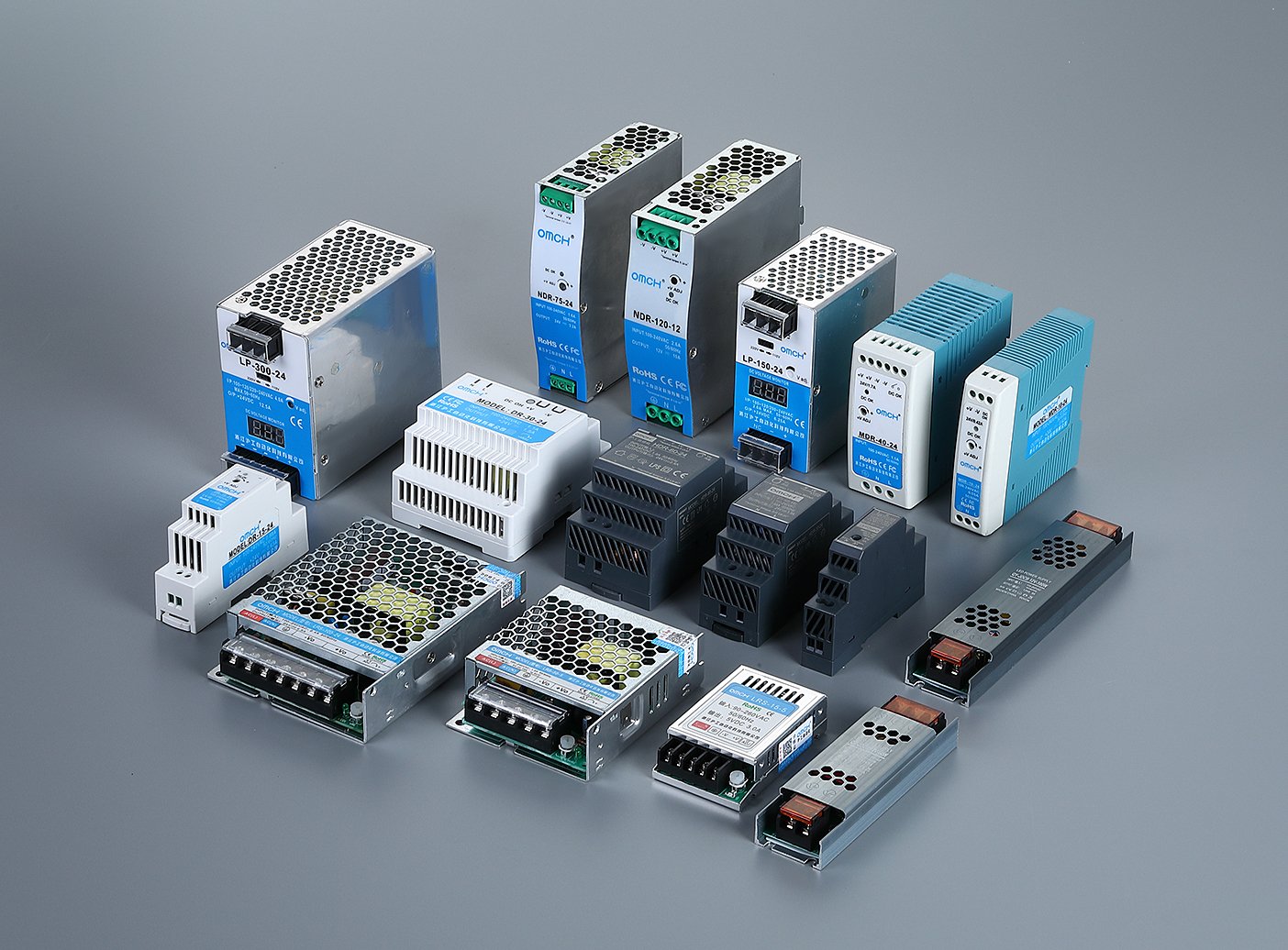
Untuk sebagian besar aplikasi otomatisasi industri (pemberian daya pada PLC, sensor, relai, dan kontaktor dari kabinet kontrol), catu daya 24 volt tipe DIN-rail yang Anda temui kemungkinan besar menggunakan desain forward atau flyback, dengan daya terukur antara 30 hingga 480 watt.
Di Mana Catu Daya Switching Digunakan?
Catu daya switching telah begitu melekat dalam kehidupan modern sehingga Anda berinteraksi dengan puluhan di antaranya setiap hari tanpa menyadarinya. Catu daya ini menyuplai daya ke perangkat-perangkat yang jelas terlihat — pengisi daya ponsel, adaptor laptop, televisi, dan catu daya komputer desktop — namun jangkauannya jauh melampaui perangkat elektronik konsumen.
Dalam otomatisasi industri, unit SMPS merupakan tulang punggung yang tak terlihat dari setiap kabinet kontrol. Sebuah jalur produksi pada umumnya terdiri dari puluhan catu daya DC 24 volt yang dipasang pada rel DIN, yang masing-masing menyuplai jaringan pengendali logika terprogram (PLC), sensor fotoelektrik dan sensor jarak, lampu menara sinyal, relai, kontaktor, serta panel antarmuka manusia-mesin (HMI). Perangkat-perangkat ini bukanlah perangkat mandiri yang beroperasi secara terpisah. Perangkat-perangkat ini membentuk ekosistem yang saling terhubung, di mana setiap komponen bergantung pada daya yang bersih dan stabil agar dapat berfungsi dengan andal. Satu unit catu daya yang spesifikasinya tidak memadai atau mengalami kegagalan saja sudah dapat menghentikan seluruh jalur produksi.
Infrastruktur telekomunikasi beroperasi menggunakan teknologi SMPS dalam skala yang jauh lebih besar. Stasiun basis seluler, rak server pusat data, dan simpul jaringan serat optik semuanya menggunakan catu daya switching berdaya guna tinggi — yang sering kali dilengkapi dengan redundansi N+1 — untuk mengubah daya dari jaringan listrik atau cadangan baterai menjadi tegangan DC yang diatur secara ketat sesuai kebutuhan peralatan mereka.
Varian SMPS khusus digunakan untuk penerangan LED (driver arus konstan untuk layar dan lampu jalan), pengisian daya kendaraan listrik (pengisi daya onboard dan stasiun pengisian cepat DC), serta peralatan medis (catu daya dengan isolasi yang diperkuat dan arus bocor yang sangat rendah). Masing-masing bidang ini memiliki persyaratan tersendiri terkait efisiensi, isolasi keselamatan, dan ketahanan terhadap kondisi lingkungan — itulah sebabnya memahami dasar-dasar hal-hal yang perlu diperhatikan dalam sebuah catu daya menjadi sangat penting, bahkan jika Anda bukan seorang insinyur listrik.
Hal-hal yang Perlu Diperhatikan Saat Memilih Catu Daya Switching
Mengetahui apa itu SMPS dan bagaimana cara kerjanya adalah satu hal. Mengetahui apa yang membedakan unit yang andal dari unit yang bermasalah adalah hal lain — dan inilah pertanyaan yang paling penting ketika Anda bertanggung jawab atas pengadaan, integrasi sistem, atau pemeliharaan. Empat dimensi di bawah ini mencakup spesifikasi yang secara langsung memengaruhi keandalan, kompatibilitas, dan biaya jangka panjang, tanpa perlu memiliki gelar di bidang teknik untuk mengevaluasinya.
Spesifikasi Masukan dan Keluaran — Hal-Hal yang Tidak Dapat Ditawar
Memastikan spesifikasi kelistrikan sudah tepat adalah langkah pertama yang krusial. Jika spesifikasi ini salah, hal lain tidak akan berarti apa-apa. Mulailah dengan tegangan masukan: jika peralatan Anda akan dipasang di berbagai wilayah, tentukan rentang tegangan masukan universal sebesar 100 hingga 240 volt AC, yang mencakup jaringan listrik Amerika Utara 120 volt dan Asia/Eropa 230 volt tanpa perlu modifikasi. Untuk wilayah dengan pasokan listrik yang tidak stabil, carilah toleransi tegangan masukan yang luas (beberapa catu daya industri mendukung rentang 85 hingga 264 volt AC) agar dapat bertahan saat terjadi penurunan tegangan tanpa mati total.
Di sisi keluaran, tegangan 24 volt DC merupakan standar yang dominan dalam otomatisasi industri, sebagaimana ditentukan oleh IEC 61131-2 untuk peralatan pengendali yang dapat diprogram. Keluaran umum lainnya meliputi 5 volt (logika digital), 12 volt (sistem otomotif dan keamanan), serta 48 volt (telekomunikasi dan infrastruktur Power-over-Ethernet). Nilai daya harus mencakup margin setidaknya 20% hingga 30% di atas beban maksimum yang Anda hitung. Mengoperasikan catu daya secara terus-menerus pada atau mendekati batas terukurnya akan mempercepat penuaan komponen, terutama pada kapasitor elektrolitik, yang merupakan titik kegagalan paling umum. Catu daya yang dijalankan pada beban 80% mungkin dapat bertahan selama 100.000 jam; catu daya yang sama pada beban 100% dapat mengalami kegagalan dalam waktu setengahnya.
Bentuk Fisik dan Pemasangan — Lokasi Pemasangannya Menentukan Komponen Apa yang Cocok
Spesifikasi kelistrikan terbaik di dunia pun tidak akan berguna jika catu daya tersebut secara fisik tidak muat di tempat yang Anda inginkan untuk memasangnya. Kabinet kontrol industri sebagian besar menggunakan pemasangan DIN-rail: rel logam standar berukuran 35 milimeter (EN 60715) yang memungkinkan catu daya dipasang dan dilepas tanpa alat. Untuk peralatan mandiri atau pemasangan semi-luar ruangan, catu daya tertutup dengan casing logam atau plastik memberikan perlindungan fisik dan ketahanan dasar terhadap debu. Catu daya rangka terbuka, yang tidak memiliki penutup, dirancang untuk dipasang di dalam peralatan yang sudah memiliki casing sendiri. Catu daya ini menghemat ruang dan biaya, tetapi mengharuskan integrator untuk menangani jarak aman dan pendinginan.
Fitur Perlindungan — Apa yang Menjaga Sistem Tetap Berfungsi Saat Terjadi Masalah
Fitur perlindungan merupakan faktor penentu antara catu daya yang mengalami kegagalan secara terkendali dan catu daya yang menyebabkan peralatan yang terhubung ikut mati bersamanya. Ada empat fitur perlindungan yang perlu dipastikan sebelum membeli:
Perlindungan terhadap tegangan berlebih (OVP) akan mematikan keluaran jika loop pengaturan mengalami kegagalan dan tegangan naik melampaui ambang batas aman (biasanya sebesar 120% hingga 140% dari keluaran nominal). Tanpa OVP, kegagalan satu komponen saja dapat membuat setiap perangkat di hilir terpapar tingkat tegangan yang merusak.
Perlindungan terhadap arus berlebih dan korsleting (OCP/SCP) membatasi arus saat terjadi kelebihan beban dan langsung mematikan daya saat terjadi korsleting total. Sebagian besar catu daya industri menggunakan “mode hiccup” untuk pemulihan korsleting: catu daya tersebut secara berkala mencoba menyala kembali setiap satu hingga dua detik, dan ketika korsleting teratasi, operasi normal akan berlanjut secara otomatis. Cara ini lebih unggul daripada alternatifnya — mode latch, di mana catu daya tetap dalam keadaan mati hingga ada yang mematikan dan menyalakannya kembali secara manual — terutama pada instalasi yang terpencil atau sulit dijangkau.
Perlindungan terhadap suhu berlebih (OTP) memantau suhu internal dan mengurangi daya keluaran atau mematikan sistem sebelum panas merusak komponen. Hal ini sangat penting terutama pada kotak tertutup atau lingkungan dengan suhu sekitar yang tinggi, di mana pendinginan konveksi mungkin tidak memadai.
Tidak semua produk yang tersedia di pasaran dilengkapi dengan keempat fitur perlindungan tersebut sebagai standar. Periksa lembar spesifikasi. Jika suatu fitur perlindungan tidak disebutkan secara eksplisit, anggaplah fitur tersebut tidak ada.
Sertifikasi dan Indikator Kualitas — Percayalah, tetapi Periksa
Sertifikasi merupakan indikator kualitas objektif yang paling mendekati kenyataan di pasar di mana spesifikasi di atas kertas bisa tampak identik pada produk-produk yang sangat berbeda. Persyaratannya bervariasi sesuai dengan pasar tujuan:
Di Eropa, penandaan CE merupakan persyaratan hukum minimum — namun penting untuk memahami apa arti CE dalam praktiknya. CE merupakan pernyataan kesesuaian mandiri dari produsen, bukan hasil pengujian oleh pihak ketiga yang independen. Produsen yang memiliki reputasi baik melampirkan laporan pengujian dari laboratorium terakreditasi sebagai pendukung penandaan CE mereka; sedangkan produsen yang kurang teliti tidak melakukannya. Untuk catu daya, arahan yang relevan meliputi Arahan Tegangan Rendah (LVD) dan Arahan Kompatibilitas Elektromagnetik (EMC). Kepatuhan terhadap RoHS dan REACH menangani persyaratan keselamatan lingkungan dan kimia.
Di Amerika Utara, sertifikasi UL memiliki bobot yang lebih besar. Berbeda dengan CE, sertifikasi UL (berdasarkan standar seperti UL 508 untuk peralatan kontrol industri atau UL 62368-1 untuk peralatan audio/video dan TI) melibatkan pengujian independen serta inspeksi pabrik berkala yang dilakukan oleh Laboratorium Pengujian yang Diakui Secara Nasional (NRTL). Produk yang tidak memiliki sertifikasi UL akan menghadapi hambatan yang signifikan dalam hal penjualan, perlindungan asuransi, dan persetujuan inspeksi kelistrikan di Amerika Serikat dan Kanada.
Untuk pasar Timur Tengah dan Asia Tenggara, mungkin berlaku sertifikasi lokal tambahan — SASO dan SABER untuk Arab Saudi, SIRIM untuk Malaysia, serta SNI untuk Indonesia. Memastikan persyaratan ini sebelum melakukan pemesanan dapat mencegah keterlambatan proses bea cukai yang bisa berlangsung selama berminggu-minggu.
Selain sertifikasi, ada dua indikator kualitas praktis yang patut diperhatikan. Peringkat efisiensi seperti 80 PLUS (untuk catu daya kelas komputer) atau tingkatan efisiensi yang tercantum dalam lembar spesifikasi secara langsung memengaruhi biaya operasional jangka panjang. Catu daya yang 5% lebih efisien dapat mengembalikan selisih harganya melalui penghematan listrik dalam beberapa tahun pengoperasian terus-menerus. Angka MTBF (Mean Time Between Failures), yang biasanya dihitung berdasarkan Telcordia SR-332 atau MIL-HDBK-217F, memberikan patokan keandalan statistik. Catu daya industri berkualitas umumnya mencantumkan angka 200.000 hingga 500.000 jam pada suhu lingkungan 25°C, meskipun angka-angka ini mengasumsikan kondisi pendinginan dan beban yang tepat.
Bagi mereka yang mencari komponen otomasi industri, perlu diperhatikan bahwa catu daya switching jarang beroperasi sendirian di dalam kabinet kontrol. Catu daya ini dipasang berdampingan dengan sensor, relai, kontaktor, PLC, dan pemutus arus, yang semuanya perlu ditentukan spesifikasinya, dipasok, dan dirawat. Bekerja sama dengan pemasok yang mencakup berbagai kategori dapat menyederhanakan proses pengadaan dan mengurangi beban administrasi dalam mengelola hubungan dengan lusinan pabrik yang berbeda. OMCH, misalnya, menyediakan catu daya switching dengan daya mulai dari 15 hingga 480 watt, serta lebih dari 30 kategori komponen otomatisasi lainnya, termasuk sensor, relai, dan peralatan distribusi tegangan rendah. Katalog mereka tersedia di omch.com/switch-mode-power-supply.
Daftar Pustaka
- Monolithic Power Systems. “Catu Daya Switching: Kegunaan, Keunggulan, dan Prinsip Kerja.” https://www.monolithicpower.com/en/learning/resources/switching-power-supply
- Elektronika Untuk Anda. “SMPS: Dasar-dasar & Prinsip Kerja Catu Daya Mode Sakelar.” https://www.electronicsforu.com/technology-trends/learn-electronics/smps-basics-switched-mode-power-supply
- Analog Devices. “AN-140: Konsep Dasar Regulator Linear dan Catu Daya Mode Switching.” https://www.analog.com/en/resources/app-notes/an-140.html
- GIC India. “Apa Itu SMPS Industri? Penjelasan Mengenai Jenis, Kegunaan, dan Manfaatnya.” https://www.gicindia.com/what-is-industrial-smps/
- IEC 61131-2. “Pengendali yang Dapat Diprogram — Bagian 2: Persyaratan dan pengujian peralatan.” Komisi Elektroteknik Internasional.
- EN 60715. “Dimensi peralatan sakelar dan pengatur tegangan rendah — Pemasangan terstandarisasi pada rel untuk penyangga mekanis perangkat listrik.” CENELEC.
- OMCH. “Catu Daya Mode Switching.” https://www.omch.com/switch-mode-power-supply/
- OMCH. “Halaman Utama.” https://www.omch.com/

 English
  Arabic
  Turkish
  Russian
  Spanish
  French
  Indonesian
  Portuguese
  Thai
Thai  Vietnamese