


Mengapa Pilihan Catu Daya Anda Menentukan Keberhasilan atau Kegagalan Sebuah Sistem Otomasi
Jika PLC adalah otak dari suatu sistem otomatisasi dan sensor-sensor adalah sarafnya, maka catu daya adalah jantungnya — dan ketika jantungnya tersendat, semuanya berhenti.
Sebagian besar insinyur menghabiskan berjam-jam untuk memilih PLC, modul I/O, dan protokol komunikasi yang tepat, lalu mengambil catu daya 24V apa pun yang ada di rak. Kebiasaan tersebut bisa sangat mahal. Menurut survei global ABB tahun 2025 yang melibatkan 3.600 pemangku keputusan senior, waktu henti industri yang tidak direncanakan menimbulkan kerugian antara $10.000 dan $500.000 per jam — dan 44% fasilitas mengalami gangguan terkait peralatan setidaknya sekali sebulan (ABB, 2025). Sebuah analisis yang dilakukan Siemens terhadap perusahaan-perusahaan Fortune Global 500 menunjukkan bahwa rata-rata kerugian lintas sektor bahkan lebih tinggi, yaitu $260.000 per jam, dengan total kerugian mencapai $1,4 triliun hanya pada tahun 2024 saja (Siemens, 2024).
Biaya rata-rata per jam akibat waktu henti yang tidak direncanakan di kalangan perusahaan manufaktur Fortune Global 500.
Sumber: Siemens, "Biaya Sebenarnya dari Waktu Henti", 2024
Catu daya yang menjadi panas, mengalami penyimpangan tegangan saat dibebankan, atau mengalami kegagalan tanpa peringatan dapat memicu rangkaian kejadian yang menghentikan jalur produksi secara tiba-tiba. Memilih catu daya yang tepat tidaklah rumit setelah Anda memahami gambaran umumnya. Bagian-bagian selanjutnya akan membahas jenis, penentuan kapasitas, sertifikasi, produsen, serta kerangka kerja pengambilan keputusan yang praktis — semua yang Anda butuhkan untuk memilih dengan percaya diri.
Tiga Jenis Utama Catu Daya Industri — dan Kapan Masing-Masing Harus Digunakan
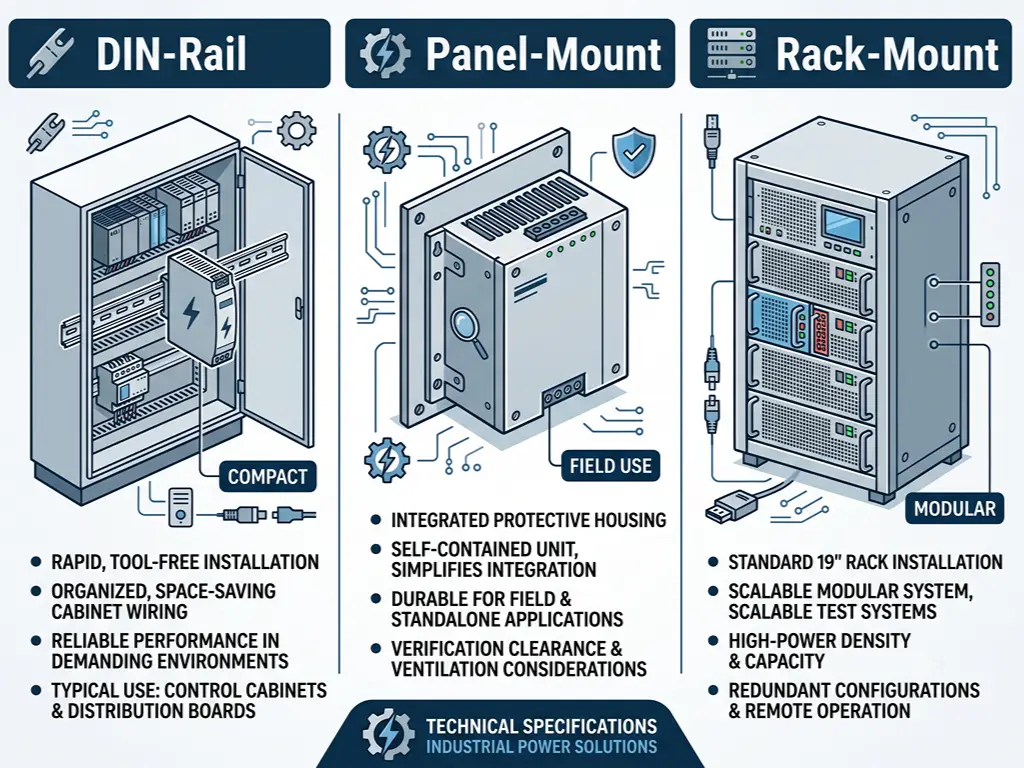
Sebelum membahas spesifikasi, Anda perlu menentukan bentuk fisiknya. Ada tiga faktor yang memengaruhi keputusan ini: di mana catu daya akan ditempatkan (di dalam kabinet kontrol atau di lapangan), berapa besar daya yang Anda butuhkan, dan seberapa luas ruang fisik yang Anda miliki. Pemilihan jenisnya harus dilakukan terlebih dahulu — semua hal lainnya bergantung pada hal tersebut.
Catu Daya DIN-Rail — Andalan Industri
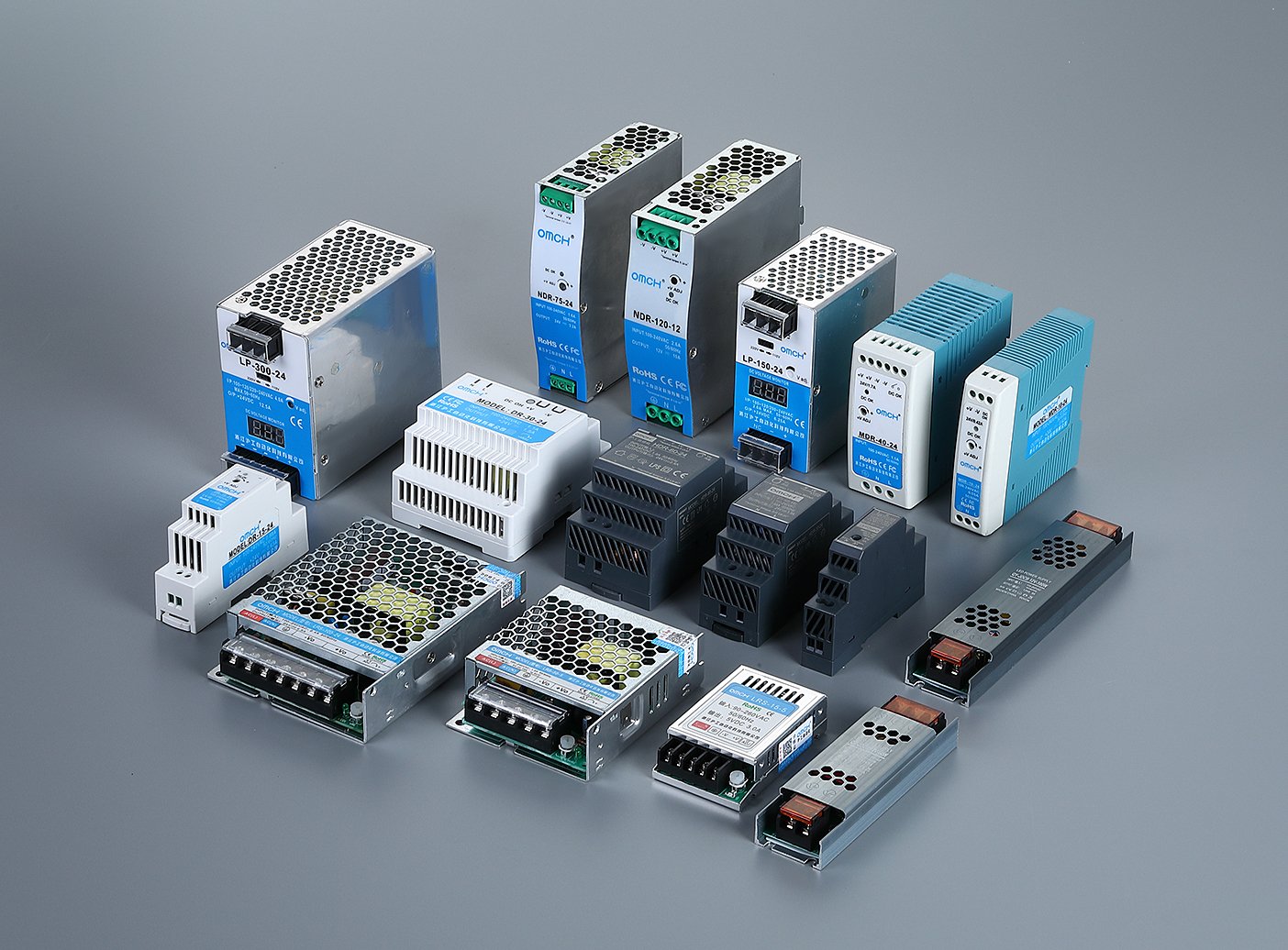
Jika Anda membuka kabinet kontrol industri mana pun di seluruh dunia, kemungkinan besar komponen pertama yang akan Anda temukan pada rel DIN 35 mm EN 60715 adalah catu daya switching berukuran ringkas dengan casing logam. Bentuk ini menjadi standar dalam bidang otomatisasi karena menstandarkan proses pemasangan, menghemat ruang panel, dan menyederhanakan pengelolaan termal — setiap komponen yang menghasilkan panas terpasang pada rel logam yang sama, sehingga memudahkan untuk memprediksi bagaimana kabinet tersebut akan berperilaku saat berada di bawah beban.
Catu daya DIN-rail umumnya memiliki rentang daya 15W hingga 960W, dengan keluaran 24VDC sebagai standar universal. Pada rentang daya terendah (15–60W), satu unit dapat menyuplai daya untuk PLC kecil dan beberapa sensor. Pada rentang 75–240W, catu daya ini digunakan untuk menyuplai kabinet kontrol menengah yang dilengkapi dengan beberapa rak I/O, HMI, dan mungkin sebuah sakelar jaringan. Kelas 480–960W ditujukan untuk sistem besar — beberapa rak PLC, rangkaian katup solenoida, dan I/O terdistribusi dengan jarak yang jauh.
Satu catatan praktis: sebagian besar catu daya DIN-rail tersedia dalam versi satu fasa (masukan 100–240 VAC) dan tiga fasa (320–575 VAC). Jika fasilitas Anda memiliki pasokan listrik tiga fasa yang tersedia di kabinet, varian tiga fasa biasanya beroperasi dengan suhu yang lebih rendah dan memiliki masa pakai yang lebih lama pada beban yang setara.
Catu Daya Tertutup — Saat Anda Membutuhkan Unit Mandiri
Tidak semua perangkat otomatisasi ditempatkan di dalam kabinet yang dilengkapi sistem pengatur suhu. Meja uji, mesin mandiri, kotak sensor luar ruangan, dan peralatan yang dipasang di lapangan sering kali membutuhkan pasokan listrik tepat di titik penggunaannya — dan hal itu memerlukan sumber daya listrik yang tertutup dengan wadahnya sendiri.
Perbedaan utama dengan unit rel DIN terletak pada tingkat perlindungan. Unit catu daya rel DIN yang dipasang di dalam kabinet cukup dengan tingkat perlindungan IP20 (terlindung dari jari dan debu yang jatuh). Unit tertutup yang dipasang di dekat stasiun pencucian atau di lantai pabrik mungkin memerlukan peringkat IP65 atau IP67 — kedap debu dan semburan air. Unit tertutup juga menjadi pilihan yang tepat jika Anda memang tidak memiliki kabinet kontrol sejak awal: mesin pengemasan kecil, konveyor dengan kontrol terintegrasi, atau retrofit di mana biaya penambahan kabinet akan lebih mahal daripada peralatan yang dilindunginya.
Pertimbangannya cukup jelas. Unit tertutup menawarkan fleksibilitas pemasangan dengan konsekuensi harga per watt yang lebih tinggi dan tingkat standarisasi yang lebih rendah. Kisaran daya umumnya berkisar antara 35–350 W, dan pilihan sistem pendinginan — kipas versus konveksi alami — bergantung pada kondisi lingkungan sekitar. Di lingkungan berdebu, unit yang menggunakan pendinginan konveksi dapat menghindari masalah perawatan akibat filter kipas yang tersumbat.
Catu Daya untuk Pemasangan di Rak dan Catu Daya Khusus
Pada rentang daya tertinggi — di atas 1.000 W — format DIN-rail dan format tertutup digantikan oleh sistem pemasangan rak. Satu unit rak 1U dapat menghasilkan daya sebesar 3.500 W atau lebih, dan beberapa unit dalam satu rak mendukung redundansi N+1: jika satu modul mengalami kegagalan, unit-unit yang tersisa akan mengambil alih beban tanpa gangguan, dan modul yang rusak dapat diganti saat sistem masih berjalan (hot-swap) tanpa perlu mematikan sistem.
Inilah ranah pabrik semikonduktor, pusat data, sistem pengujian berskala besar, dan industri dengan proses berkelanjutan, di mana bahkan penghentian operasional yang direncanakan pun memerlukan koordinasi selama berminggu-minggu. Sistem rak-mount tidak bersaing dengan catu daya DIN-rail — keduanya melayani skala operasi yang sama sekali berbeda. Bagi sebagian besar pembaca, pelajaran praktis yang dapat diambil adalah mengetahui di mana batasnya: jika beban total 24 VDC Anda melebihi sekitar 40 A (sekitar 960 W), Anda telah memasuki wilayah sistem rak-mount dan harus merencanakan dengan tepat.
Cara Menentukan Kapasitas Catu Daya: Tegangan, Daya, dan Margin yang Menghemat Biaya Anda
Memilih jenis yang tepat sudah setengah dari perjuangan. Setengahnya lagi adalah menghitung angkanya dengan benar. Bagian ini mengikuti daftar periksa mental tiga langkah: tentukan standar tegangan Anda, hitung beban total Anda, dan terapkan margin yang akan mencegah Anda dari masalah.
Mengapa 24 VDC Menjadi Standar Universal — dan Kapan Standar Ini Tidak Berlaku
Cobalah berjalan-jalan di lantai pabrik mana pun, dan Anda akan menemukan tegangan 24 VDC di mana-mana: untuk menyalakan PLC, menggerakkan katup solenoida, menerangi lampu indikator, serta mengoperasikan puluhan sensor. Penerapan yang hampir universal ini memiliki sejarah yang dapat dilacak.
Standar 24 V berakar dari era logika relai, ketika kumparan 24 V menjadi standar dalam pengendalian industri. Ketika PLC menggantikan panel relai, PLC tersebut mewarisi tegangan yang sama untuk menjaga kompatibilitas mundur dengan perangkat lapangan. Alasan keselamatan menjadi penentu utama: tegangan 24 VDC berada jauh di bawah ambang batas SELV (Safety Extra Low Voltage) sebesar 60 VDC yang ditetapkan oleh IEC 61131-2, yang berarti tegangan ini tidak menimbulkan risiko sengatan listrik dan memerlukan praktik pemasangan kabel yang tidak seketat sirkuit tegangan jaringan.
Ada beberapa pengecualian yang perlu diketahui. Beberapa sistem otomatisasi yang dipasang pada kendaraan atau bertenaga baterai beroperasi pada tegangan 12 VDC (umumnya digunakan pada rig pengujian otomotif dan peralatan bergerak). Di sisi lain, tegangan 48 VDC semakin populer dalam jaringan industri berbasis PoE dan aplikasi penggerak servo, di mana tegangan yang lebih tinggi mengurangi arus dan memungkinkan penggunaan kabel yang lebih tipis untuk jarak yang jauh. Namun, untuk panel kontrol standar, 24 VDC tetap menjadi pilihan aman — dan toleransi suplai biasanya ±10% (21,6–26,4 V), jadi pastikan perangkat lapangan Anda dapat menangani rentang tegangan tersebut secara penuh.
Anggaran Daya: Hitung Beban Anda, Lalu Tambahkan 30%
Kesalahan paling umum dalam pemilihan catu daya adalah memilih kapasitas yang terlalu kecil. Para insinyur sering kali menjumlahkan arus yang tertera pada label spesifikasi dari lembar data perangkat, memilih ukuran standar berikutnya yang lebih besar, dan menganggap urusan sudah selesai. Pendekatan tersebut memang berhasil — sampai kabinet menjadi panas pada bulan Juli, atau sekelompok solenoida menyala sekaligus, atau sistem tersebut ditambahkan modul ekspansi dua tahun kemudian.
Metode yang tepat hanya membutuhkan waktu lima menit dan menghemat biaya penggantian di lapangan, panggilan layanan, atau penghentian jalur dua tahun ke depan. Mulailah dengan tabel beban. Untuk setiap perangkat pada bus 24 VDC Anda, catat arus yang diserap dalam kondisi stabil berdasarkan lembar data pabrikan — bukan nilai maksimum, bukan perkiraan. CPU PLC kelas menengah biasanya menyerap arus sebesar 0,5–1,5 A. Modul input digital 16 titik menambah 0,1–0,3 A. Setiap sensor jarak PNP tiga kabel menarik arus 10–100 mA. Katup solenoid adalah variabel tak terduga: satu kumparan mungkin menarik arus 0,1–0,5 A dalam kondisi mapan, tetapi dapat melonjak hingga 3–5 kali lipat selama 20–50 milidetik saat penggerak bekerja.
| Perangkat | Kuantitas | Arus per Satuan (A) | Arus Total (A) |
|---|---|---|---|
| CPU PLC (kelas menengah) | 1 | 1.0 | 1.0 |
| Modul I/O digital (16 titik) | 4 | 0.2 | 0.8 |
| Modul I/O analog (4 saluran) | 2 | 0.15 | 0.3 |
| HMI (7 inci) | 1 | 1.0 | 1.0 |
| Switch Ethernet (5 port) | 1 | 0.4 | 0.4 |
| Sensor jarak PNP | 8 | 0.05 | 0.4 |
| Katup solenoid (24 VDC) | 3 | 0.3 | 0.9 |
| Total pada kondisi mapan | 4,8 A | ||
| +30% margin | 6,24 A | ||
Jumlahkan nilai kolom kondisi mapan. Itulah nilai dasar Anda. Sekarang tambahkan margin setidaknya 20–30% — bukan karena Anda bersikap konservatif, melainkan karena penuaan komponen, perluasan di masa depan, dan lonjakan arus awal (inrush) akan mengikis margin tersebut seiring waktu. Sebagian besar catu daya rel DIN dilengkapi kemampuan peningkatan arus (biasanya sebesar 150% dari arus pengenal selama 3–5 detik), yang dapat menangani lonjakan arus awal solenoida. Namun, nilai peningkatan arus tersebut merupakan nilai puncak, bukan titik operasi berkelanjutan. Berdasarkan hasil 6,24 A di atas, ukuran standar berikutnya adalah 8A atau 10A — pilih 10A jika kabinet menjadi panas, karena penurunan kapasitas pada suhu 60°C akan membuat unit 8A bekerja terlalu mendekati batas kemampuannya.
Suhu merupakan variabel terakhir. Setiap catu daya industri memiliki kurva penurunan daya yang dimulai pada suhu lingkungan antara 40°C dan 50°C. Di atas ambang batas tersebut, kapasitas keluaran menurun — biasanya secara linier — hingga catu daya mencapai sekitar 70% dari nilai nominalnya pada suhu 60–70°C. Jika kabinet Anda berada di dalam ruang tertutup di atap gedung di Asia Tenggara atau Timur Tengah, di mana suhu internal sering melebihi 50°C, pertimbangkan hal tersebut dalam margin Anda. Catu daya 10A pada suhu 25°C mungkin hanya dapat menghasilkan arus 7A pada suhu 60°C.
Jangan lupa kurva penyesuaian beban
Catu daya 10A yang dirancang untuk suhu 25°C mungkin hanya dapat menyalurkan arus sebesar 7A di dalam selungkup bersuhu 60°C — sesuaikan kapasitasnya dengan suhu terburuk yang mungkin terjadi di kabinet Anda, bukan berdasarkan spesifikasi yang tercantum dalam lembar spesifikasi yang mengasumsikan adanya pendingin udara.
Mengurai Sertifikasi: CE, UL, CCC, dan Apa Artinya Sebenarnya bagi Proyek Anda
Sertifikasi adalah semacam paspor bagi catu daya — pasar yang berbeda menuntut sertifikasi yang berbeda pula, dan jika Anda membawa sertifikasi yang salah, peralatan Anda akan ditahan di bea cukai atau, yang lebih parah lagi, gagal dalam uji penerimaan di lokasi.
Bayangkan sertifikasi dalam tiga tingkatan. Yang pertama adalah akses pasar wajib: Tanda CE untuk Uni Eropa, sertifikasi UL (khususnya UL 508 untuk peralatan kontrol industri) untuk Amerika Utara, dan CCC untuk Tiongkok. Tanpa sertifikasi tersebut, peralatan Anda tidak dapat dipasang secara sah di wilayah-wilayah tersebut. Tanda CE perlu dijelaskan lebih lanjut: produsen dapat melakukan deklarasi kesesuaian CE secara mandiri untuk banyak kategori produk, yang berarti logo “CE” saja tidak membuktikan apa pun tanpa laporan pengujian pendukung dari laboratorium terakreditasi. Selalu mintalah Deklarasi Kesesuaian dan laporan pengujian yang mendasarinya — bukan hanya sertifikatnya saja.
Lapisan kedua adalah standar keamanan produk, yang menentukan standar apa yang sebenarnya digunakan dalam pengujian catu daya tersebut. Standar yang paling relevan untuk otomatisasi industri adalah IEC/UL/EN 62368-1 (keselamatan untuk peralatan audio/video, TI, dan komunikasi — yang semakin menggantikan standar lama IEC 60950-1) dan EN 61010-1 (keselamatan untuk peralatan pengukuran, pengendalian, dan laboratorium). Jika aplikasi Anda melibatkan lokasi berbahaya, sertifikasi ATEX atau IECEx menjadi pertimbangan. Untuk peralatan manufaktur semikonduktor, kepatuhan terhadap SEMI F47 — yang mensertifikasi ketahanan terhadap penurunan tegangan — sering kali menjadi persyaratan wajib dari pengguna akhir.
Lapisan ketiga mencakup standar acuan lingkungan dan kualitas: RoHS (pembatasan zat berbahaya), REACH (keamanan bahan kimia), dan ISO 9001 (manajemen mutu). Setiap produsen yang kredibel sudah memenuhi standar-standar ini pada tahun 2026 — standar-standar ini merupakan syarat dasar, bukan faktor pembeda.
Sebuah kebiasaan verifikasi yang praktis: Sertifikasi UL dapat diperiksa secara real time di ul.com/database dengan mencari nama produsen atau nomor berkasnya. Jika pemasok tidak dapat menunjukkan nomor berkas UL yang sah dan menghasilkan hasil pencarian di basis data UL, anggaplah klaim UL mereka dengan skeptis — terlepas dari logo apa pun yang muncul di situs web mereka.
Sebelum Anda mempercayai klaim sertifikasi:
- Cari nama produsen di ul.com/database — nomor berkas UL yang sah akan menampilkan hasil yang aktual.
- Mintalah laporan pengujian, bukan hanya sertifikatnya — logo CE tanpa laporan dari laboratorium terakreditasi hanyalah pernyataan sendiri, bukan verifikasi.
Dari Kelas Premium hingga Praktis: Memahami Lanskap Produsen Catu Daya Industri
Hasil SERP untuk kata kunci ini didominasi oleh pengumuman produk dari masing-masing produsen. Yang masih kurang — dan yang sebenarnya paling dibutuhkan oleh sebagian besar pembeli — adalah gambaran yang jelas mengenai pasar ini: siapa saja yang berkecimpung di segmen mana, apa saja yang Anda dapatkan sesuai dengan selisih harganya, dan bagaimana cara mengevaluasi pemasok yang belum pernah Anda dengar sebelumnya.
Tingkat Premium: Kapan Siemens, Phoenix Contact, dan PULS Menjadi Pilihan yang Tepat
Segmen premium — yang dipimpin oleh produsen asal Jerman seperti PULS, Phoenix Contact, Siemens, dan Weidmüller — secara kolektif menguasai sekitar 62% dari pasar catu daya rel DIN global berdasarkan pendapatan (QYResearch, 2024). Merek-merek ini bersaing berdasarkan fitur-fitur yang tidak diperlukan oleh sebagian besar panel kontrol, namun tidak dapat diabaikan oleh sebagian kecil pengguna.
Unit Siemens SITOP terintegrasi secara native dengan ekosistem TIA Portal, sehingga memungkinkan pemantauan beban PROFIenergy dan diagnostik prediktif yang data hasilnya langsung ditampilkan pada dasbor pemeliharaan untuk seluruh pabrik. Seri QUINT dari Phoenix Contact menawarkan teknologi SFB (Selective Fuse Breaking) — kemampuan untuk mengalirkan arus enam kali lipat dari arus nominal selama 12 milidetik guna memicu pemutusan pemutus arus di hilir tanpa membuat catu daya itu sendiri masuk ke mode perlindungan. PULS, pemimpin pasar berdasarkan pendapatan, berfokus pada efisiensi sangat tinggi dan bentuk yang ringkas, dengan beberapa unit mencapai efisiensi 95,61 TP3T pada beban penuh.
Tingkat layanan premium memang sepadan dengan harganya jika tiga syarat terpenuhi: pelanggan akhir Anda mewajibkan penggunaan merek tertentu, aplikasi Anda memerlukan sertifikasi untuk area berbahaya, atau pabrik Anda menjalankan proses berkelanjutan di mana integrasi diagnostik mencegah waktu henti yang biayanya per jam lebih mahal daripada selisih harga seribu unit catu daya.
Produk Unggulan di Segmen Pasar Menengah: Mean Well, Omron, Delta, dan Weidmüller
Bagi sebagian besar proyek otomatisasi industri, segmen pasar menengah merupakan titik optimalnya. Mean Well, yang berkantor pusat di Taiwan, merupakan pemain utama di bidang ini: menduduki peringkat kelima secara global berdasarkan pendapatan, namun peringkat pertama berdasarkan volume unit di segmen rel DIN profil rendah, dengan lebih dari 10.000 model standar dan gudang-gudang regional yang memungkinkan pengiriman dalam waktu 24–48 jam untuk SKU umum (QYResearch, 2024).
Seri S8VK dari Omron sudah memenuhi standar SEMI F47 sebagai fitur bawaan — sebuah detail yang sangat penting jika peralatan Anda kemungkinan akan digunakan di pabrik semikonduktor. Delta memanfaatkan keahliannya di bidang elektronika daya (perusahaan ini merupakan salah satu produsen catu daya terbesar di dunia secara keseluruhan) untuk menghadirkan desain berbasis SiC dan GaN dengan tingkat efisiensi di atas 96%. Lini produk PROeco II dari Weidmüller mencapai efisiensi lebih dari 95% dengan harga yang lebih mendekati Mean Well daripada PULS, sehingga produk ini semakin sering ditemui di kabinet kontrol yang dibuat untuk ekspor.
Untuk panel kontrol standar — tanpa area berbahaya, tanpa daftar merek yang diwajibkan, dan tanpa lingkungan ekstrem — produk kelas menengah dari salah satu produsen ini merupakan pilihan standar yang masuk akal. Anda akan mendapatkan sertifikasi global yang lengkap, data kinerja yang andal, serta kepastian rantai pasokan tanpa harus membayar fitur integrasi yang tidak akan pernah digunakan oleh sistem Anda.
Produsen yang Hemat Biaya: Hal-Hal yang Perlu Diketahui Saat Melakukan Pembelian dari Tiongkok
Tiongkok merupakan pusat manufaktur catu daya industri dunia — dan pernyataan tersebut menggambarkan sebuah spektrum, bukan entitas tunggal yang homogen. Di satu ujung spektrum, pabrik-pabrik di Kawasan Industri Liushi, Wenzhou, dan koridor elektronik Shenzhen mengoperasikan jalur produksi SMT otomatis, ruang uji ketahanan internal, serta laboratorium pengujian yang diawasi oleh UL, yang setara dengan fasilitas mana pun di Barat. Di ujung spektrum lainnya, bengkel-bengkel kecil merakit catu daya dari komponen komoditas dengan pengujian yang minim dan jejak asal-usul yang kurang jelas.
Perbedaannya dapat dideteksi jika Anda tahu apa yang harus dicari. Produsen yang kredibel mengoperasikan jalur pemasangan SMT otomatis sepenuhnya miliknya sendiri — ini merupakan standar dasar untuk kualitas solder yang konsisten dalam skala besar. Produsen tersebut melakukan pengujian burn-in (penuaan) 100% — biasanya selama 4–8 jam pada beban penuh dan suhu tinggi — pada setiap unit sebelum pengiriman, bukan hanya pengambilan sampel per batch. Klaim sertifikasinya didukung oleh laporan pengujian dari laboratorium terakreditasi yang disebutkan namanya, dan nomor file UL-nya menghasilkan hasil yang valid di basis data online UL. Pabrikan tersebut telah beroperasi cukup lama — puluhan tahun, bukan hanya beberapa tahun — sehingga mampu bertahan melewati berbagai siklus kelangkaan komponen tanpa gulung tikar.
Keunggulan biaya ini nyata. Catu daya DIN-rail 24V/5A yang dibuat dengan baik dari produsen Tiongkok yang berfokus pada kualitas biasanya dijual 30–50% lebih murah daripada unit Mean Well yang setara dengan harga FOB, dengan jumlah pesanan minimum (MOQ) mulai sekitar 100 unit. Penghematan ini berasal dari integrasi vertikal (peralatan produksi internal, proses penggulungan, dan SMT), biaya tenaga kerja yang lebih rendah, serta model distribusi tanpa struktur markup berjenjang yang diterapkan oleh merek-merek Barat. Yang tidak dapat Anda hemat — dan sebaiknya tidak Anda coba hemat — adalah biaya verifikasi pemasok sebelum melakukan pemesanan.
Daftar Periksa Verifikasi Pemasok 5 Poin
Membuat Pilihan yang Tepat: Kerangka Kerja Pengambilan Keputusan Praktis dalam 5 Langkah
Semua hal di atas dapat dirangkum menjadi daftar periksa lima langkah yang hanya memakan waktu sepuluh menit dan dapat mencegah kesalahan-kesalahan yang paling merugikan:
Langkah 1 — Pilih bentuk perangkat Anda. Apakah ini akan dipasang di lemari kontrol? DIN-rail. Mesin mandiri atau pemasangan di lapangan? Tertutup. Lebih dari 1.000 W atau memerlukan redundansi hot-swap? Dipasang di rak.
Langkah 2 — Buatlah tabel beban Anda. Buat daftar semua perangkat, catat arus kondisi stabilnya berdasarkan lembar spesifikasi, hitung jumlah kolom tersebut, lalu tambahkan 30%. Selanjutnya, periksa suhu lingkungan terburuk pada kabinet Anda dan terapkan kurva derating.
Langkah 3 — Pastikan sertifikasi pasar Anda. Di mana peralatan ini dipasang? Sertifikasi CE untuk Eropa, UL untuk Amerika Utara, dan CCC untuk Tiongkok. Silakan verifikasi nomor berkas UL yang disebutkan di ul.com/database.
Langkah 4 — Sesuaikan anggaran Anda dengan tingkat produsen yang tepat. Kelas premium (Siemens, PULS, Phoenix Contact) jika pengguna akhir mewajibkannya atau jika integrasi diagnostik dapat menutupi biayanya sendiri. Kelas menengah (Mean Well, Omron, Delta, Weidmüller) untuk kasus standar. Pilihan hemat biaya (produsen Tiongkok yang kualitasnya telah terverifikasi) jika tekanan anggaran tinggi dan Anda bersedia melakukan uji tuntas terhadap pemasok.
Langkah 5 — Mintalah sampel dan laporan pengujian sebelum memutuskan untuk memesan dalam jumlah besar. Sebuah catu daya yang tampak sempurna di lembar spesifikasi dapat menunjukkan masalah termal, gangguan kebisingan, atau masalah kualitas rakitan dalam delapan jam pertama pengujian beban penuh. Jalankan sampel pada beban aktual Anda, ukur suhu casing, amati riak menggunakan osiloskop, dan baru setelah itu ajukan pesanan pembelian.
Jika Anda memasok komponen otomatisasi kepada pembuat panel, integrator sistem, dan pabrik, rangkaian catu daya DIN-rail dan catu daya tertutup dari OMCH akan menjadi pilihan yang hemat biaya untuk ditambahkan ke katalog Anda — didukung oleh pengalaman manufaktur selama 38 tahun, produksi SMT otomatis, pengujian burn-in 100%, serta sertifikasi CE/RoHS lengkap. Lihat rangkaian produknya di omch.com/switch-mode-power-supply, atau hubungi kami di omch.com/contact untuk membahas ketentuan distributor.
Sedang Mencari Pemasok Listrik yang Terpercaya untuk Katalog Anda?
Sediakan catu daya DIN-rail dan catu daya tertutup yang dapat diandalkan oleh pelanggan Anda — dilengkapi sertifikasi lengkap, kualitas yang konsisten, serta dokumentasi teknis yang membantu Anda menutup lebih banyak transaksi.
Hubungi Tim Penjualan KamiDaftar Pustaka
- ABB Motion Services. “Waktu henti operasional industri dapat menimbulkan kerugian hingga $500.000 per jam dan bisa terjadi setiap minggu.” Oktober 2025. https://new.abb.com/news/detail/129763/industrial-downtime-costs-up-to-500000-per-hour-and-can-happen-every-week
- Siemens AG. “Biaya Sebenarnya dari Waktu Henti.” 2024. https://www.siemens.com/global/en/company/stories/industry/true-cost-of-downtime.html
- QYResearch. “Catu Daya Rel DIN Industri — Pangsa Pasar dan Peringkat Global, Perkiraan Penjualan dan Permintaan Secara Keseluruhan 2024–2030.” 2024. https://www.qyresearch.com/reports/4702703/industrial-din-rail-power
- Fluke Corporation. “Waktu Henti yang Tidak Direncanakan Menghabiskan Biaya Hingga $852M per Minggu bagi Para Produsen.” Oktober 2025. https://www.mromagazine.com/2025/10/31/unplanned-downtime-costs-manufacturers-up-to-852m-weekly-fluke-report/
- OMCH. “Catu Daya Mode Switching.” https://www.omch.com/switch-mode-power-supply/
- OMCH. https://www.omch.com/
- OMCH. “Kontak.” https://www.omch.com/contact/


 English
  Arabic
  Turkish
  Russian
  Spanish
  French
  Indonesian
  Portuguese
  Thai
Thai  Vietnamese