

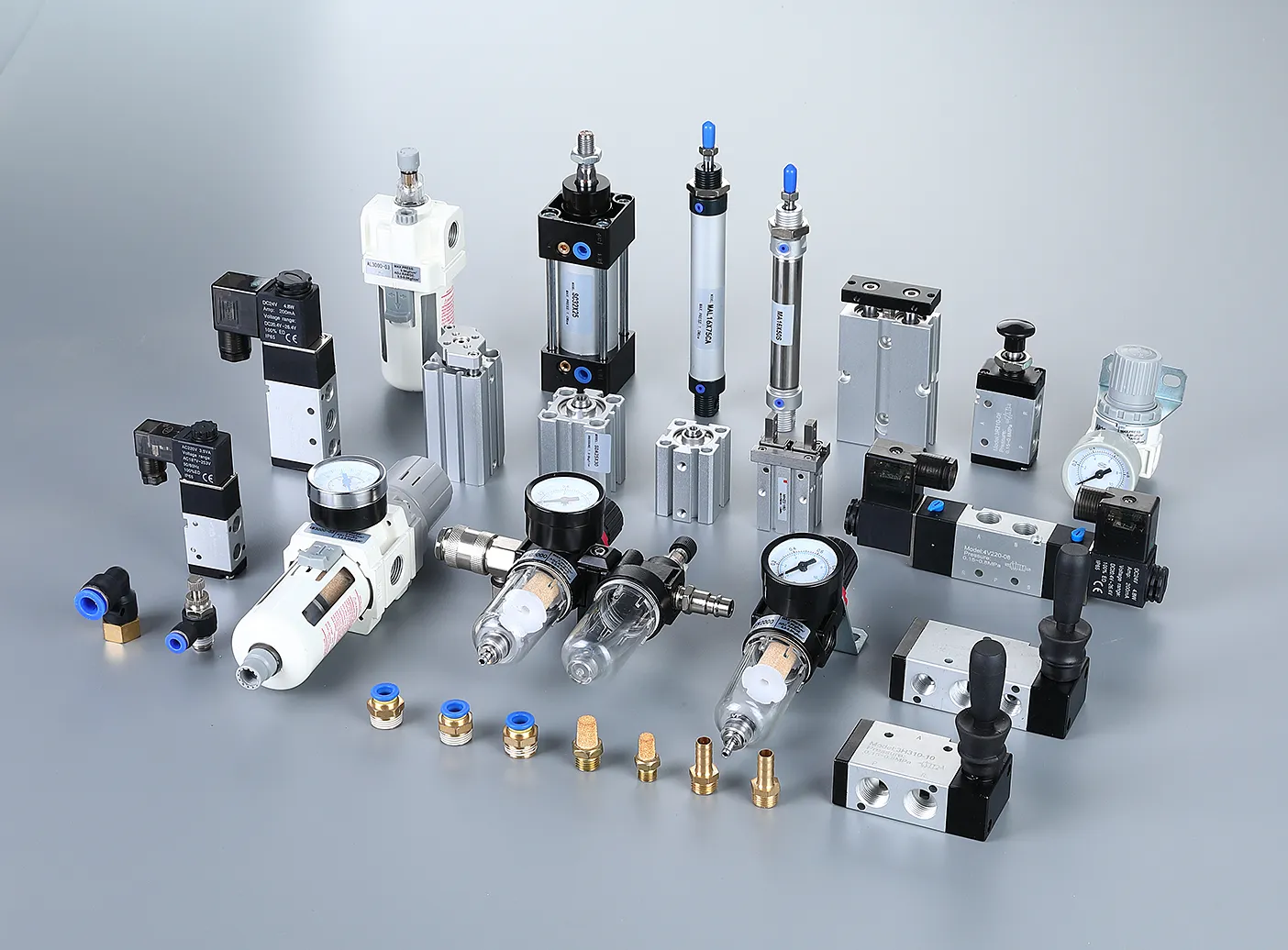

The factory floor has evolved into a highly orchestrated digital ecosystem in the landscape of 2026, as opposed to a series of mechanical actions. At the heart of this transformation are factory automation sensors. These machines are no longer switches that say that there is an object, but the eyes, ears and nervous system of modern manufacturing. They are important in the productivity of industrial production since they are the main source of information for the whole business.
As Industry 4.0 matures into Industry 5.0, the focus has shifted toward human-machine collaboration, hyper-personalization, and autonomous decision-making. Choosing the right industrial sensor is no longer just a technical requirement-it is a strategic decision that affects throughput, quality control, and long-term scalability. This guide offers an in-depth analysis of the various categories of sensors, selection criteria, and new trends in AI that characterize the industrial systems of the present day.
Essential Types of Sensors for Modern Factory Automation
The diversity of manufacturing processes such as high-speed bottling to the delicate semiconductor assembly requires an enormous amount of sensing technologies. To come up with a powerful automation system, one must be familiar with the principles of any form of industrial sensors.
- Proximity Sensors
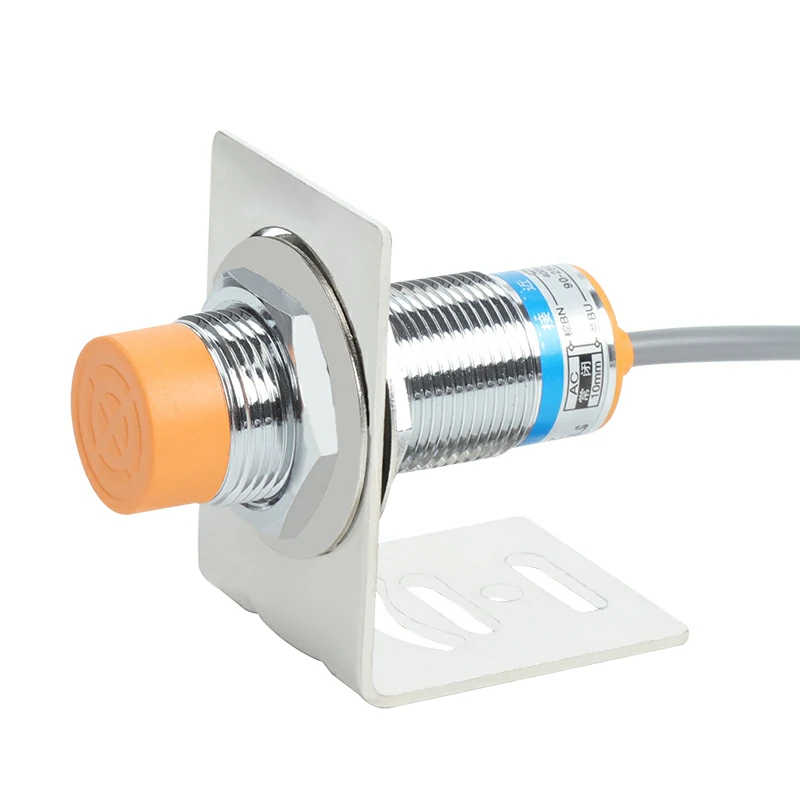
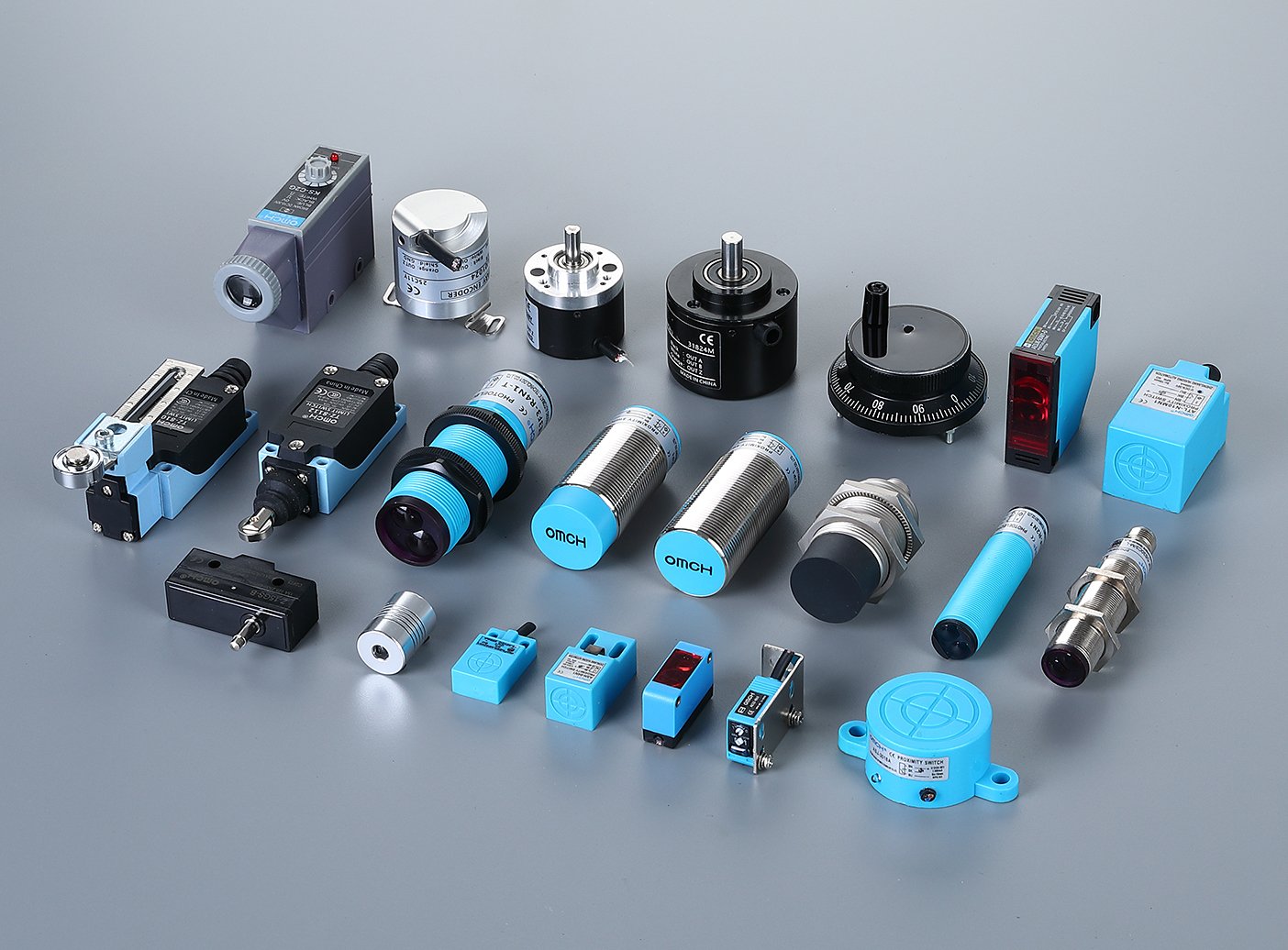
Proximity sensors are the workhorses of discrete manufacturing. They are able to detect the existence of an object without necessarily touching it physically and this eliminates wear and tear on the sensor and the target.
- Inductive Sensors: In 2026, premium inductive sensors now utilize 316L Stainless Steel housings to resist corrosion in washdown environments. Find models that have “Factor 1” with a fixed sensing distance to all metals with switching frequencies up to 5,000 Hz (0.2ms response time). For safety-critical applications, ensure sensors meet SIL2 (Safety Integrity Level 2) standards.
- Capacitive Sensors: Modern capacitive units feature potentiometer or IO-Link sensitivity adjustment to ignore foam or build-up. They are rated over a very broad range of dielectric constants, enabling a very fine level sensing of materials such as pure water to plastic pellets.
- Magnetic Sensors: These are especially applied in the detection of the position sensors of a piston of different pneumatic systems.
- Photoelectric Sensors
Photoelectric sensors are light sensors (infrared, red or laser) which are applied in detecting objects at a very long distance. They play a significant role in material handling to monitor the flow of goods in the long conveyor belts.
- Through-beam: The emitter and receiver are separate, offering the longest sensing range and highest reliability in dirty environments.
- Retro-reflective: The light bounces off a reflector back to the sensor. The polarization of the high-end models has been made to light in order to capture reflective or clear objects.
- Diffuse-reflective: The object itself acts as the reflector. In such sensor, the contemporary sensors use Background Suppression (BGS) to disregard anything that is not in a certain focal point that is important in different target colors.
- Ultrasonic Sensors
These are high frequency sound wave producing sensors that measure the time taken by the echo to reflect. They are the right choice in the scenario of transparent glass, transparent films or liquid levels where light based sensors may not work well because of transparency or surface glare.
- Vision and Image Sensors
While traditionally considered a separate category, the “smart sensor” of 2026 often includes integrated CMOS imagers. These sensors are capable of performing more complicated tasks such as OCR (Optical Character Recognition), color inspection and pattern recognition which is necessary in high-speed industrial tasks.
- Process Sensors
In the case of “fluid” or “batch” automation, process sensors are essential to the stability of the production environment:
- Pressure Sensors & Flow Sensors: In hydraulic pneumatic systems, sensors must handle ranges up to 600 bar with a typical accuracy of ±0.5% F.S. (Full Scale). For hazardous oil and gas environments, look for ATEX/IECEx certified explosion-proof housings.
- Temperature Sensors: The shift to Digital Temperature Sensors and Class A RTDs (Pt100/Pt1000) provides a measurement accuracy of ±0.15°C. These are now commonly integrated with M12 IO-Link connectors to eliminate analog signal interference.
- Specialized Sensors
- Encoders: Provide feedback on the precise angular or linear position of a motor.
- Load Cells & Force Sensors: These are required in order to enable robotic assembly arms to mimic human “touch” and not to break fragile components in the assembly process.
- Motion Sensors: Used in both production and security systems to detect unauthorized movement or to trigger safety protocols.
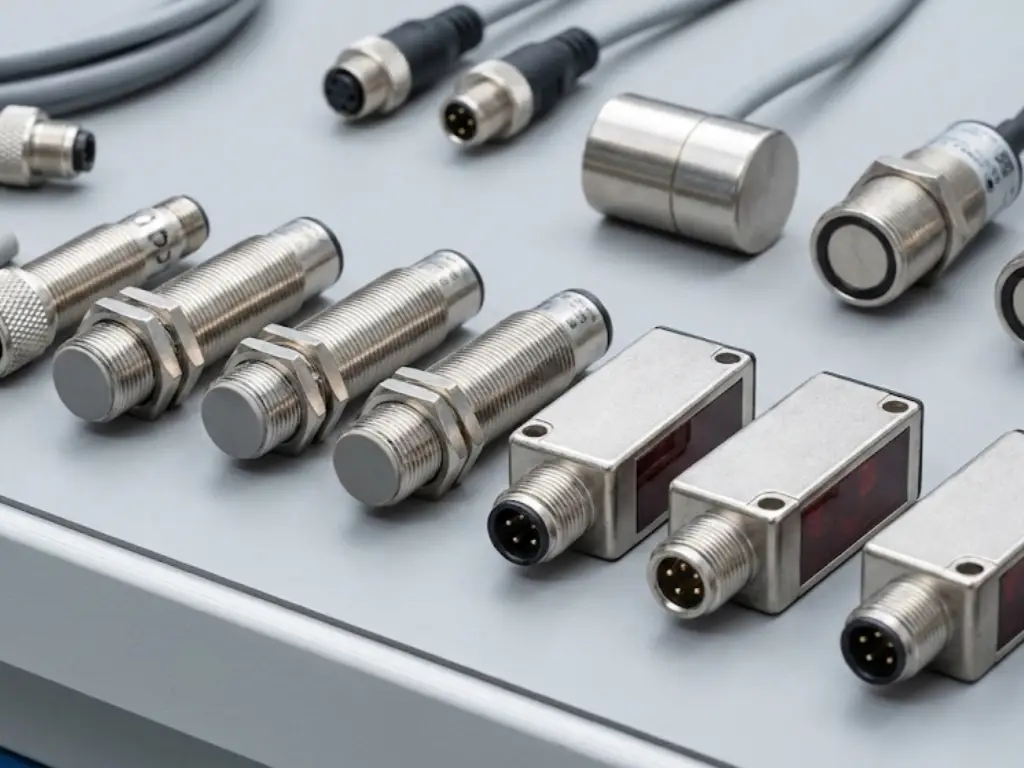
Technical Selection Criteria for High-Performance Industrial Sensing
When choosing a sensor, the price is usually the main factor, which often results in disastrous downtime.
Engineers should consider the conversion of physical properties into electrical signals by sensors and the speed of communication to have a reliable setup.
The Material and Target Profile
The most basic question is: What am I detecting? Metallic objects favor inductive sensors, while transparent or highly irregular surfaces often require ultrasonic or specialized laser sensors. When the object of interest is very small (e.g. a wire or a needle), a focused beam laser photoelectric sensor is required.
Sensing Distance and Precision
Every sensor has a “Blind Zone” (too close) and a “Maximum Range” (too far). In cases where high-precision measurement technology is required, Laser Displacement Sensors can be used with an accuracy of sub-micron when measuring the thickness of a wafer.
Response Time and Speed
The response time of a sensor is important in high-speed industrial production. When a sensor is not able to generate an electrical signal quickly, the system might fail to identify a defect or count a product more than once, causing serious errors in the batch.
Environmental Resilience (The IP Rating)
Factories are unfriendly environments.
- IP67: Protection against dust and temporary immersion in water.
- IP69K: Essential for Food & Beverage sectors where equipment is subjected to high-pressure, high-temperature washdowns.
- Chemical Resistance: In battery manufacturing or chemical processing, sensor housings must be made of stainless steel (316L) or specialized plastics like PEEK.
Table: Sensor Type vs. Application Suitability
| Sensor Type | Target Material | Typical Range | Best For… | Key Advantage |
| Inductive | Metals Only | 1mm – 50mm | Position of metal cams | No physical contact |
| Capacitive | Any Solid/Liquid | 3mm – 25mm | Level sensors | Detects through walls |
| Photoelectric | Any Opaque | Up to 100m | Material handling | Long-distance sensing |
| Ultrasonic | Any (Incl. Clear) | 30mm – 6m | Clear bottle detection | Immune to color/light |
| Pressure | Liquids/Gases | N/A | Hydraulic/Pneumatic | High-precision gauge |
Leveraging AI and Machine Vision for Precision Detection
By 2026, the distinction between a “sensor” and a “computer” has been lost. The AI-based sensors can now perform Edge Inference, i.e. the data is processed locally in the sensor head. This is especially revolutionary to quality control.
Deep Learning for Defect Detection
Traditional vision sensors relied on “Rule-Based” programming (e.g., “if the pixel count of this area is less than X, it is a defect”). AI sensors now use Neural Networks trained on images of “Good” and “Bad” parts. This allows the sensor to identify defects it has never seen before, such as scratches on a curved metal surface or inconsistent stitching in textiles, which would be impossible to program manually.
Predictive Maintenance Sensors
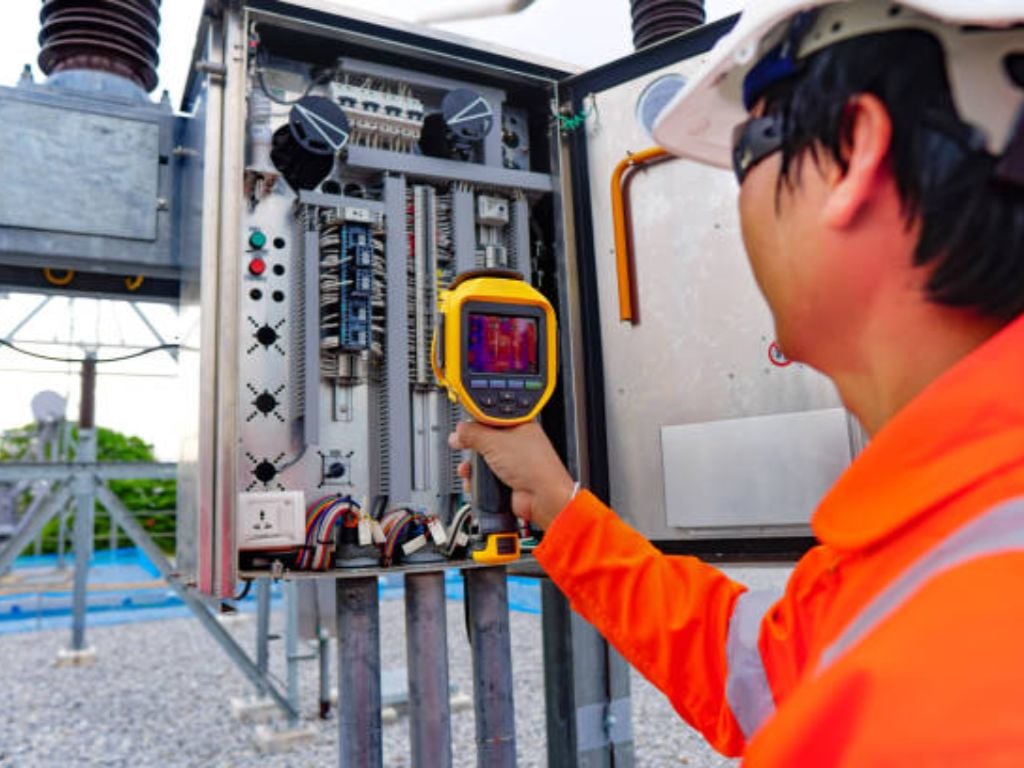
Vibration and thermal sensors now have AI algorithms that “learn” the normal operating signature of a motor. Rather than waiting until a bearing fails, the sensor notices a slight change in the vibration frequency, which is not visible to the traditional systems, and informs the maintenance team weeks before a failure has taken place.
Self-Diagnostic Capabilities
Contemporary intelligent sensors are able to check their health. If a lens becomes too dirty for a photoelectric sensor to operate reliably, or if an inductive sensor detects a slight misalignment in its mounting, it sends a “Health Alert” via the network, preventing a “False Trip” that would stop the production line.
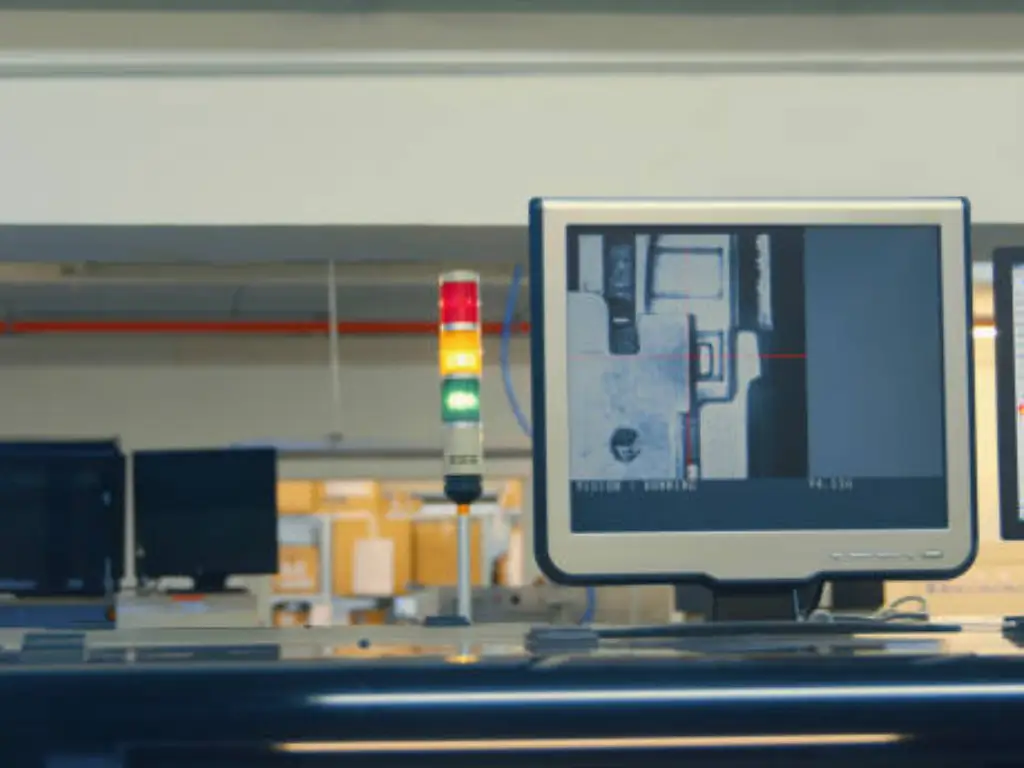
Optimizing Data Flow with IO-Link and IIoT Connectivity
The largest bottleneck of legacy automation was the “Analog Trap”, the fact that a sensor could only give a simple On/Off signal. Today, IO-Link is the global standard of the last mile of industrial communication.
The Power of IO-Link
IO-Link is a point to point, bi-directional communication protocol. It supports three forms of data exchange:
- Process Data: The actual measurement (e.g., “The distance is 15.4mm”).
- Service Data: Parameters like sensitivity settings or focal points, which can be changed remotely.
- Event Data: Error messages or maintenance warnings.
IIoT Integration
The sensor data can be directly sent to the ERP (Enterprise Resource Planning) or MES (Manufacturing Execution System) of a company with the assistance of IO-Link masters and the Industrial Internet of Things (IIoT) by connecting the IO-Link masters to the Industrial Internet of Things (IIoT) via such protocols as MQTT or OPC UA. This enables “Digital Twins”—virtual replicas of the factory floor that update in real-time, allowing managers to monitor global production metrics from a single dashboard.
Proven Applications to Reduce Downtime and Maintenance Costs
The ultimate goal of any sensor deployment is to maximize OEE (Overall Equipment Effectiveness). By strategically placing sensors, companies can shift from reactive maintenance to a proactive model.
Case Study: Automotive Assembly
A robotic welding cell consists of a combination of inductive sensors (to position the part) and vision sensors (to measure the quality of the weld) such that no defective chassis will be passed to the next stage. When a sensor identifies a deviation, the AI-controlled controller will correct the robotic arm trajectory in real-time, which will decrease the scrap rates by up to 15%.
Case Study: Food and Beverage
High-speed bottling lines utilize ultrasonic sensors to detect the quantity of foaming liquids (e.g. beer or soda) at the location where the conventional sensors would be confused by the bubbles. By proper fill levels, companies save thousands of dollars in “overfill” waste and in the process, meet labeling regulations.
Predictive Maintenance (PdM)
By installing vibration sensors on critical pumps and compressors, a mid-sized factory can reduce unscheduled downtime by 30%. These sensors are highly ROI and this is normally realized within the initial six months since the cost of an hour of downtime is normally greater than the cost of the sensing system.
Leading Sensor Brands and Market Landscape in 2026
The world sensor market consists of high-end innovators and high-value “One-Stop” providers. Being aware of the strengths of each brand helps to make a balanced list of vendors.
- KEYENCE (Japan)

KEYENCE is a multinational company that deals with designing and manufacturing of industrial automation and inspection systems. The company is reputed to be quick in innovation and advanced technology and focuses on offering high-added-value products that solve complicated manufacturing problems in various industries.
- Consultative Direct Sales Model: Keyence has direct sales force that provides a wide range of on-site technical support and real-time application solutions, which competitors do not.
- Industry-Leading R&D: The company has continuously been rated as one of the most innovative companies in the world with approximately 70% of new products being “world-first” or “industry-first” technologies.
- Extreme Precision & Speed: Their sensors are engineered for high-end applications requiring sub-micron accuracy and ultra-high processing speeds.
- Rapid Delivery System: Has a massive international stock to ship nearly all standard catalog products in a day.
- SICK AG (Germany)

SICK is a multinational producer of sensors and sensor solutions in the industrial application. The company operates under the motto “Sensor Intelligence” and focuses on the creation of smart, networked technologies, which are the foundation of Industry 4.0 and safe human-machine collaboration.
- Pioneer in Industrial Safety: A global authority in safety light curtains, LIDAR, and laser scanners, setting the international standard for workplace protection.
- Massive Patent Portfolio: Has more than 2,000 patents, a legacy of German engineering that is oriented towards “Sensor Intelligence.”
- Comprehensive Logistics Solutions: SICK also provides end-to-end track-and-trace solutions in addition to sensors, which are implemented by the largest automated warehouses and airports in the world.
- Strong Digital Integration: Provides sophisticated software integration of data-driven manufacturing, which allows predictive maintenance and analytics on the cloud.
- OMCH (China)

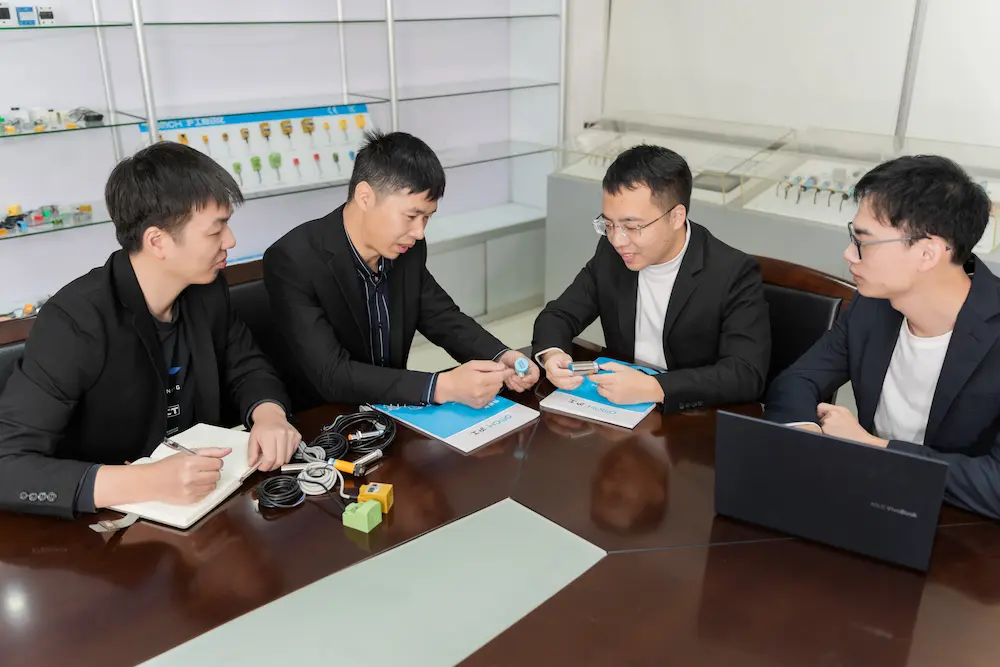
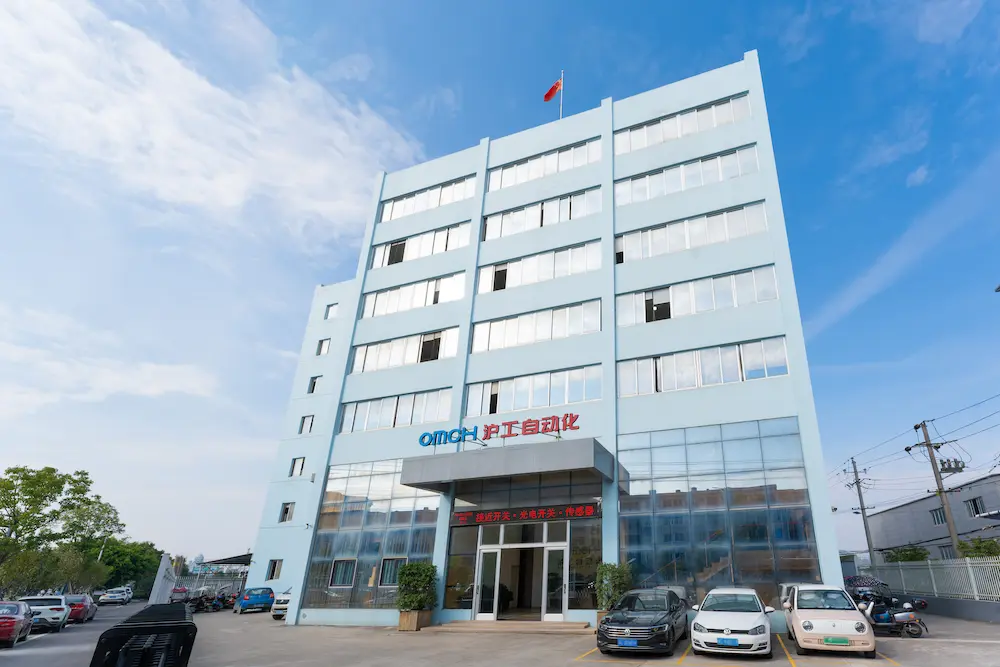
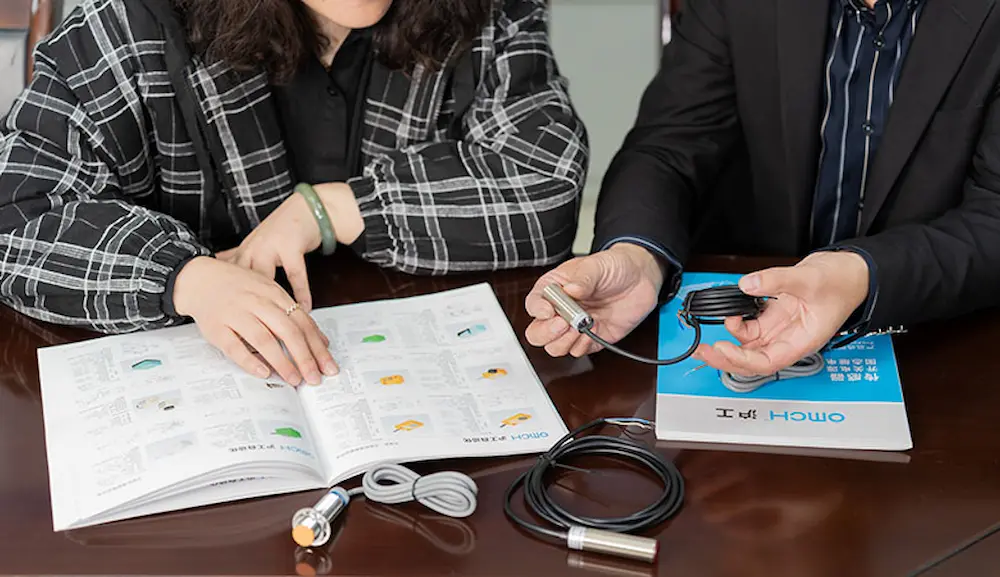
OMCH is a full-fledged manufacturer of industrial automation and low-voltage electrical products, which was founded in 1986 and deals with the research and development, manufacturing, and sales of its products. Having a presence in more than 100 countries and a portfolio of 72,000+ customers, OMCH has become a reliable international supplier of high-quality and versatile automation components.
- “One-Stop” Product Ecosystem: Offers an exhaustive range of over 3,000 SKUs, covering everything from sensors and power supplies to pneumatic components and low-voltage distribution.
- Global Trusted Certification: The products are firmly founded on the international standards, including IEC, CE, RoHS, and ISO9001, which provide high-level confidence to the global B2B procurement.
- 24/7 Rapid Response: It is defined by the model of “customer-first” service, which offers 24/7 technical support and 1-year warranty with quality compensation guarantees.
- Scalable Manufacturing & Delivery: Has a 8,000 sqm modernized warehouse with 7 high-tech production lines and 86 branches in the country to ensure rapid global delivery.
- Pepperl+Fuchs (Germany)

Pepperl+Fuchs is generally referred to as an electrical explosion protection and sensor technology innovator. The company is a market leader in the market of process and factory automation, particularly in harsh or hazardous environments, as it invented the first inductive proximity sensor in the world.
- Inductive Technology Leadership: They possess the most and most consistent inductive sensor portfolio in the market since they are the pioneer of the proximity switch.
- Explosion Protection Experts: World-renowned “Intrinsic Safety” technology, the best choice in oil, gas, and chemical automation.
- IO-Link Integration Pioneers: A driving force behind the IO-Link standard, they ensure that their sensors are all ready to be digitized and bi-directional.
- Ruggedized Engineering: Specialized in “extreme environment” sensors that resist high pressure, corrosive chemicals, and extreme temperatures.
- Banner Engineering (USA)

Banner Engineering is a major producer of smart sensing, machine safety, and industrial LED lighting systems in the US. Banner is particularly reputed to possess user friendly designs and ability to respond to demanding sensing applications through novel photoelectric and wireless technologies.
- World-Class Photoelectric Sensors: Offers one of the widest ranges of photoelectric sensors that are capable of detecting the most difficult objects, including clear objects and dark-colored surfaces.
- Wireless IIoT Solutions: A leader in industrial wireless technology, providing easy-to-deploy sensor networks for remote monitoring and “Smart Factory” upgrades.
- Advanced Industrial Lighting: Integrates high-quality LED lighting with sensor feedback (Pro Editor), which enables the visual status indication on the factory floor to be intuitive.
- User-Centric Configuration: Known to have very intuitive interfaces and a “teach-mode” configuration that saves on installation time and complexity to maintenance personnel.
Strategies for Integrating Smart Sensors into Legacy Systems
Most manufacturers are not building new plants, they are trying to modernize the so-called “Brownfield” sites with 20-year-old machines.

- The Retrofit Approach
You don’t need to replace a 2005-era CNC machine to make it “Smart.” By adding external Vibration and Current Sensors, you can capture the machine’s behavior and feed it into an IIoT gateway. This provides the same data as a brand-new machine at 1/10th of the cost.
- Use Protocol Converters
Legacy PLCs (Programmable Logic Controllers) often speak older languages like Modbus or Profibus. Utilizing Smart Gateways that can convert these protocols to OPC UA allows you to bridge the gap between old hardware and new AI analytics software.
- Start with High-Impact Areas
Don’t try to sensorize the entire factory at once. Identify the “Bottle-neck” machine—the one whose failure stops the entire plant. Focus your initial sensor investment there to prove ROI before scaling.
- Leverage Wireless Solutions
In legacy layouts, the cost of labor to run electrical conduits is often higher than the sensors themselves. Wireless IIoT sensors (using LoRaWAN or Zigbee) allow for rapid deployment without the need for complex wiring, enabling data collection in previously inaccessible areas.


 English
  Arabic
  Turkish
  Russian
  Spanish
  French
  Indonesian
  Portuguese