


In the era of Industry 4.0, industrial sensors are the nervous system of modern factories. From simple limit switches, pressure sensors, and temperature sensors to motion sensors and complex vision systems, these devices play a pivotal role in collecting the critical data required for automation, process control, quality control, and predictive maintenance. Understanding the distinct capabilities of different industrial sensor types is the first step toward building a reliable system. However, the sheer amount of sensor technologies can be overwhelming to the automation engineers, procurement managers, and maintenance teams.
Selecting an inappropriate sensor may result in false alarms, machine failure, and expensive industrial production mistakes. The awareness of sensor technology peculiarities is an obligatory requirement in case of creating a new assembly line or updating the old equipment.
This comprehensive guide dissects the landscape of types of industrial sensors, moving from fundamental principles to advanced IIoT applications, helping you navigate the selection process with engineering precision.
Fundamental Principles: Contact vs. Non-Contact Sensing
Before getting down to specific technologies, it is worth knowing the two large methodologies of detection, that is, contact and non-contact.
Contact Sensing (Electromechanical)
Mechanical limit switches were used in the past as a basis of automation. These machines collide with the target object physically to provoke a response. They are strong, easy to wire and not influenced by electrical noise, but they wear and tear mechanically. They possess lower response rates and are capable of physically injuring weak targets.
Non-Contact Sensing (Electronic)
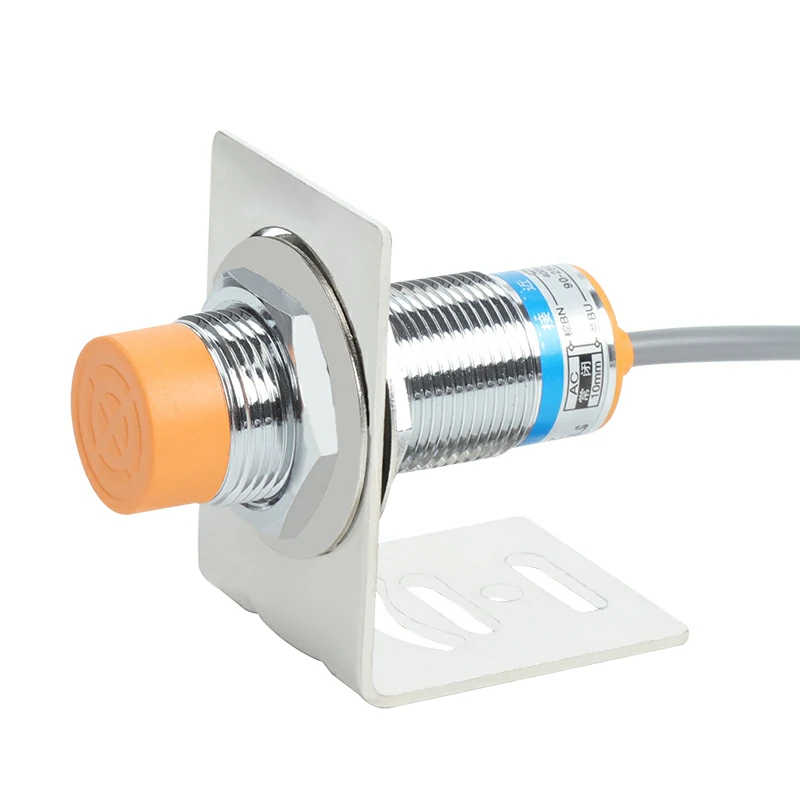
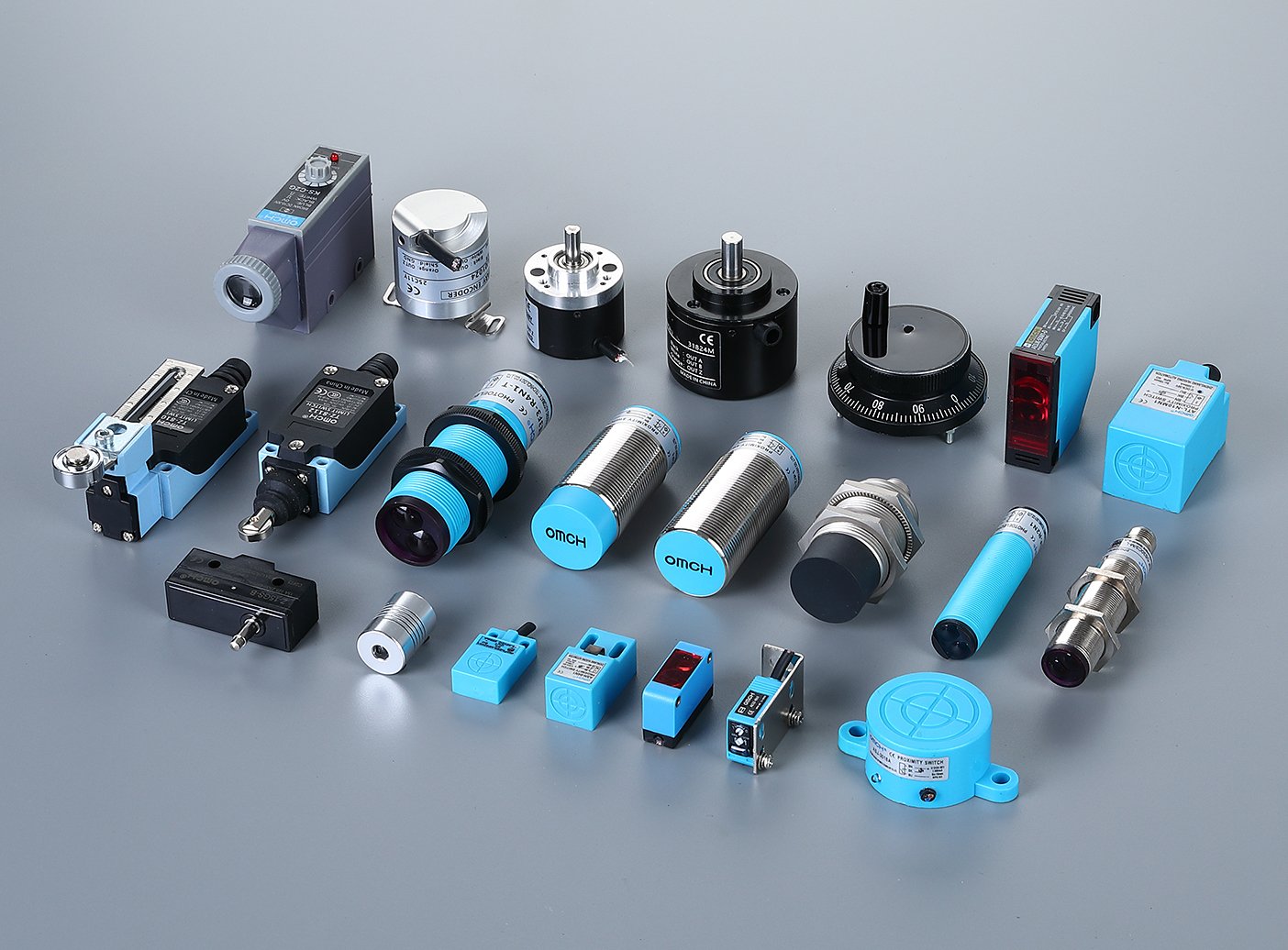
The current industrial automation sensors have massively moved to non-contact sensing to enhance durability and speed. These sensors, such as proximity sensors, are used to sense the presence or location of an object without touching it, using magnetic fields, light, sound waves, or capacitance to convert physical changes into electrical signals.
- Wear-Free Operation: No physical contact means an infinite mechanical lifespan.
- High Speed: Electronic switching frequencies can exceed 5,000 Hz, essential for high-speed packaging.
- Target Safety: Ideal for detecting wet paint, food products, or fragile electronics.
Key Sensor Categories by Target Object

The target material is the first filter in sensor selection. When evaluating the various types of sensors used in industrial automation, the target material usually determines the technology. What are you trying to detect? Sensor technology is determined by the physical properties of the target.
Presence Detection Sensors: Solutions for Object Positioning
These are the workhorses of the manufacturing floor and they give binary (On/Off) signals to show the presence of an object.
| Sensor Type | Detection Principle / Target | Best Applications | Key Advantages |
| Inductive Sensors | Oscillating Electromagnetic Field Detects Metallic objects (ferrous & non-ferrous). | Machine parts, gear teeth counting, cam position, metal stamping. | Highly resistant to oil, dirt, and water (IP67). Robust for automotive & heavy machinery. |
| Capacitive Sensors | Electrostatic Field Detects Non-metal objects & Liquids (based on dielectric constant). | Liquid level control (through walls), granules, powder, wood, plastic parts. | Sensitivity is adjustable to ignore container walls and detect fluid inside. |
| Photoelectric Sensors | Light Beam (LED/Laser) Detects Transparent objects or Long-distance targets. | Conveyor systems, counting boxes, glass bottles (clear objects). | Most flexible range. Three modes: Through-beam (long range), Retro-reflective, Diffuse. |
| Magnetic Sensors | Magnetic Field Detects magnets on pneumatic cylinder pistons. | Pneumatic systems: Confirming “end-of-stroke” status in clamps & arms. | Non-intrusive installation; detects through cylinder walls without drilling. |
| Ultrasonic Sensors | Sound Waves (Echo) Detects Sound-reflecting materials, regardless of color/transparency. | Clear films, glass, varied colors, and dusty environments. | Works on uneven surfaces and liquids where optical sensors fail due to foam or refraction. |
Advanced Sensing: Measurement, Inspection, and Complex Targets
In cases where basic “presence” detection is not needed, sophisticated sensors can give valuable information on “where”, “how much” or “what type”.
| Sensor Type | Detection Principle / Function | Best Applications | Key Advantages / Performance |
| Fiber Optic Sensors | Light via Fiber Cable Separates electronics (amplifier) from sensing head. | Tight spaces: Semiconductor pins, SMD components, O-ring verification. | Miniature Size: Sensing heads as small as needles (M3/M4) fit where standard sensors cannot. |
| Laser Displacement Sensors | Triangulation / Time-of-Flight Measures exact distance/thickness values (e.g., 10.42mm). | Quality Control: Brake disc thickness, robot positioning, surface flatness. | High Precision: Provides micron-level resolution for measurement (not just On/Off). |
| Contrast & Color Sensors | RGB Light Source Detects subtle light intensity differences or specific colors. | Packaging: Detecting “eye-marks” or registration marks for cutting wrapping material. | High Sensitivity: Detects low-contrast targets (e.g., yellow mark on white) that standard photoelectrics miss. |
| Vision Sensors | Image Capture & Processing Analyzes patterns, codes, and shapes. | Inspection: Label verification, skewed caps, reading QR/Barcodes. | Multi-Tasking: Performs multiple checks (presence + alignment + content) in a single pass. |
Critical Technical Specifications for Performance
The appropriate type of sensor is only the start. It aligns the technical requirements to the needs of the application that the engineering expertise is required.
Sensing Range and Response Frequency
- Sensing Range (Sn): This is the maximum distance at which the sensor detects the standard target. This in the case of inductive sensors is determined by the sensor diameter (e.g. an M18 sensor will be more inclined to sense further than an M8).
- Response Frequency: This is the number of switches per second that the sensor can make. A conventional sensor may not detect a bottle that is moving at a high speed (5 milliseconds) in a bottling line. You need high-frequency sensors (often >1kHz) to capture rapid movement.
Accuracy, Resolution, and Hysteresis
- Resolution: The smallest change in distance the sensor can detect.
- Hysteresis (Differential Travel): The distance between the “switch-on” point as the object approaches and the “switch-off” point as it moves away. Hysteresis also allows the sensor not to chatter (turning on and off quickly) in case the target vibrates slightly at the detection threshold. A stable hysteresis (typically 10-15% of sensing range) is vital for reliable operation in vibrating machinery.
Real-World Applications: Optimizing Efficiency Across Key Industries
The real value of a sensor is assessed through its capacity to solve some of the pain points in the industry. Here, it will be a strategic benefit to join a full-fledged manufacturer like OMCH. OMCH has over 3000+ SKUs and 72,000+ customers in the world and it applies decades of experience to provide unique solutions to certain industrial problems.
Automotive Manufacturing: Welding and Assembly Lines
- The Challenge: The car industry is savage. Welding robots generate strong magnetic fields and shower sensors with hot weld slag.
- The Solution: Sensors in this industry must have Teflon coating to avoid slag build-up and full-metal faces to avoid impact. The inductive sensors of OMCH are strictly tested to be able to withstand such conditions, and continuity is guaranteed in high-value production lines where downtime costs thousands of minutes.

Food and Beverage: Hygienic and Washdown Processes
- The Challenge: Sensors are subjected to high-pressure, high-temperature chemical washdowns (CIP/SIP) daily. One of the risks is bacteria accumulation.
- The Solution: Sensors must meet IP69K standards and use SS316L stainless steel housing to prevent corrosion. OMCH products are IEC compliant and have RoHS certifications, which means that they are safe to the high standards of food processing and can withstand harsh cleaning agents.
Logistics and Packaging: High-Speed Sorting Systems
- The Challenge: E-commerce has pushed the limits of conveyor speed. Sensors should not be triggered by false alarms when detecting boxes of different colors and materials.
- The Solution:Background Suppression (BGS) High-frequency photoelectric sensors are necessary to ignore the conveyor belt and only the package. The ability of OMCH to provide a “one-stop” solution, including power supplies, the sensors and relays, enables the logistics integrators to simplify their supply chain and guarantee compatibility of the components.
CNC and Machine Tools: Precision in Oily Conditions
- The Challenge: Fluid and oil reduction are violent. They are capable of hardening standard plastic sensor faces and cutting cables, shorting them.
- The Solution: Oil-resistant sensors with specialized cable jackets (PUR) and fortified sealing. The manufacturing process of OMCH that involves strict ISO9001 quality control and testing (ingress protection) makes these parts endure within the “splash zone” of CNC lathes and mills.
Electronics and Semiconductor: Handling Miniature Components
- The Challenge: Targets are microscopic, static-sensitive, and valuable. There is no space within the machine.
- The Solution: Fiber optic units and laser sensors. The wide range of products offered by OMCH (“Full Coverage/Multi-spec”) guarantees that even the niche needs of micro-detection are satisfied, which is why the accuracy of chip placement and PCB assembly is required.
Adapting Sensors to Harsh Industrial Environments
A sensor that works perfectly on a test bench may fail within an hour on the factory floor if environmental factors are ignored.
Understanding IP Ratings: IP67, IP68, and IP69K
The international standard of defining sealing effectiveness is Ingress Protection (IP) ratings.
| IP Rating | Description | Typical Application |
| IP40 | Protected against solid objects >1mm; no water protection. | Control cabinets, clean indoor assembly. |
| IP65 | Dust tight; protected against low-pressure water jets. | General factory automation. |
| IP67 | Dust tight; protected against temporary immersion (1m depth). | Machine tools, wet environments (most common industrial standard). |
| IP69K34 | Dust tight; protected against high-pressure, high-temp steam jets. | Food & Beverage, Pharmaceutical washdown zones. |
Specialty Sensors: Explosion-proof and High-Temperature
- Explosive Atmospheres: In flour mills, paint shops, or oil & gas facilities, a spark can be catastrophic. Intrinsically safe or explosion-proof sensors (ATEX/IECEx certified) limit electrical energy to prevent ignition.
- Extreme Temperatures: Standard sensors fail above 70°C. High-temperature inductive sensors utilize specialized coil potting and electronics to survive temperatures up to 230°C in steel foundries or glass manufacturing.
Electrical Output, Wiring, and Physical Installation
After dealing with physics and the environment, it is now time to deal with integration. How does the sensor connect to the PLC?
Output Logic: NPN vs. PNP and NO vs. NC
This is often the most misunderstood aspect for new engineers. Correct selection depends on your region’s standards and your PLC’s input card type.
- Wiring Output: NPN vs. PNP
This determines how the sensor connects electrically to the PLC.
| Type | Also Known As | Electrical Function | Typical Region / Usage |
| NPN | Sinking | Switches the Negative (0V) to the load. | Common in Asian and US equipment. |
| PNP | Sourcing | Switches the Positive (+24V) to the load. | Standard in Europe. Safer for fault troubleshooting (a short to ground blows a fuse rather than triggering a false “On” signal). |
- Switching State: NO vs. NC
This determines the default state of the signal when no target is present.
| State | Full Name | Signal Behavior | Key Application |
| NO | Normally Open | OFF initially Turns ON when target is detected. | Most Common. Used for counting, positioning, and general presence detection. |
| NC | Normally Closed | ON initially Turns OFF when target is detected. | Safety Critical. Used for “End of Travel” limits or wire-break detection (if the wire cuts, the machine stops). |
Switching vs. Analog Signals (4-20mA)
- Discrete (Switching): Simple digital 0 or 1. Used for counting, presence, and limits.
- Analog: Outputs a varying voltage (0-10V) or current (4-20mA) proportional to measurement. Used for monitoring tank levels or tension control. Long distances Long distances prefer current loop (4-20mA) because it is not sensitive to voltage drop.
Housing Styles (M8/M12/M30) and Connection Types
- Cylindrical (M8, M12, M18, M30): The standard threaded barrel allows for easy adjustment of sensing distance by moving the nuts. Greater diameters tend to have greater sensing ranges.
- Connection:
- Pre-wired (Cable): Less expensive, but in case the sensor fails, you have to re-run the whole cable through the machine trays.
- Connector (M12/M8 Pigtail): Can be replaced by a “plug and play”. It is very advisable to minimize maintenance downtime.
5 Steps to Selecting the Right Industrial Sensor
It takes a systematic way of navigating the thousands of options. Use this decision funnel to zero in on the perfect component:
- Identify the Target Material & Speed: Is it metal? (Inductive). Is it plastic/liquid? (Capacitive/Photoelectric). Is it moving faster than the eye can see? (Check Response Frequency).
- Assess Environmental Hazards: Are there washdowns? (Need IP69K). Is there welding slag? (Need Teflon). Is it a standard clean room? (Standard IP67 is sufficient).
- Determine Sensing Range & Mounting Space: Do you have room for a bulky M30 sensor to get a 20mm range, or do you need a miniature sensor that fits in a gripper?
- Confirm Electrical Output: Check the PLC input card. Does it require NPN or PNP? Do you need a connector cable or pre-wired?
- Balance Brand Quality with Project Budget: It is the most critical commercial decision. Engineers can be loyal to expensive legacy brands in case of critical safety loops. However, when it comes to the majority of the common automation needs, the possibility to find a partner that can provide Global Certifications (UL, CE, IEC) at reasonable costs is the determinant of the profitability of the project and its sustainability.
Smart Sensors and Future IIoT Trends
The future of sensing is connectivity. The era of “dumb” sensors that only switch on and off is ending.

IO-Link Technology IO-Link is a point-to-point communication protocol that converts conventional sensors into smart devices.
- Remote Configuration: Change sensor parameters (e.g., sensing distance) via the PLC software without sending a technician to the line.
- Diagnostics: The sensor can report “Lens Dirty” or “Wire Broken” before the machine stops, enabling Predictive Maintenance.
As factories move toward the Internet of Things, sensors are no longer just triggers—they are data collectors. They monitor temperature, vibration, and their own health, feeding the Big Data analytics that optimize production efficiency.
Conclusion
Industrial sensors are the fundamental components of automation. Whether it is a massive car chassis or a small resistor, the principles of selection are the same, know what you want to do, respect the environment, and verify the integration.
With the tips in this article, such as the difference between inductive and capacitive, and the appropriate IP rating, you are in a good position to come up with systems that are not only functional, but also robust, efficient, and future-proof. Choosing the right sensors is the key to maintaining this efficiency.



 English
  Arabic
  Turkish
  Russian
  Spanish
  French
  Indonesian
  Portuguese
  Thai
Thai  Vietnamese