



The electromechanical relay (EMR) is one of the most widespread yet misunderstood components in industrial applications and circuit design. While they may appear to be simple on/off switches, the reality is far more complex. From the microscopic composition of contact alloys to the macroscopic architecture of DIN rail mounting, choosing the wrong component from the myriad of electromechanical relay types can be disastrous—leading to contact welding, coil burnout, and signal degradation.
This blog provides a technical, in-depth look into the classification, internal mechanics, and selection process of various types of relays. Going beyond mere definitions, we offer practical engineering insights to ensure your manufacturing lines and automation systems operate with peak reliability.
Understanding the Core Mechanism: How EMRs Work
To understand the differences between types of relays, it is necessary to grasp the common mechanism they share. At its core, a standard electromechanical relay is a device that utilizes the physical laws of electromagnetism to convert an electrical signal into a mechanical switching action. This galvanic isolation between the control circuit (low power) and the load circuit (high power) has made these devices indispensable.
The mechanism is based on the four main elements that are functioning together:
- The Coil: A copper wire wound around a core. It produces a high electromagnetic field when current is passed through it.
- The Armature: This is an armature that is made of ferrous material and it is drawn towards the center of the coil as the magnetic field is generated.
- The Return Spring: A tensioning component that pulls the armature back to its original position once the current to the coil is cut.
- The Contacts: A set of contacts formed by conducting metal surfaces that physically touch (make) or separate (break) to complete the circuit.

The Engineering Challenge: Hysteresis
No matter what type of electromechanical relay you choose, the concept of Hysteresis has to be known. The voltage required to cause the armature to move in (Pick-up Voltage) is always not less than the voltage required to cause it to release (Drop-out Voltage). This mechanical inertia helps to avoid chattering and is one of the main factors to guarantee stability.
Structural and Logical Taxonomy: Beyond the Basics
Types of electromechanical relays are commonly categorized according to their physical design and their control philosophy. These structural variations outline the life time, speed and the ability of the component to perform under certain environmental conditions.
Armature vs. Reed Relays
Armature Relays (The Industrial Standard):
Among the most common types of relays in heavy industrial applications, these are the rough workhorses. They use a hinged armature to move contacts. They are robustly constructed so that they can operate with large currents (5A up to over 100A).
Reed Relays (Precision and Speed):
Unlike more common armature types, such electromechanical relay types are made of two ferromagnetic blades (reeds) sealed in a glass capsule.
- Pros: It is very quick to change, it does not oxidize (because of inert gas) and its mechanical life is very long.
- Cons: Extremely low current carrying capacities. They can be affected by contact welding when inrush currents (e.g. capacitive loads) occur.
Monostable vs. Latching Logic
Monostable (Non-Latching) Relays:
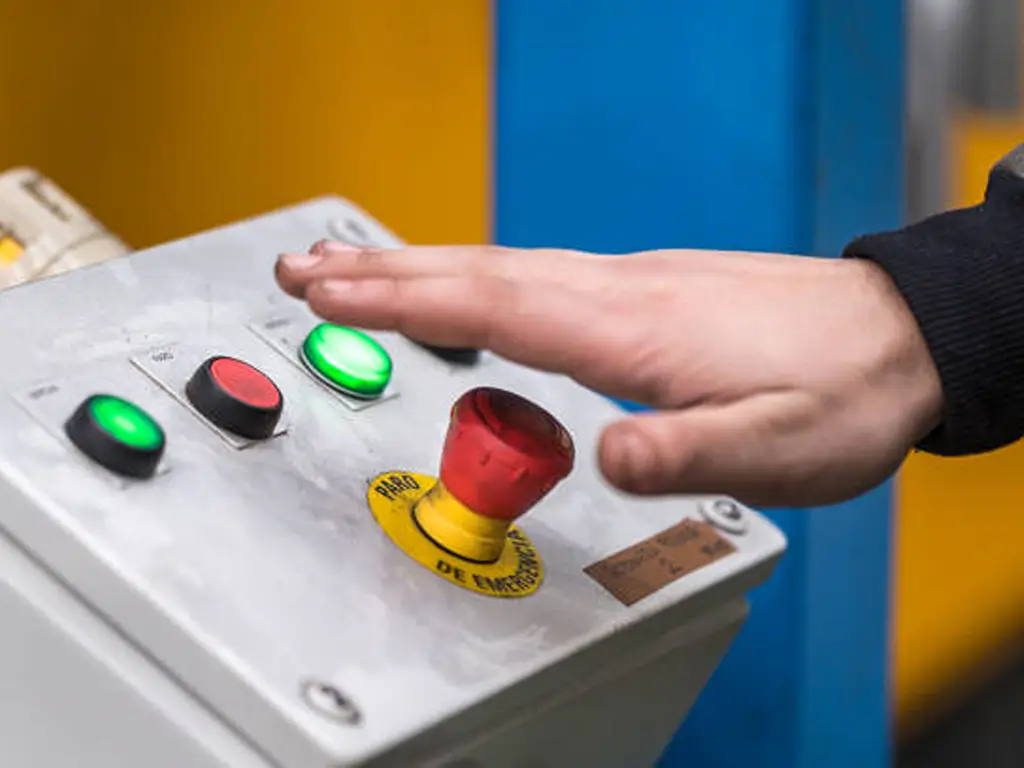
This is the default setting. In the application of power to the coil, the relay is only active. The contacts will be returned to their default position by the spring in case of the loss of power (Fail-Safe). This is required in safety circuits- e.g. an emergency stop system where the circuit is supposed to be opened by loss of power.
Latching (Bistable) Relays:
Latching relays utilize a permanent magnet or a mechanical locking mechanism to hold the contact position after the coil power is removed. They require a pulse to set and a second pulse (or reverse polarity) to reset.
- Application: These are ideal for energy-sensitive applications or memory functions where the state must be maintained in the event of a power failure. However, they are unsuitable for safety-critical applications because they fail to automatically reset (fail-safe) when power is cut off.
Categorizing by Switch Configuration: Poles and Throws
You will come across the terminology of “Poles” and “Throws” when you are looking through a list of the types of electromechanical relays.
- SPST (Single Pole, Single Throw): The most basic one. It has four terminals and it is a simple on-off switch. It is commonly referred to as either Form A (Normally Open) or Form B (Normally Closed).
- SPDT (Single Pole, Double Throw): A changeover switch. It has a common terminal that links to one of the outputs at rest and to the other at activity. This is needed to alternate between two sources of power or status indicators.
- DPDT (Double Pole, Double Throw): Basically two SPDT switches operated by a single coil. This is the standard of the industry of motor reversing circuit (reversing of polarity) or isolation of the live and the neutral simultaneously.
- 4PDT (Four Pole, Double Throw): This is applied in industrial control panels where a single signal is required to turn on a number of independent indicators, both alarms and secondary control circuits simultaneously.

Industry-Specific Categories and Protective Types
In addition to physical structure, electromechanical relay types are also made to fit certain applications and load profiles.
General Purpose, Power, and Signal Relays
- Signal Relays: Low voltage and low current (usually less than 2A). They play an important role at low energy levels (wetting current) to ensure data integrity in telecommunications and instrumentation, and contact reliability.
- General Purpose Relays: The intermediate relays typically had a range of 5A to 10A. They are used in many industrial applications, HVAC systems, appliances and simple automation logic.
- Power Relays: Designed to carry high inrush currents and inductive loads, usually between 20A and 80A. Their contact gaps are larger to prevent electric arcs which occur when heavy motors or heaters are switched.
Specialized Protective and Thermal Variations
- Force-Guided (Safety) Relays: In this type of unit, the contacts are connected together mechanically. When a Normally Open (NO) contact closes, the Normally Closed (NC) contact will not be able to close. This mechanical assurance should be on safety modules and E-stop circuits.
- Thermal Overload Relays: These are not switching relays in the usual sense of the term, but protection devices. They employ a bimetallic strip which folds when overheated by excessive current and which has mechanical action of breaking the circuit to prevent burning of motors.
Contact Material Science: Tailoring Alloys for Specific Loads
This will probably be the least considered in the selection of relays. The lifespan of a relay will be 10 years or 10 minutes based on the contents of the contact. The engineers are expected to align the alloy with the type of load (resistive, inductive or capacitive).
The performance characteristics of the most common contact materials are summarised in the table below:
| Contact Material | Chemical Symbol | Key Characteristic | Best Application | Limitations |
| Silver Nickel | AgNi | High electrical conductivity; good resistance to material transfer. | Resistive Loads: Heaters, general automation logic, simple solenoids. | Prone to welding under high inrush currents. |
| Silver Tin Oxide | AgSnO2 | Superior resistance to welding and material erosion; high thermal stability. | Inductive/Capacitive Loads: Motors, LED drivers, lamp ballasts with high inrush. | Higher contact resistance; requires higher coil power. |
| Silver Cadmium Oxide | AgCdO | Excellent arc-quenching properties (Legacy material). | General purpose inductive loads. | Restricted in many regions (RoHS non-compliant) due to Cadmium toxicity. |
| Gold-Clad / Gold-Flashed | Au + Ag | Extremely resistant to corrosion and oxidation. | Signal/Low-Level Loads: PLCs, audio, sensors, dry circuits. | Gold layer evaporates (burns off) if used with high current/voltage. |
Note: For industrial environments where motors and solenoids are common, AgSnO2 is generally the superior choice for longevity.
Mounting Architectures and Environmental Sealing
How a relay is physically integrated into a system affects maintenance protocols and environmental resilience.
PCB, Socket, and DIN Rail Systems
- PCB Mount: Soldered directly to the board. Conserves space and cost, but is hard to replace.
- Plug-in / Socket Mount: The relay plugs into a base. The most important systems that require speed of maintenance. When a relay breaks, it is possible to replace it within a few seconds without a soldering iron.
- DIN Rail Mount: The industrial control cabinet standard. These modular units often combine the relay, socket, and LED indicator into a single interface module, streamlining panel wiring.

Sealing Levels: From Flux-Tight to Hermetic
Packaging classifications generally comply with the IEC 61810 standard:
- RT I (Dust Protected): Standard housing, not sealed.
- RT II (Flux Proof): Resists solder flux but cannot be washed.
- RT III (Wash Tight): Sealed against washing processes (IP67 equivalent). Important to PCBs that are being cleaned in water.
Electromechanical vs. Solid State Relays: A Critical Comparison
The most difficult question that engineers are compelled to respond to is whether to use an Electromechanical Relay (EMR) or a Solid State Relay (SSR).
The following table breaks down the critical trade-offs between these two technologies:
| Feature | Electromechanical Relays (EMR) | Solid State Relays (SSR) |
| Lifespan | Limited: Mechanical wear on contacts and springs limits life (typically 100,000 to 10 million cycles). | Infinite: No moving parts means zero mechanical wear. |
| Switching Speed | Slow: Limited by armature mass (milliseconds). | Fast: Instantaneous semiconductor switching (microseconds). |
| Heat Generation | Low: Low contact resistance means no heatsink is required. | High: Semiconductor voltage drop creates heat; usually requires a heatsink. |
| Electrical Isolation | Complete: Physical air gap provides total galvanic isolation. | Opto-isolated: Good isolation, but minute “Leakage Current” exists even when off. |
| Environment | Sensitive: Susceptible to vibration, shock, and generates acoustic noise/EMI. | Robust: Silent operation, spark-free (safe for hazardous zones), and vibration resistant. |
| Cost | Low: Generally more cost-effective for standard applications. | High: More expensive per pole, especially for high-current ratings. |
| Versatility | High: Can typically switch both AC and DC loads with the same unit. | Low: Usually dedicated to either AC or DC switching (not both). |
The Verdict: SSRs should be used in high-speed, high-cycle control of PID (such as heater elements). General safety, motor switching and applications requiring absolute zero current flow Use EMRs.
Step-by-Step Guide to Selecting the Correct Relay
The choice of the appropriate relay is an elimination process which involves the load restriction and the environment.
Critical Factors in the Selection Process
- Define the Load Type: Is it a heater (Resistive) or a Motor (Inductive)? An inductive load produces a huge spike in “Back EMF” when switched off, and this may arc across contacts. You must de-rate the relay or choose one designed for inductive loads (AC-15 vs AC-1 categories).
- Check Inrush Current: LED power supplies can draw 100x their rated current for a microsecond. Ensure the relay contact material (preferably AgSnO2) can handle this surge without welding.
- Coil Voltage & Environment: Does the coil match your control voltage (12VDC, 24VDC, 230VAC)? Is the ambient temperature within the relay’s operating range?
The OMCH Advantage: Precision Engineering for Industrial Reliability
The specifications are pertinent to know but the quality of the component being produced is the last variable in the reliability equation. A failure in automation in industries can be compared to downtime that can be compared to lost revenue.
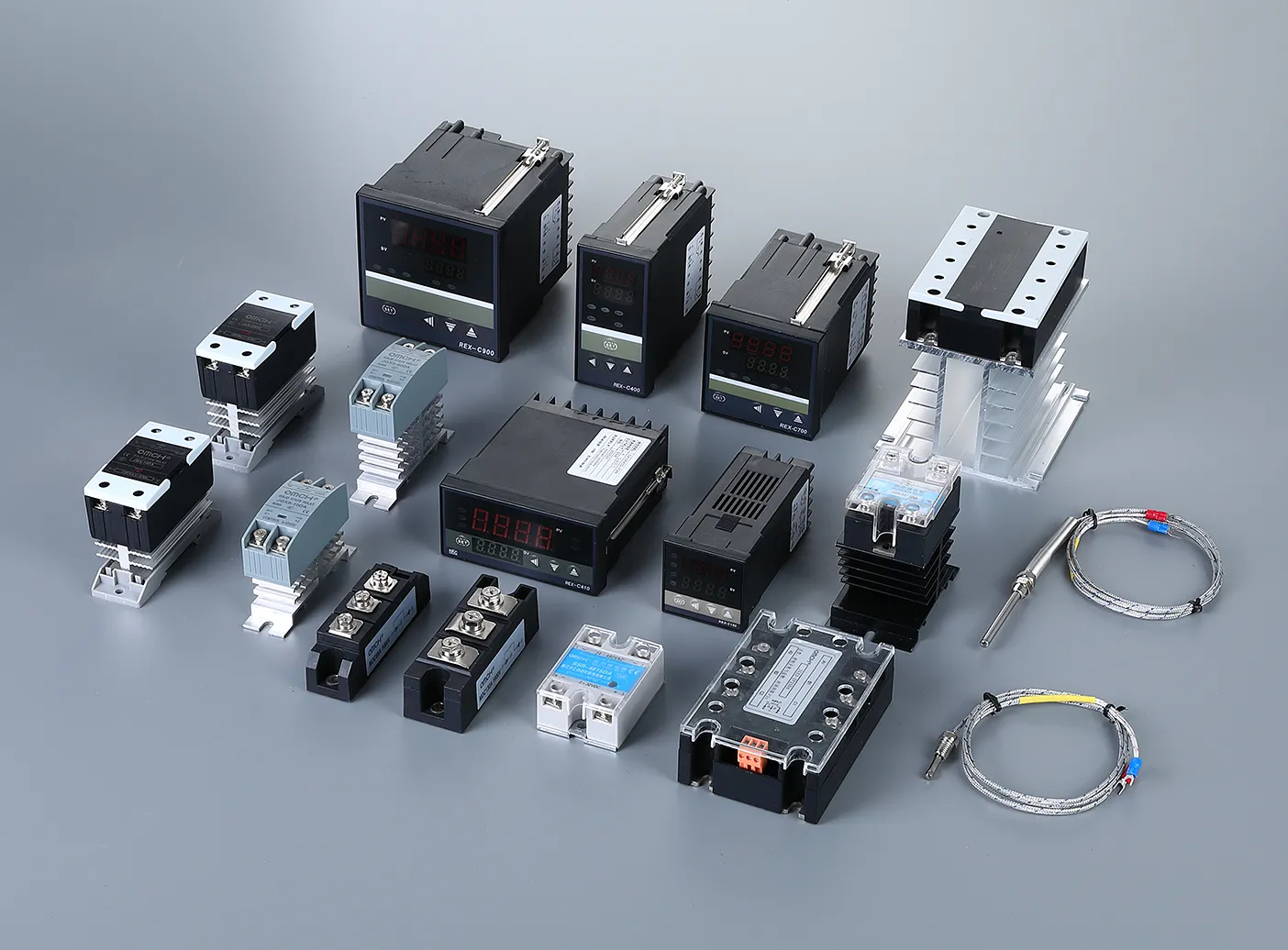
OMCH has addressed these industrial challenges since 1986. As a comprehensive manufacturer of industrial automation parts, OMCH moves beyond standard “off-the-shelf” quality by adhering to a philosophy of engineered reliability.
- Material Integrity: OMCH relays use high grade AgSnO2 contacts with power applications, which are specifically designed to resist the arcing and welding of inductive industrial loads.
- Consistency via Automation: OMCH possesses 7 modernized lines of production and an 8000 square meter plant that removes variability of manual assembly. The relays are very consistent and are supported by the ISO9001, CCC, CE, and RoHS standards.
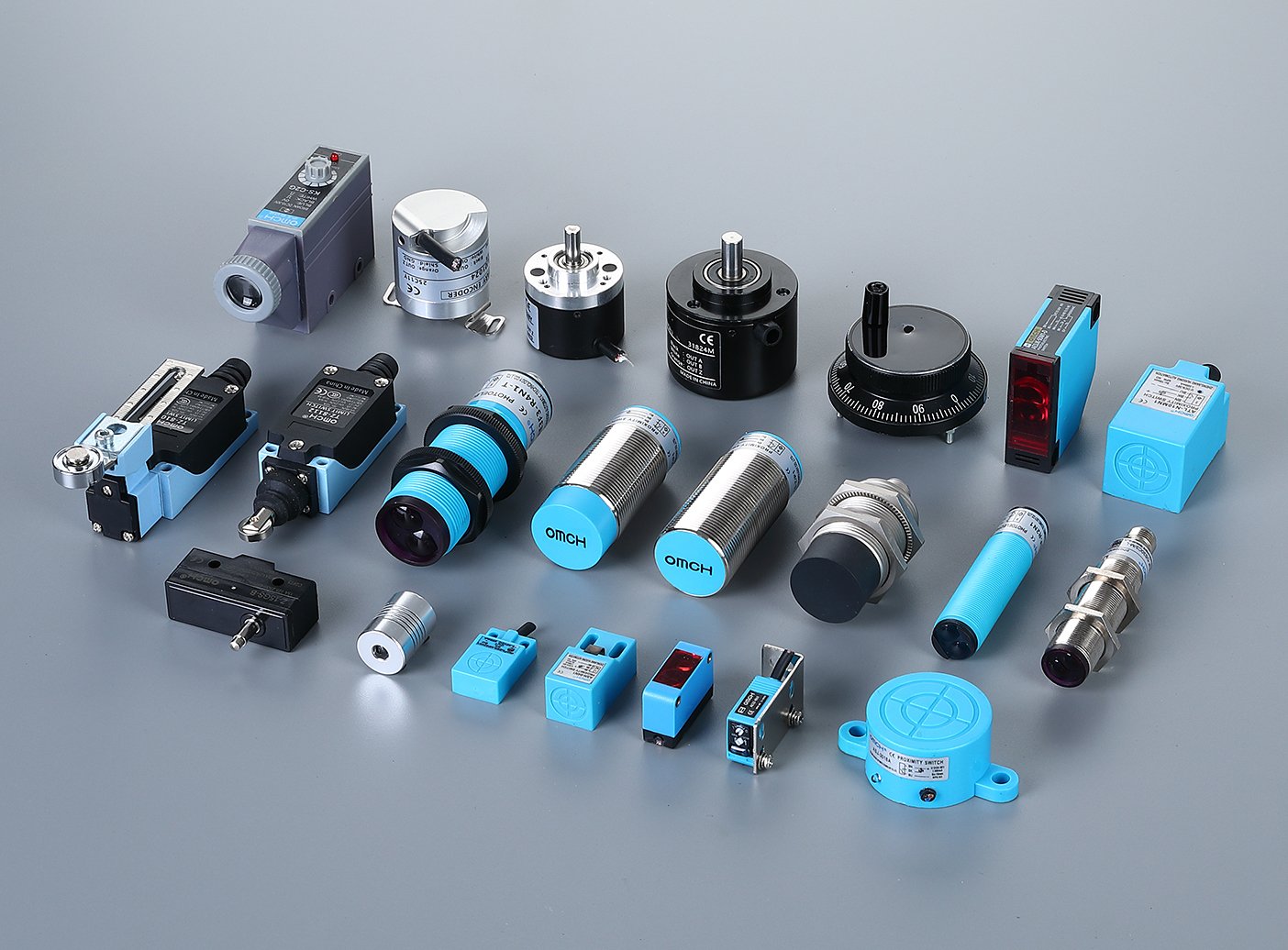
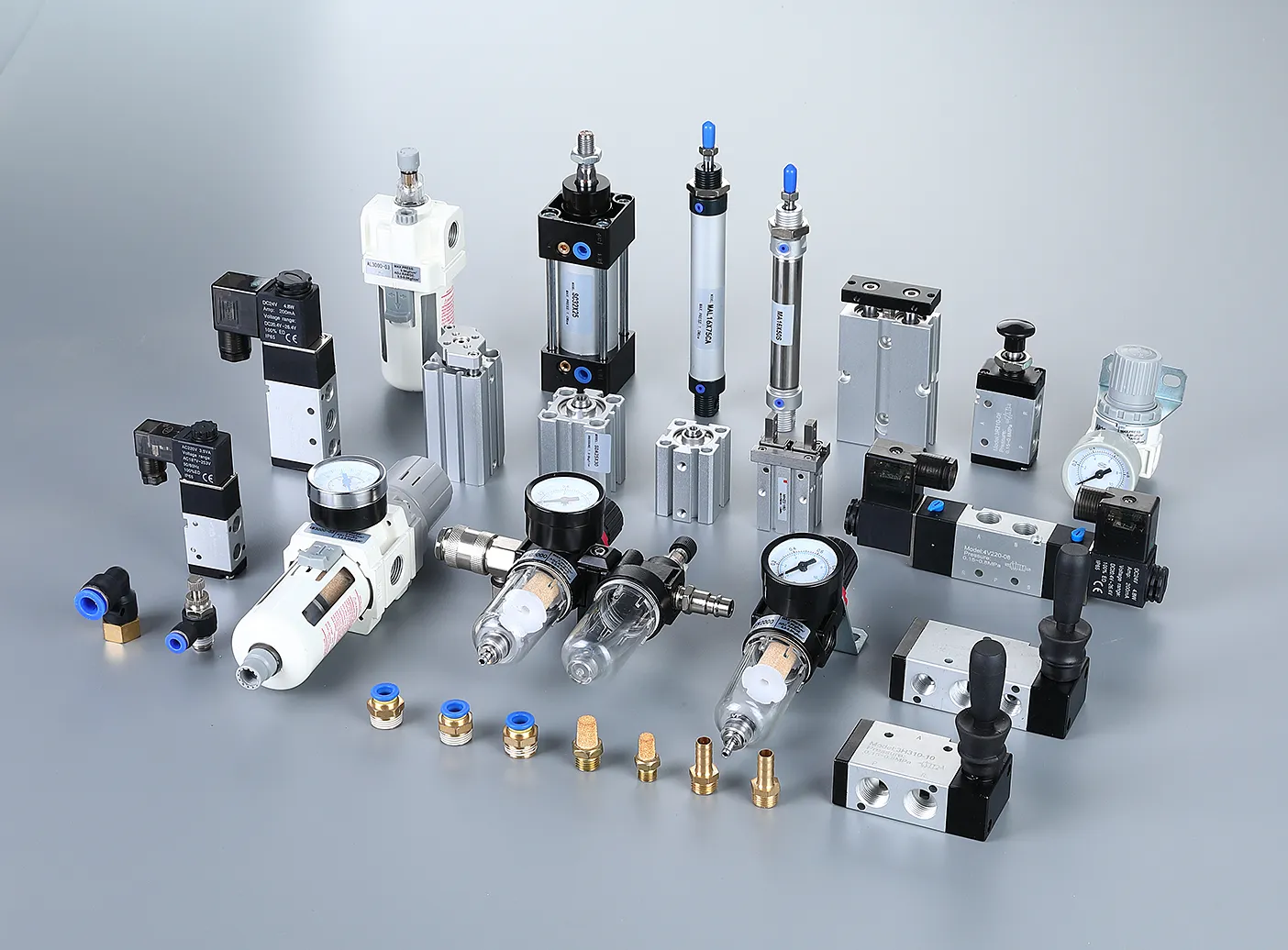
- System-Wide Compatibility: OMCH has more than 3,000 SKUs, including relays and sensors, power supplies and pneumatics, which provides a “One-Stop” solution. This ensures that your relay matches your DIN rail power supply and your sensor logic perfectly, simplifying the procurement and compatibility chain.
- Global Support: OMCH possesses technical and logistical support needed to support international projects that operate in more than 100 countries and 24/7 technical response team.
When you select an OMCH component, you are not just buying a switch; you are investing in a 40-year legacy of industrial stability.
Quick Checklist for Engineers
Before finalizing your BOM (Bill of Materials), verify the following:
- [ ] Load Category: Have I accounted for inductive kickback? (Consider adding a flyback diode or varistor).
- [ ] Contact Material: Does this motor/LED require AgNi or does it require AgSnO2?
- [ ] Coil Voltage: Does it have a power supply that is regulated? (Relays have a tolerance window).
- [ ] Mounting: Do I need a socket for easy future replacement?
- [ ] Certification: Does the project require UL/CE/CCC listed components?
Under this taxonomy and selection scheme, engineers will be in a position to make the so-called humble relay the strongest part of their automation chain.



 English
  Arabic
  Turkish
  Russian
  Spanish
  French
  Indonesian
  Portuguese
  Thai
Thai  Vietnamese