




In the complex and challenging environment of industrial automation, the components, much like a laptop computer, are frequently appraised on the basis of the aptitude to serve in increasing uptime, efficiency and reliability. Industrial switching power supply units (PSUs) may not have the dazzle and flair of PLCs, robotic arms, and sophisticated sensors, but without an uninterruptible power supply (UPS) providing backup power, those other advanced technologies could not possibly exist. This is a noteworthy omission. In such an environment, a power supply is not like any component but the foundation of the complete system. The apparent inconsequential PSU shutdown is not a simple parts replacement. This is the unscheduled radiation of the plant, the loss of the production work, and the security failure, domino effect that potentially implicates the whole operation. This article digs deeper into the fundamentals of the industrial-grade switching DC power supply to unpack its main capabilities and inherent worth as to explain why its judicious selection is not an operational cost, but an investment in the continuity of operations.
Basic Mission: Precise Energy Conversion from Grid to Device
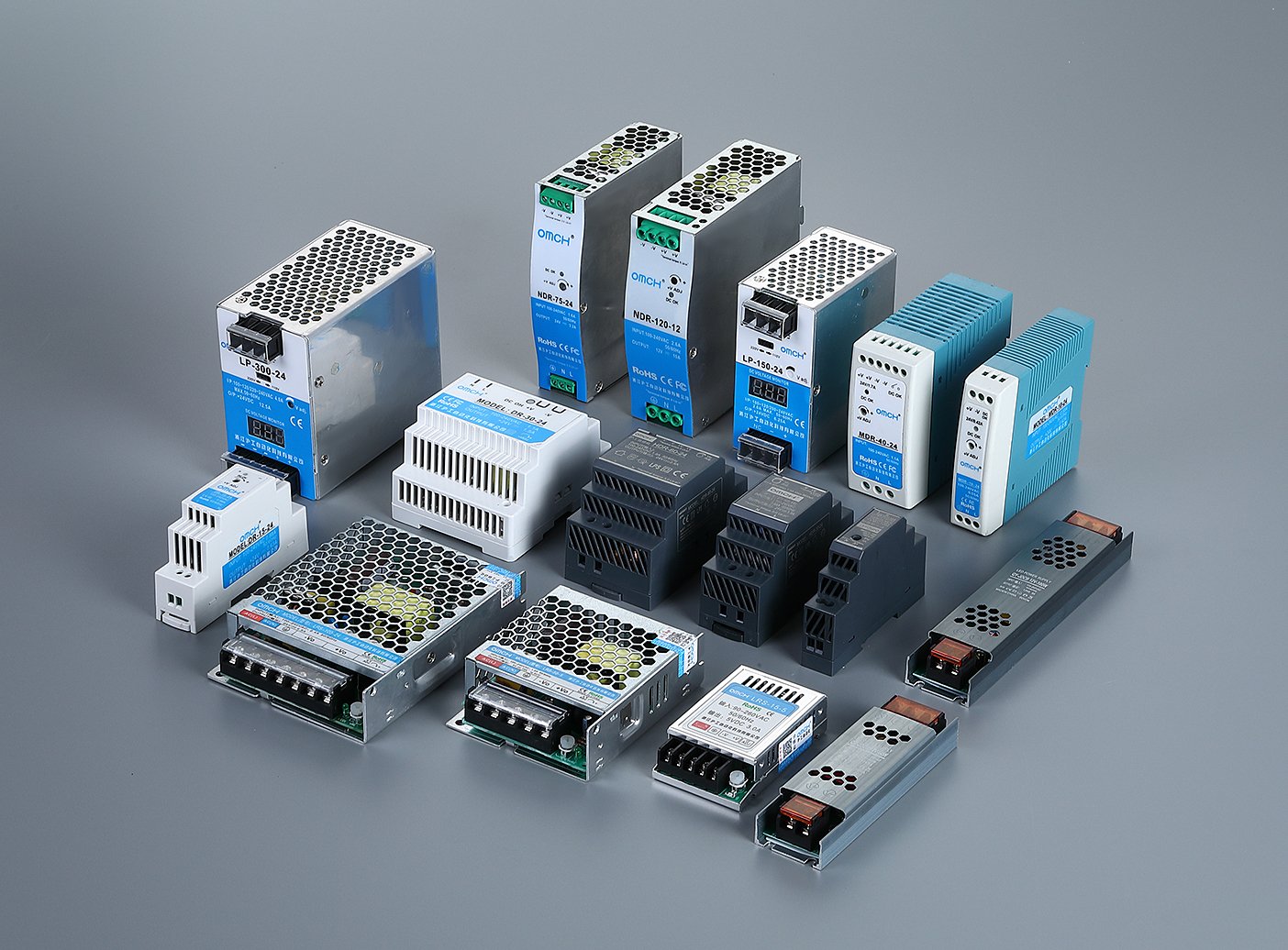
Basing it on the simplest form, the role of any switching power supply, including a mode power supply, is to convert efficaciously electric power. To an industrial PSU, such mission is that of precision and resilience. It takes alternating current (AC) power off of a typical AC mains power supply—which is often prone to fluctuations and instability in an industrial environment—and carefully converts it to the low-voltage direct current (DC) output voltage that the sensitive automation parts can use. All devices including Programmable Logic Controllers (PLCs), Human-Machine Interfaces (HMIs), sensors, actuators, and communication modules that operate on these systems rely on the constant and clean DC power in order to operate correctly.
The resemblance to consumer-grade or personal computers power supply ends there though. Whereas a computer power supply is engineered with respect to a climate-controlled, electrically stable office environment, an industrial PSU is engineered to do battle in the face of chaos, especially for applications in different countries. The industrial environment is another much greater challenge and could be discussed as series of voltage sags, overvoltages, and electrical noise made by motors and variable frequency drives (VFDs). The major difference is seen not only in the conversion itself, but on the resoluteness of the conversion even when faced with coercion. Industrial PSU is a very rugged filter and a stable regulation device, such that, the power delivered to some critical electronics device can be yet impervious, despite the electrical mayhem at the input port. This initial role of sound conversion is the foundation to its role of being a guarantor to system integrity and this can best be compared in a straight forward way.
| Feature | Consumer / IT-Grade PSU | Industrial-Grade PSU |
| Operating Environment | Climate-controlled (10°C to 40°C) | Harsh, wide temperature range (-40°C to 70°C+) |
| Power input Tolerance | Limited range, sensitive to fluctuations | Wide input range, high tolerance for sags/surges |
| Electrical noise | Basic filtering for office environment | Advanced filtering for high EMI/RFI environments |
| Construction | Plastic/thin metal casing, fan-cooled | Rugged metal housing, often convection-cooled |
| Lifespan (MTBF) | 100,000 – 200,000 hours | 500,000 – 1,000,000+ hours |
| Safety Certifications | IT/Consumer standards (e.g., IEC 62368-1) | Industrial standards (e.g., UL 508, IEC 61010-2) |
This distinction makes it clear that while both perform the same basic mission, only one is fit for the factory floor.
Stability Above All: The Lifeline in Industrial Environments
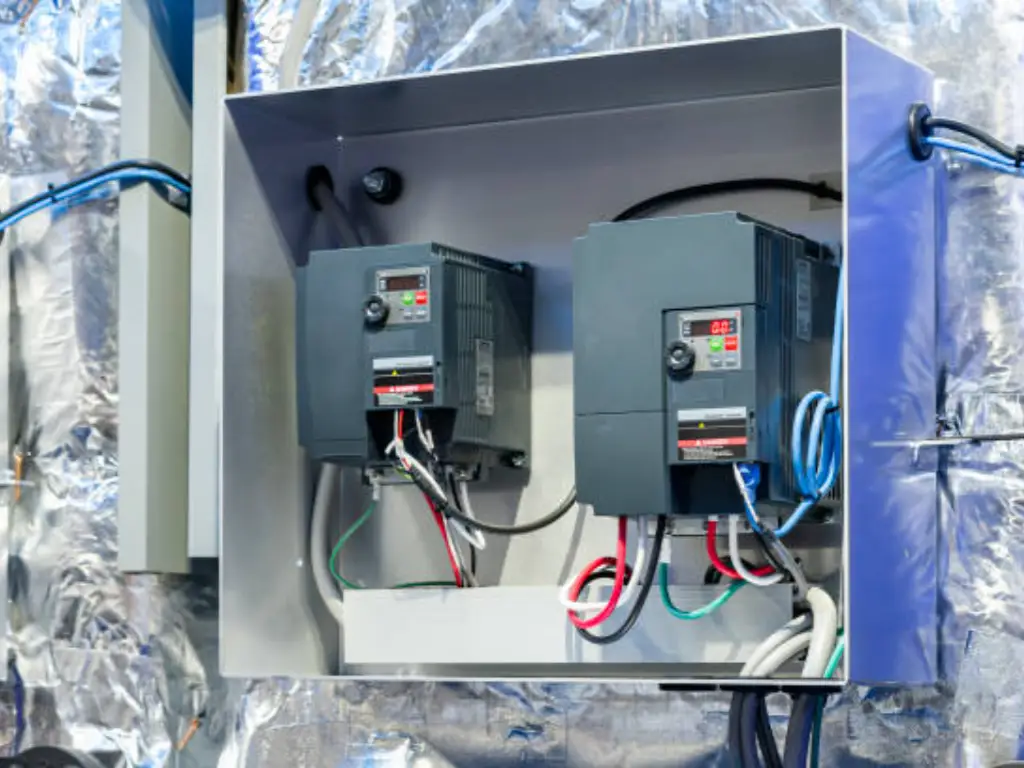
Other than merely conversion, the most critical role of an industrial regulated power supply, often utilizing various types of linear regulators, is the ability to provide constant input voltage, including a single voltage, and voltage stability. Every calculation, every action, and every measurement in an automated system depends on stable electric current, which is no luxury under any circumstances. Even the most trivial variation in output voltage can cause errors to trickle down the whole control loop causing output defects or system shutdown or at least improbability. Two technical parameters are paramount here, voltage regulation and ripple/noise suppression.
To start with load regulation, adjustable power supplies can play a crucial role. An industrial process is dynamic, with motors cranked and cycled off, heaters switched into operation, and solenoids actuated. All these phenomena trigger a burst of the current consumed by the DC power supply. The front panel power input connection ensures that the power supply is able to adjust smoothly to such loads, keeping the voltage output within a stable range even during fluctuations. For sensitive devices like PLCs, even a minor voltage drop can lead to a fault or reset.
Second is the dampening of the ripple and noise. Switching power supplies, by their way of operation, do, of course, cause some high-frequency noise of their DC output voltage. In a benign IT environment, this is normally insignificant. We have a disaster in an industrial atmosphere where such ripples happen. This can appear as jitter in encoder readings, or noise on sensitive analog signals, or as corrupted data packets in a digital communications interface. A professional-grade industrial PSU with high efficiency has the additional features of high-quality filtering and circuitry to provide an entirely smooth DC output, with ripple in the millivolt range. This will provide an assurance that signal is pure in a sensor, logic is executed properly in a controller, and the integrity of the control system is upheld. Here the PSU is the head of the systems and its regulated output is the main steady heart beat upon which all others shall rely.
Indestructible: Ensuring Reliability in Harsh Environments
The actual characteristics of a power supply is worth nothing unless it can endure itself against its working conditions. An industrial PSU can be characterized by a level of physical and electrical ruggedness, a quality that would guarantee survival and a continued operable lifetime under circumstances that would instantly destroy a linear power supply. It is not the extraordinary strength of a single aspect rather an overall design philosophy that holds up to the triple threat of industrial mishaps: High temperatures, mechanical strains, and environmental pollutants.
Industrial control cabinets are not normally air-conditioned. They may be found on a hot factory shop floor in summer or in the unheated warehouse on winter. Because this is the reality, an industrial AC power supply is designed to work perfectly in a wide ambient temperature range, usually between -25C or even -40C up to +70C. This is done largely by careful thermal design to ensure use of high-quality and well-designed components that generate minimum heat, and passive convection cooling via well-built metal cases, which are robust heat sinks. The fan-less design is also an extremely important mosnex reliability point in that it pre-empts the mechanical point of failure; the fan, which can become clogged with dust or can simply wear out over time.
Constant vibration and occasional shocks of machinery brought on by contact with a nearby machine are another reality of mechanical stress. To counter this, industry PSUs have been constructed with harder casing, well bolted parts, and PCB design that reduce the effect of physical stress. In addition, the ambient environment in most of the industrial shops is laced with dust or moisture particles that are conductive or corrosive, respectively, in food shops and metal shops, respectively. Many requirements of industrial PSUs include long-term reliability, and often these PSUs have a conformal coating on the PCB. This is a thin protective polymeric thin film deposited to the circuit board which insulates it against moisture, dust, chemicals, temperature extremes and prevents short circuiting and corrosion. This is an intrinsic strength that does not present the PSU as a vulnerable factor, but a strengthened item that can stand up to the heavy prolonged use of the heavy machines.
Ultimate Protection: Countering Grid Pollution and Faults
The electric power grid can be unstable, especially in industrial environments. Frequent on/off switching of large motors, the use of welding machinery, and high-frequency switching of variable frequency drives (VFDs) can introduce noise, surges, and transients back into the local electric power supply. The role of the industrial PSU is to act as a shield between these disturbances and sensitive electronics downstream.
The excellent Electromagnetic Compatibility (EMC) starts with this protective ability. An industrial PSU may be built to high EMC standards (such as EN 61000-6-2: immunity or EN 61000-6-4: emissions) well beyond those required of consumer products. It can thus resist high levels of immunity to external electricity-related noise such as electrostatic discharge (ESD), electrical fast transients (EFT), and power surges at lower voltages. Federal standard connectors, which are one of the types of connectors, can illustrate, on start-up, that a large motor may produce a pronounced voltage output sag followed later by a surge. A properly designed industrial PSU with a special output connector will soak up such an event and prevent its output power drifting, protecting a connected PLC with a digital communication interface against what may be a damaging or disrupting electrical event.
Beyond external threats, the PSU incorporates a suite of internal protection circuits that act as failsafes. These are non-negotiable features in an industrial context:
- Over Voltage Protection (OVP): Prevents a failure within the PSU from passing a destructively high voltage to the connected devices.
- Over Current Protection (OCP): Protects the PSU from damage if a downstream component short-circuits or draws excessive current. It often operates in a “hiccup” mode, attempting to restore power intermittently until the fault is cleared.
- Short Circuit Protection (SCP): A crucial safety feature that immediately shuts down the output in the event of a direct short, preventing fire hazards and further equipment damage.
- Over Temperature Protection (OTP): Monitors the PSU’s internal temperature and reduces output power or shuts down if it exceeds safe operating limits, preventing thermal runaway.
These protective functions transform the PSU from a simple converter into an intelligent gatekeeper, actively defending the automation system from both internal and external electrical hazards.
Intelligence & Redundancy: Keeping Systems Continuously Online
In contemporary automation, particularly in safety-critical industries, uptime is measured in decimal fractions, and interruptions can be catastrophic. As such, the PSU is not only a power source but an intelligent, fail-safe part of the automation system. To ensure continuous operation, industrial PSUs are often designed with redundancy systems, where multiple power units are connected in parallel. This ensures that if one unit fails, the others continue to supply the necessary power without interruption.
One of the most important characteristics that makes a PSU an active component of a system, is intelligent monitoring. A DC OK relay contact is provided on most high quality industrial power supplies. This (not a light type indicator) is a physical set of contacts that gives a clear, two-state signal to the PLC or monitoring device. With the output of the PSU within its specification range (e.g. greater than 90 percent of the nominal value), the relay is closed. The relay closes in rotation movies and opens when there is a loss or shutdown of input power, or another fault happens inside. This signal is of immeasurable value in predictive maintenance, and prompt diagnostics. The control system is programmable to immediately highlight a problem with a power supply so that the maintenance team can access the issue before it brings the rest of the system down in the process. This shifts troubleshooting from a reactive search to proactive/guided response.
With applications where it is just unacceptable to be without power, the notion of a backup is critical. This consists of the capability to maintain the flow of power in the event a single DC power source is disconnected. Industrial power supplies are exactly specified to take this. By parallel-joining two power units of the same type with the help of a redundancy module (it has diodes or MOSFETs to decouple the units), a robust N+1 redundant system is built. In this arrangement, the two power supplies also share the load. In the event that one of them fails due to some factor, then the other device immediately and effortlessly picks up the entire load without any break in the output voltage. The OK signal on the faulty unit identifies the system to the failure ensuring that the failing unit can be swapped, whilst the system is fully operational. This capability to bring about resilient systems architecture that can keep power sources reliable and fault-tolerant is the crowning jewel of the industrial PSU functionality in ensuring operational continuity.
How to Select and Source High-Quality Industrial PSUs?

Knowing these key functions, it is then natural to ask: what should the supplier choose as the power supply and, at least as importantly, the supplier? The process of selection should be as stringent as its environment as the PSU will be situated in. It needs a dedicated reviewing of technical requirements and collaboration with a supplier who is familiar with the requirements of industrial automation.
First, the technical selection must be methodical. Key criteria include:
- Power calculation: Accurately sum the power output requirements (in Watts) of all connected electronic devices and add a safety margin of 20-30% to accommodate how much power inrush currents and future expansion.
- Efficiency rating: Higher efficiency (e.g., 94% vs 85%) means less wasted energy, less heat generated in the control cabinet, and a longer component lifespan. Look for units that perform efficiently across a wide load range.
- Certifications and approvals: Ensure the PSU carries the necessary safety certifications for your industry and region, such as UL 508 (for Industrial Control Equipment) and potentially Class I, Division 2 ratings for hazardous locations.
- Form factor: The most common form factor is the DIN rail mount, which allows for easy, secure, and high-density installation inside standard control panels.
Once these technical requirements are defined, selecting a supplier becomes the critical next step. Understanding these key functions, it becomes paramount to choose a reliable supplier for your automation project. An excellent supplier provides not just products, but also expert solutions and a robust supply chain.
Why choose OMCH as your partner?
- One-Stop Sourcing Platform: At OMCH (https://www.omch.com/), we understand the needs of distributors and system integrators. You don’t need to juggle multiple brands; we provide a comprehensive range of switching power supplies, from basic to high-end models that meet various industrial certifications, alongside a full suite of industrial control components, simplifying your procurement process.
- Professional Technical Support: Our people go beyond being sales personnel,we are engineers, trained in understanding your application scenarios. The selection calculations of power supply applications or complex redundant system structures are not an issue of an overnight calculation, but we can offer you expert advice that can secure the failure-proof solution.
- Stable Supply Chain Guarantee: With years of experience in the B2B market, we can help you maintain competitive prices and unit delivery times that can be used confidently as the backbone of your supply chain.
Conclusion
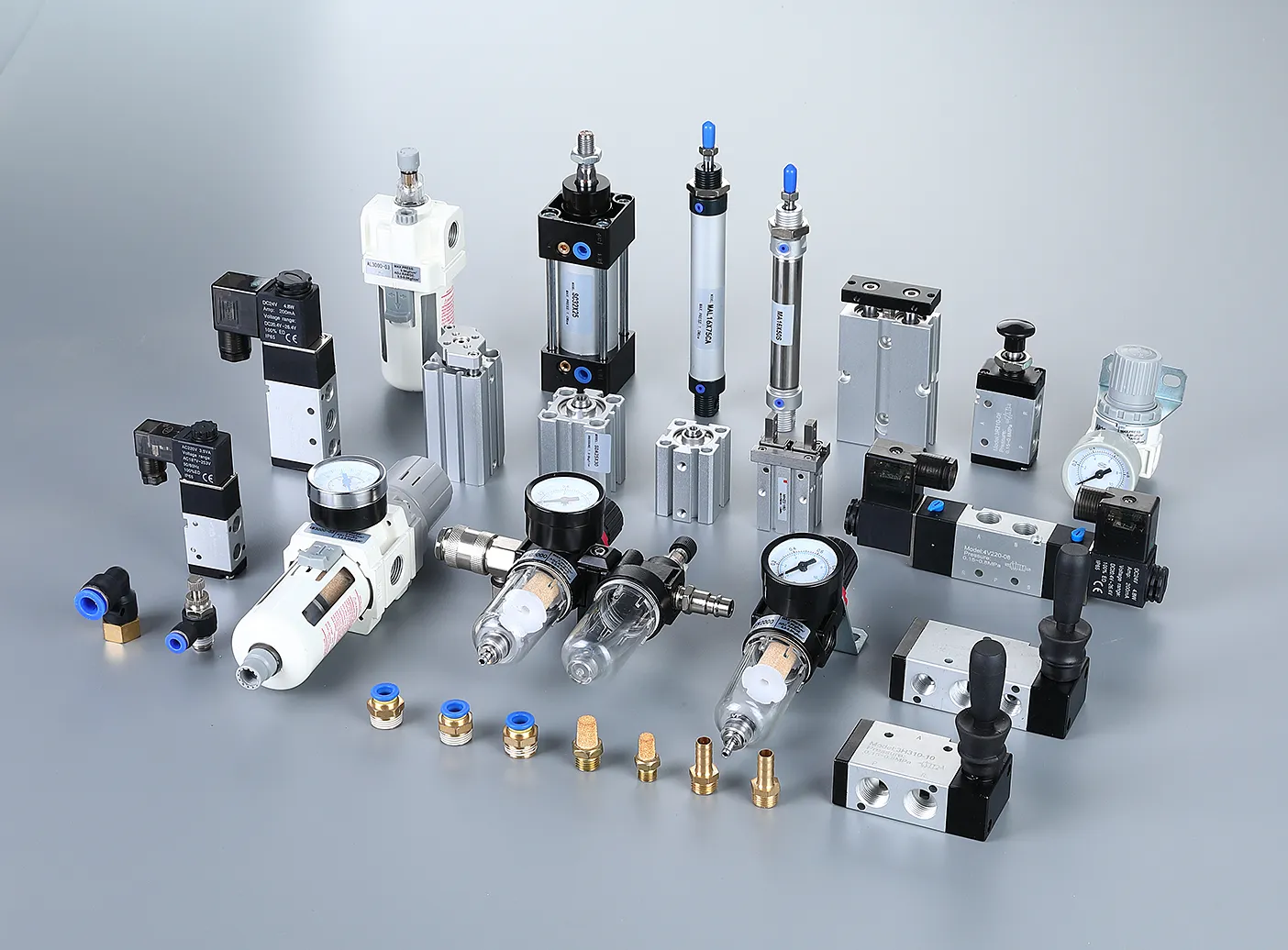
In summary, the most meaningful core value of an industrial switching power supply goes far beyond that of power conversion of AC to DC. It is a proactive guard of stability of a system, a tough survivor, which works in austere surroundings, as well as, a smart enabler of resiliency to run operations. It does not act as a passive element but as the major preservative that unswerving stable energy source drives the fine wires of the automation process. The use of high frequency transformer technology in the power supply is a major component in the design of your next automation system, so take a new look at it. Manage a wide variety of pneumatic accessories that include: pneumatic fitting, pneumatic clamp, pneumatic nozzle, pneumatic regulator, and pneumatic ball valve and so much others.


 English
  Arabic
  Turkish
  Russian
  Spanish
  French
  Indonesian
  Portuguese
  Thai
Thai  Vietnamese